
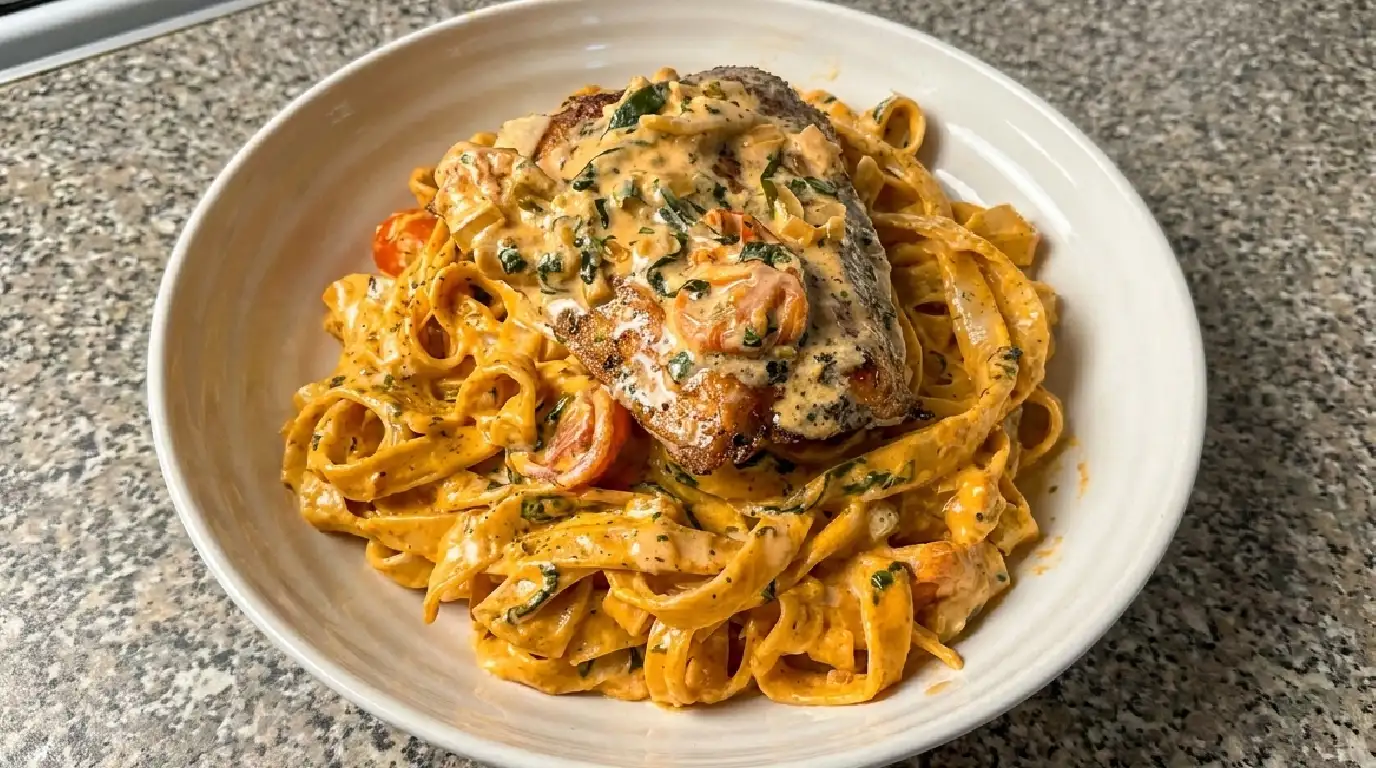
Creamy Tuscan Salmon Pasta Recipe – Ready in 30 Minutes with Fresh Tomatoes and Basil
Introduction
There’s something about a perfectly cooked salmon fillet nestled into a silky cream sauce that makes a weeknight dinner feel like a small celebration. This creamy Tuscan salmon pasta came into my kitchen three years ago on a night when I had forty-five minutes and zero plan. I pulled from what I knew—fresh salmon, sun-dried tomatoes, cream, garlic—and something genuinely good happened. The kitchen filled with the smell of herbs and butter. The pasta turned out tender, with a sauce that clung to each piece of penne like it was meant to be there.
Since that evening, I’ve made this dish dozens of times. Friends have asked for the recipe. Family members have requested it for celebrations. Even the people who usually push pasta around their plates with skepticism have come back for seconds. This Tuscan salmon pasta sits in that rare space where it feels special enough for guests but simple enough that you won’t be stressed in the kitchen.
Why You’ll Love This
• Ready in under 35 minutes—no standing around waiting for something to happen • Uses simple, accessible ingredients you probably already have or can grab on any grocery run • The salmon stays tender and flaky while the pasta absorbs all those buttery, herby flavors • Works as easily for a Tuesday night as it does for entertaining • Naturally impressive looking when plated, but genuinely easy to pull together
The Backstory
My brother-in-law is that person. You know the type—he prefers steak, potatoes, things he can identify at fifty paces. He once pushed away a seafood risotto with the kind of politeness that actually stings. So when I knew he was coming to dinner, I almost didn’t make this. But I had salmon thawing, and I figured the cream sauce might win him over where other fish dishes had failed.
He took the first bite, paused—the kind of pause that feels like forever—and then asked for the recipe. Not to be polite. Genuinely wanted to know how to make it. That moment told me everything. This dish has a way of converting people. The salmon isn’t “fishy.” The sauce isn’t heavy. It’s just right, balanced in a way that appeals to people who think they don’t like seafood pasta.
What Makes It Special
• Salmon: Rich, buttery, with a delicate flake that holds up beautifully in pasta. The fat content means it stays moist even with the heat. • Sun-dried tomatoes: Concentrated tomato flavor without the watery quality of fresh tomatoes. They bring sweetness and acidity to balance the cream. • Fresh basil: Adds brightness and a subtle peppery note that prevents the sauce from feeling one-dimensional. • Heavy cream: Creates a luxurious, clinging sauce that’s silky without being heavy when balanced with lemon juice. • Garlic and shallots: Build a savory base. The shallots break down into the sauce and add sweetness. • Lemon juice: Cuts through the richness and lifts the entire dish with brightness. This is what keeps it from tasting heavy.
Making It Happen
Start by getting your pasta water salted and heating it. This is the boring part, but the salt in that water is doing real work. While the water heats, pat your salmon dry with paper towels—moisture is the enemy of a good sear. Season the fillets generously with salt and pepper on both sides.
Heat a large skillet over medium-high heat and add about a tablespoon of olive oil. The oil should shimmer and move easily when you tilt the pan. Once it’s hot, carefully place the salmon skin-side up in the pan. Don’t move it. This is important. Let it sit for about four minutes, until the underside is golden and releases easily from the pan. Flip it gently and cook the other side for another three minutes. The salmon doesn’t need to be cooked all the way through yet—carryover heat will finish it as you build the sauce. Transfer it to a plate.
Add another tablespoon of olive oil to the same pan and reduce the heat to medium. Add your diced shallots and a pinch of salt, stirring occasionally until they soften and begin to turn translucent, about three minutes. This is when the kitchen really starts to smell good. Add your minced garlic and stir constantly for about thirty seconds—just enough time for the raw edge to come off but not so long that it burns and turns bitter.
Now add the sun-dried tomatoes. If they’re packed in oil, drain them first. Stir them into the shallots and garlic, letting them warm through for about a minute. Pour in your heavy cream slowly, stirring to combine everything. Let this bubble gently for a couple of minutes, just until it thickens slightly. Add a handful of fresh basil—torn, not chopped—and the juice of half a lemon. Taste it. Adjust with more salt, pepper, or lemon if needed. The sauce should taste bright and savory, not one-note creamy.
By this time, your pasta should be nearly done. Reserve about a cup of pasta water, then drain the rest. Add the drained pasta directly to the cream sauce and toss gently, adding a splash of pasta water if it looks too thick. The starchy water loosens everything up and helps the sauce coat the noodles.
Flake your salmon into bite-sized pieces and fold it gently into the pasta. You want to keep the pieces intact, so handle it lightly. Give everything one more gentle toss. If the sauce looks too thick, add a little more pasta water, a quarter cup at a time.
You Must Know
• The salmon is delicate after cooking—fold it in at the very end and use a gentle hand so you don’t break it into tiny flakes • Pat the salmon completely dry before searing; excess moisture prevents browning and creates steam instead of a golden crust • Taste your cream sauce before adding the pasta. If it’s not seasoned well at this stage, it won’t suddenly become flavorful later • Fresh basil goes in at the very end. Heat destroys its flavor, so save most of it for the moment right before serving • Pasta water is liquid gold here. It’s starchy and helps emulsify the sauce, making it silky instead of oily
Serving Ideas & Pairings
Serve this with something simple on the side. A green salad with lemon vinaigrette works beautifully, cutting through the richness without competing. Garlic bread is never a bad call, especially for soaking up extra sauce. If you want vegetables in the mix, a quick sauté of spinach or asparagus added right at the end works well.
For beverages, a crisp white wine like Pinot Grigio or Sauvignon Blanc bridges the gap between the salmon and the cream. If you’re not drinking wine, sparkling water with lemon is perfect.
Make It Different
For a lighter version: Use half-and-half instead of heavy cream, or even better, use a combination of both. Add a few tablespoons of Greek yogurt at the end for creaminess with fewer calories.
For vegetarians: Skip the salmon and add more sun-dried tomatoes, artichoke hearts, and capers. The sauce works beautifully with just vegetables.
For dairy-free cooking: Coconut milk creates an interesting variation. Use full-fat canned coconut milk instead of cream. It sounds unusual, but the richness carries the sauce, and the basil and lemon keep it from tasting sweet.
For a spicier kick: Add red pepper flakes to the oil when you’re sautéing the shallots. Or stir in a teaspoon of pesto for extra brightness and a hint of garlic.
To add more vegetables: Spinach wilts in beautifully at the end. Roasted mushrooms add earthiness. Cherry tomatoes halved and added to the sauce at the very end bring freshness.
Storage & Reheating
Leftovers keep in an airtight container in the refrigerator for up to three days. The pasta will absorb more of the sauce as it sits, which is either good or not depending on how you feel about it. If you like a little more sauce consistency when reheating, add a splash of cream or pasta water.
To reheat, transfer to a skillet over medium heat and warm gently, stirring occasionally. Don’t use high heat—this breaks down the salmon further and can make the sauce split. If it looks dry, add a tablespoon or two of cream or whole milk.
Freezing isn’t ideal for this dish. The cream sauce separates when thawed, and the salmon texture suffers. If you do freeze it, use it within a month and plan to add fresh cream when reheating.
Success Tips
The difference between good and genuinely great comes down to a few small things. First, don’t skimp on searing the salmon. That golden-brown exterior adds flavor that you can’t replicate any other way. It only takes a few minutes and completely changes the dish.
Second, the ratio of sauce to pasta matters. You want enough sauce to coat everything, but not so much that it pools at the bottom of the plate. Add pasta water gradually as you combine everything, and you’ll find the balance.
Third, lemon juice is not optional and it’s not a garnish. It’s a core flavor that prevents the dish from tasting heavy and one-dimensional. Taste without it and then taste with it, and you’ll immediately understand why it matters.
Finally, remember that salmon continues cooking after you remove it from heat. Take it off the pan while it’s still slightly underdone in the center. By the time it’s on the plate, it will be perfectly cooked.
Frequently Asked Questions
Can I use frozen salmon? Yes. Thaw it completely in the refrigerator overnight. Pat it dry thoroughly before searing—frozen salmon often releases more moisture. Otherwise, the cooking time and method stay the same.
What if I don’t have sun-dried tomatoes? Fresh tomatoes work in a pinch, though they’re quite different. Dice two medium tomatoes and add them when you add the basil, just at the end. They won’t bring the concentrated flavor of sun-dried tomatoes, so consider adding a teaspoon of tomato paste to the cream sauce for depth.
Can I make this ahead? You can prepare components ahead. Cook the salmon and make the sauce separately, then combine them just before serving for the best texture. Store both in the refrigerator for up to a day. Reheat gently before combining with hot pasta.
Is this recipe gluten-free? The pasta isn’t unless you use gluten-free pasta. Everything else is naturally gluten-free. Use your favorite gluten-free pasta and follow the cooking instructions on the package.
Why did my sauce split? Cream sauces split when they get too hot or when you add ingredients that are much colder than the sauce. Keep the heat at medium rather than high, and add cold ingredients slowly while stirring. If it does split, add a tablespoon of cold cream and whisk vigorously off the heat.
Recipe Card Info
Prep time: 15 minutes Cook time: 20 minutes Total time: 35 minutes Servings: 4 Category: Main Course Difficulty: Easy to Intermediate Cuisine: Italian-Inspired Yield: 4 servings Equipment: Large skillet, large pot, pasta colander, wooden spoon
Ingredients
For the Salmon:
- 1 pound fresh salmon fillets, cut into 2 pieces
- Salt and freshly ground black pepper to taste
For the Pasta:
- 1 pound penne or fettuccine pasta
- Water for pasta cooking
- Salt for pasta water
For the Sauce:
- 4 tablespoons unsalted butter, divided
- 2 tablespoons olive oil
- 3 medium shallots, thinly sliced
- 4 cloves garlic, minced
- 1 cup sun-dried tomatoes (packed in oil or dry-packed)
- 1 cup heavy cream
For Flavor & Garnish:
- 2 lemons, juiced (about 1/4 cup juice)
- 1 cup fresh basil leaves, roughly torn
- 1 teaspoon red pepper flakes (optional)
Directions
- Bring a large pot of salted water to a rolling boil. Add the pasta and cook according to package directions until al dente. Reserve 1 cup of pasta water before draining.
- While the water heats, pat the salmon fillets completely dry with paper towels. Season both sides generously with salt and pepper.
- Heat 1 tablespoon of olive oil in a large skillet over medium-high heat until it shimmers. Carefully place the salmon skin-side up in the pan and cook without moving for 4 minutes until the bottom is golden.
- Gently flip the salmon and cook for another 3 minutes. The salmon should be nearly cooked through but still slightly moist in the center. Transfer to a clean plate.
- Add the remaining tablespoon of olive oil to the skillet and reduce heat to medium. Add the sliced shallots with a pinch of salt and cook for 3 minutes, stirring occasionally, until they soften and turn translucent.
- Add the minced garlic and stir constantly for 30 seconds until fragrant but not browned.
- Add the sun-dried tomatoes and stir to coat with the oil. Let warm for 1 minute.
- Pour in the heavy cream slowly while stirring to combine. Let the sauce bubble gently for 2 minutes until it begins to thicken slightly.
- Add the torn basil leaves and lemon juice, stirring to incorporate. Taste and adjust seasoning with additional salt and pepper as needed.
- Add the drained pasta directly to the cream sauce and toss gently using two forks or tongs, adding pasta water a few tablespoons at a time until the sauce reaches your desired consistency.
- Flake the cooked salmon into bite-sized pieces and gently fold into the pasta, being careful not to break the fish into tiny flakes.
- Toss once more very gently to distribute the salmon evenly throughout the pasta.
- Divide among four shallow bowls or plates. If desired, add a small amount of the remaining fresh basil as garnish. Serve immediately while hot.
Notes
• Sun-dried tomatoes packed in oil are the easiest to use, but dry-packed tomatoes work too—just rehydrate them in warm water for 10 minutes before using • The salmon must be completely thawed and patted dry for the best sear and browning • Adding a splash of white wine (about 1/4 cup) to the sauce before the cream brings extra depth of flavor • For a lighter version, substitute half-and-half for the heavy cream or use a combination of both • Freshly grated Parmesan cheese can be offered on the side, though the sauce is rich enough without it
Nutrition
Per serving (approximate): Calories: 680 Protein: 42g Carbohydrates: 62g Fat: 28g Saturated Fat: 12g Fiber: 4g Sugar: 3g Sodium: 580mg Cholesterol: 120mg
Note: Nutrition information is calculated based on standard ingredient portions and may vary depending on specific brands and preparation methods used.
