
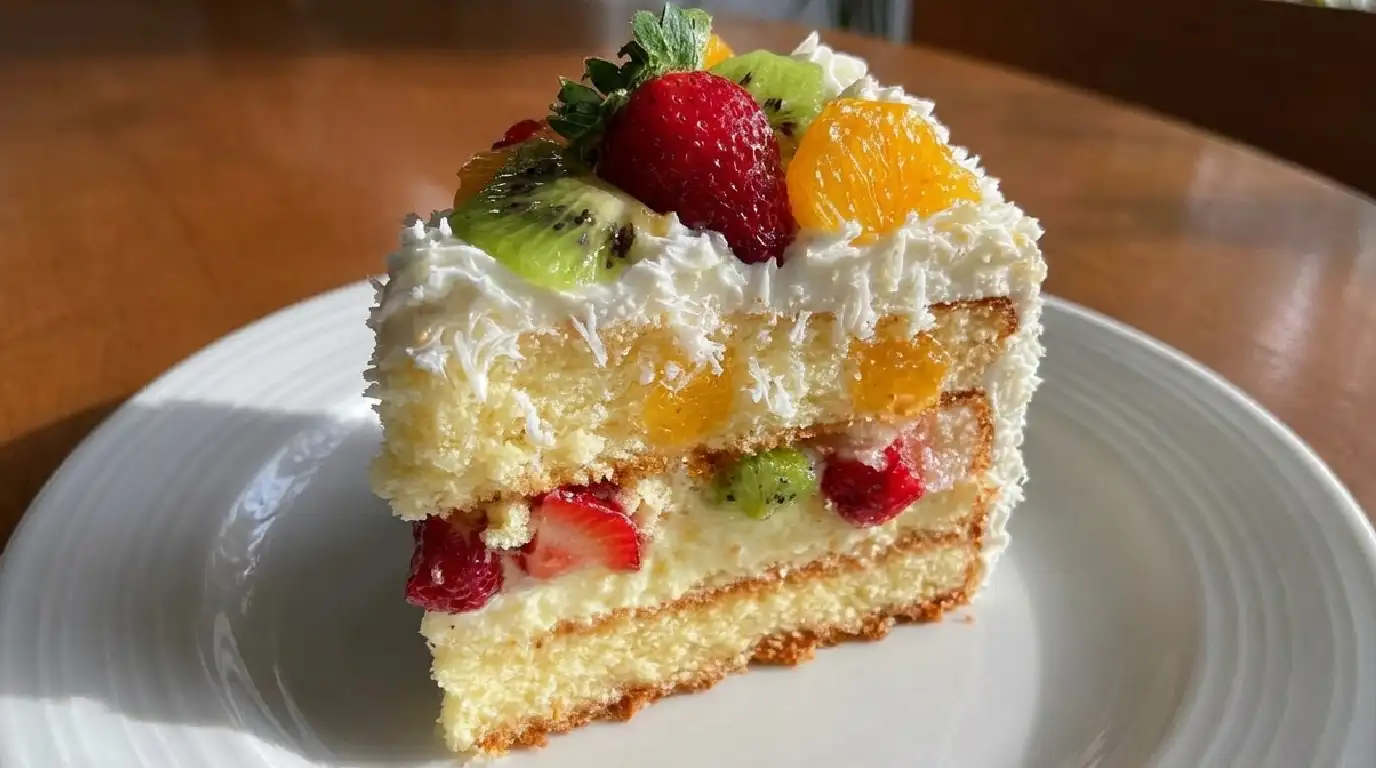
Super Soft & Moist Butter Fruit Fresh Cream Cake: A Tender Layer Cake That Stays Moist for Days
Introduction
There’s a particular kind of magic that happens when you pull a butter cake from the oven and it’s still warm enough to hold your hand over it. This butter fruit fresh cream cake does exactly that—it’s the kind of dessert that makes the kitchen smell like comfort and tastes like someone spent hours perfecting every layer, even though the reality is much simpler. The crumb is impossibly soft, almost delicate, and stays moist for days without drying out or becoming gummy. I discovered this recipe while trying to recreate the tender, fruit-studded cakes I’d find at local bakeries, the ones that seemed to know secrets I didn’t. After months of testing butter ratios, mixing times, and how to fold in fresh fruit without breaking it into pulp, I finally cracked it. This cake became the one I make when I want to impress without stressing, or when I just want to eat an embarrassingly large slice with my coffee on a Tuesday morning.
Why You’ll Love This
This cake checks every box for busy home bakers and cake enthusiasts alike:
- The crumb stays impossibly tender and doesn’t dry out, even on day three or four when you’re still eating it for breakfast
- It’s forgiving to make—no temperamental meringues, no folding techniques that require a culinary degree
- Fresh fruit baked into the batter keeps things light while the cream filling adds richness without overwhelming
- The buttery flavor is genuine and rich without feeling heavy or greasy
- You can customize it with whatever fruit and cream flavoring suits your mood
The Backstory
My brother-in-law showed up to Easter dinner with one of those “I don’t eat dessert” attitudes that makes you want to prove him wrong. Polite refusals, serious face, the whole thing. I sliced him a piece of this cake anyway—mostly to be annoying, honestly. Twenty minutes later, he was back at the kitchen asking if he could take the rest home. A few days afterward, my sister sent me a photo of him eating it straight from the container while watching a game. Some recipes just have a way of changing minds.
What Makes It Special
This cake succeeds because of how its components work together:
- Softened butter as the base: The majority of the structure comes from properly creamed butter and sugar, which traps air and keeps everything tender
- Fresh fruit for moisture and flavor: Strawberries, raspberries, or stone fruit release their juices while baking, creating natural moisture pockets throughout the crumb
- Heavy cream in the batter: A small amount of cream (not milk) adds richness and keeps the cake moist longer than water-based versions
- The right flour ratio: All-purpose flour keeps the cake sturdy enough to layer while staying soft enough to cut cleanly
- Fresh cream filling and topping: Real whipped cream with a touch of vanilla transforms the cake from simple to special without requiring pastry skills
Making It Happen
Start by bringing your butter and eggs to room temperature—this usually takes about 30 minutes sitting on the counter. While they warm up, prepare your pans by lining them with parchment paper and greasing the sides, then preheat your oven to 350°F.
In a large mixing bowl, cream together softened butter and sugar until the mixture looks pale and fluffy, roughly three to four minutes with an electric mixer. This step matters more than it seems; you’re incorporating air that will help the cake rise and stay light. Add eggs one at a time, mixing well after each addition and scraping down the bowl between additions so everything stays evenly combined.
In a separate bowl, whisk together your flour, baking powder, and salt. Add this dry mixture to the wet ingredients in two additions, alternating with the heavy cream. Start with dry, then cream, then the remaining dry mixture. This prevents overmixing and keeps the batter tender. Fold in your prepared fresh fruit gently—if using berries, toss them lightly in a tablespoon of flour first to help them stay distributed rather than sinking to the bottom.
Divide the batter evenly between your prepared pans and smooth the tops. Bake for 28 to 32 minutes, until a toothpick inserted into the center comes out with just a few moist crumbs clinging to it. The cakes should be golden on top and spring back gently when touched. Let them cool in the pans for about ten minutes, then turn them out onto wire racks to cool completely. This patience matters—trying to layer them while they’re warm will result in a mess, and waiting pays off.
Once cooled, whip heavy cream with powdered sugar and vanilla extract until soft peaks form. You want it spreadable but still cloud-like. Place your first cake layer on a cake stand or serving plate, spread a generous layer of cream on top, scatter fresh fruit if desired, then top with the second layer. Frost the outside however you prefer—thick frosting around the sides, a simple dusting of powdered sugar, or a more formal crumb coat. Refrigerate for at least an hour before serving to let everything set.
You Must Know
- Don’t skip the room temperature step for butter and eggs; cold ingredients won’t incorporate properly and your cake will be denser
- When folding in fresh fruit, do it gently and stop as soon as the fruit is distributed—overmixing at this point can toughen the batter
- If your fresh fruit is very wet (like fresh pineapple or watermelon), pat it dry with paper towels first to avoid adding excess moisture
- The cake develops better flavor and texture a day after baking, so make it the day before if your schedule allows
- Cream filling begins to weep after about four hours at room temperature, so refrigerate assembled cakes until serving time
Serving Ideas & Pairings
This cake pairs beautifully with strong black coffee or a simple cup of tea. For something more indulgent, serve alongside a glass of prosecco or a light white wine. Leftover slices become an excellent breakfast with yogurt alongside, or a midday snack with a cold glass of milk. If you’re making this for a gathering, consider pairing it with a fresh salad at dinner—the richness of the cake feels balanced after something bright and acidic.
Make It Different
The foundation of this recipe is flexible. If strawberry shortcake appeals to you, use fresh strawberries throughout and layer with vanilla bean-infused cream. Prefer stone fruit? Peaches and nectarines work beautifully; dice them small so they distribute evenly. For a slightly different texture, substitute half of the all-purpose flour with cake flour, which will give you an even more delicate crumb. If you’re looking to reduce richness, use Greek yogurt for half of the cream in the batter. For a lemon version, add the zest of two lemons to the butter and sugar mixture before creaming, then toss raspberries into the batter. Don’t be afraid to experiment with the cream filling either—a touch of cardamom, rosewater, or fresh mint transforms the flavor without changing the method.
Storage & Reheating
This cake actually improves when stored. Wrap the unfrosted layers in plastic wrap and store them in an airtight container for up to four days at room temperature, or freeze them for up to three months. The assembled, frosted cake keeps best in the refrigerator, covered loosely, for up to two days. Let slices sit at room temperature for about ten minutes before serving if they’ve been refrigerated; this brings back the tender texture and lets the flavors come through more clearly. Don’t reheat this cake in the oven; it’s meant to be served cold or at room temperature, which is part of what makes the texture so pleasant.
Success Tips
The small details that separate a good cake from one you’ll remember: when you cream the butter and sugar, you’re building the cake’s structure, so give it those full three to four minutes even though it seems excessive. When you alternate the dry ingredients and cream, start and finish with the dry mixture—this prevents the wet ingredients from deflating all those air bubbles you worked to create. If you’re using a stand mixer, switch to a spatula for the last stage when you’re folding in fruit and cream; the mixer can overwork the batter at that point. When baking, don’t open the oven door in the first 20 minutes. After that, a quick peek is fine, but the initial heat is critical for proper rising. Finally, remember that fruit releases water as it cooks, so this cake naturally develops pockets of moisture as it sits, which is why it’s even better on day two than day one.
Frequently Asked Questions
Can I make this cake in advance for an event? Absolutely. Bake the unfrosted layers up to three days ahead and wrap them in plastic wrap, or freeze them for up to three months. Assemble and frost the morning of your event, and refrigerate until serving time. If you’re freezing the layers, thaw them at room temperature for about two hours before frosting.
What if I don’t have fresh fruit on hand? The cake will still be delicious without fresh fruit—you’ll just have a more traditional butter cake. You could also use frozen fruit (thawed and drained well), dried fruit that’s been plumped in warm water, or skip the mix-ins entirely and let the butter flavor stand alone. Frozen berries work in a pinch; thaw and drain them completely first.
Why did my cake sink in the middle? The most common culprit is opening the oven door too early or having it too hot. Make sure your oven temperature is accurate (use an oven thermometer to check) and resist opening the door until at least 25 minutes have passed. Overmixing the batter can also cause sinking, so be gentle once you’ve added the final dry ingredients.
How long does the fresh cream filling stay stable? Whipped cream is best used within four to six hours of making it, though it will hold in the refrigerator for up to 24 hours. If you need to assemble the cake earlier, consider using a stabilized whipped cream (add one tablespoon of cornstarch or powdered sugar per cup of cream), or make a buttercream instead, which is more stable at room temperature.
Can I double this recipe for a larger cake? Yes, you can double everything and bake in three or four eight-inch pans instead of two, or in two nine-inch pans. Baking time will be similar since the layers are the same thickness. Keep an eye on the larger pans around the 30-minute mark and adjust if needed. Just remember that your oven may only fit two pans at a time, so you might need to bake in batches.
Recipe Card Info
Prep time: 20 minutes Cook time: 30 minutes Total time: 50 minutes (plus cooling and assembly) Servings: 10 to 12 slices Category: Dessert Difficulty: Easy to Moderate Cuisine: American Yield: One two-layer 8-inch cake Equipment: Two 8-inch round cake pans, electric mixer, mixing bowls, wire cooling racks, cake server, offset spatula
Ingredients
For the Cake:
- 1 cup (2 sticks) butter, softened to room temperature
- 1 1/4 cups granulated sugar
- 3 large eggs, room temperature
- 2 cups all-purpose flour
- 2 teaspoons baking powder
- 1/2 teaspoon salt
- 1/2 cup heavy cream, room temperature
- 1 1/2 cups fresh fruit (strawberries, raspberries, peaches, or a combination), diced small
For the Fresh Cream Filling and Topping:
- 2 cups heavy whipping cream, cold
- 3 tablespoons powdered sugar
- 1 teaspoon vanilla extract
- Fresh fruit for garnish (optional)
Directions
- Preheat your oven to 350°F. Line two 8-inch round cake pans with parchment paper and lightly grease the sides.
- In a large mixing bowl, cream together the softened butter and granulated sugar on medium-high speed for 3 to 4 minutes, until the mixture is pale and fluffy. Scrape down the bowl occasionally.
- Add the eggs one at a time, mixing well after each addition and scraping down the bowl between additions.
- In a separate bowl, whisk together the flour, baking powder, and salt.
- Add the dry mixture to the wet ingredients in two additions, alternating with the heavy cream. Start with the dry mixture, then add half the cream, then the remaining dry mixture. Mix on low speed until just combined.
- Gently fold in the fresh fruit using a spatula, being careful not to break the fruit pieces.
- Divide the batter evenly between the prepared pans and smooth the tops.
- Bake for 28 to 32 minutes, until a toothpick inserted in the center comes out with just a few moist crumbs.
- Let the cakes cool in the pans for 10 minutes, then turn out onto wire racks to cool completely (about 1 to 2 hours).
- While the cakes cool, prepare the fresh cream filling. In a chilled bowl, whip the cold heavy cream, powdered sugar, and vanilla extract until soft peaks form.
- Place the first cooled cake layer on a serving plate or cake stand. Spread a generous layer of whipped cream on top, add fresh fruit if desired, then place the second layer on top.
- Frost the outside of the cake with the remaining whipped cream, or dust lightly with powdered sugar.
- Refrigerate for at least 1 hour before serving to allow everything to set properly.
Notes
This cake is best served cold or at room temperature and tastes even better on the second day. Store the unfrosted layers in an airtight container for up to 4 days at room temperature or freeze for up to 3 months. The assembled cake keeps in the refrigerator, loosely covered, for up to 2 days. For a strawberry shortcake variation, use fresh strawberries exclusively and pair with vanilla bean-infused cream. You can substitute up to half the all-purpose flour with cake flour for an even more delicate crumb.
Nutrition
Per serving (based on 12 servings):
- Calories: 380
- Total Fat: 22g
- Saturated Fat: 13g
- Cholesterol: 85mg
- Sodium: 210mg
- Total Carbohydrates: 42g
- Dietary Fiber: 1g
- Sugars: 28g
- Protein: 4g
