
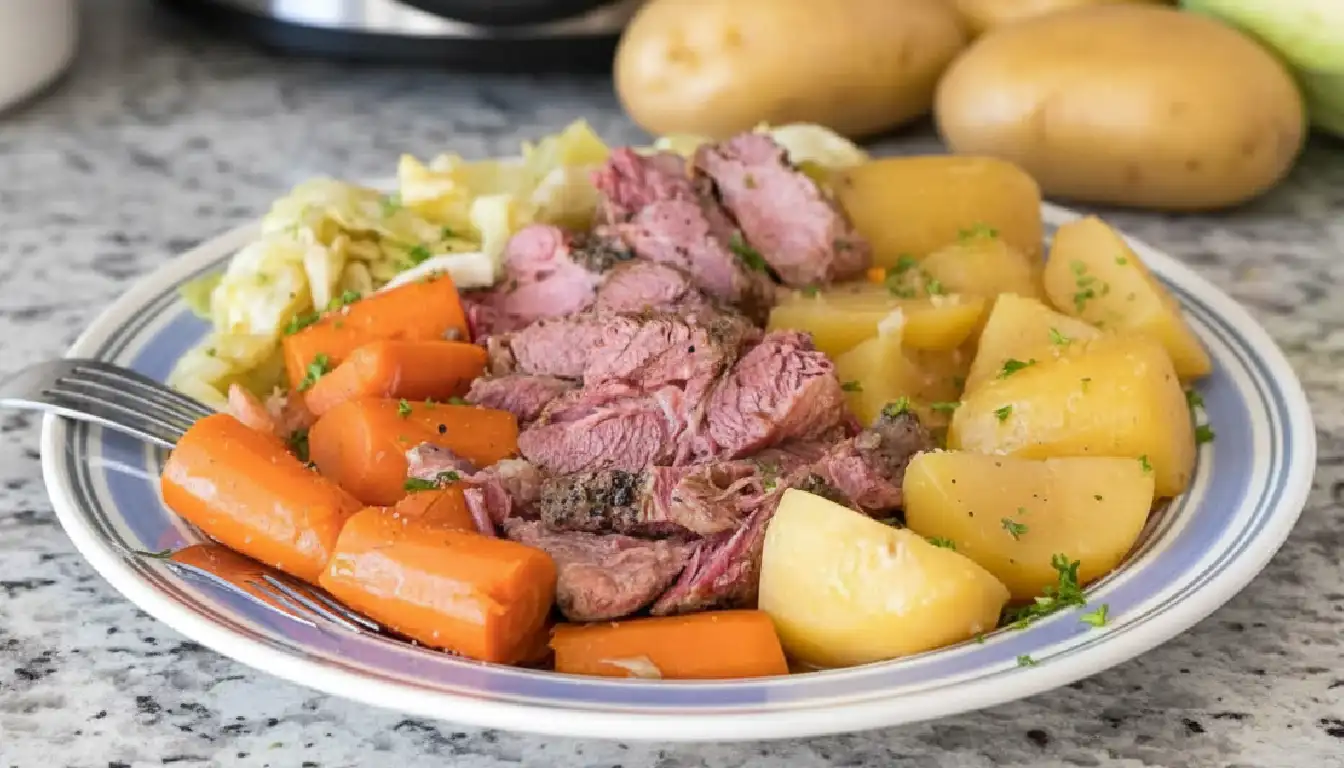
Slow Cooker Corned Beef and Cabbage Recipe for a Stress-Free Dinner
There is a specific kind of magic that happens when you let a brisket simmer low and slow for an entire day. It starts with the aroma—a savory, salty, and slightly spiced scent that fills every corner of the house, promising a meal that feels like a warm hug. For many, this dish is a once-a-year tradition for St. Patrick’s Day, but in my kitchen, it is the quintessential comfort food for any rainy Sunday. The beauty of the slow cooker is that it takes a notoriously tough cut of meat and coaxes it into something so tender it practically falls apart at the touch of a fork. It’s about more than just the meat, though; it’s about those buttery potatoes and the way the cabbage soaks up all that seasoned broth until it becomes the best part of the plate.
Why You’ll Love This
It is a true “set it and forget it” meal that yields professional results with minimal hands-on prep time.
The slow cooking process ensures the brisket reaches a melt-in-your-mouth texture that is hard to achieve on a stovetop.
It is a complete, one-pot meal that balances hearty protein with tender, nutrient-dense vegetables.
The leftovers are incredibly versatile, making for the world’s best Reuben sandwiches the next day.
I once served this to a close friend who claimed to be a lifelong “cabbage hater.” To them, cabbage was something that was always soggy, bitter, or flavorless. I didn’t say a word; I just piled a generous helping of those slow-simmered green wedges next to a few slices of the corned beef. By the end of the night, they were asking for the “buttery vegetable recipe.” When cabbage is cooked in the seasoned juices of the brisket, it loses its bite and takes on a savory, silky quality that surprises even the pickiest eaters.
What Makes It Special
Corned Beef Brisket: This salt-cured cut is the star, providing a deep, umami flavor that seasons the entire pot.
The Spice Packet: Those tiny seeds—mustard, coriander, and peppercorns—infuse the cooking liquid with a classic, aromatic profile.
Fresh Garlic and Bay Leaves: These simple additions elevate the pre-packaged spices, adding a layer of sophisticated earthiness.
Layered Vegetables: By adding the potatoes, carrots, and cabbage at different intervals, we ensure every element is cooked to its own version of perfection without anything becoming mushy.
Making It Happen
The journey to a perfect dinner begins with a simple foundation. Start by cutting a yellow onion into large, sturdy chunks and scattering them across the bottom of your slow cooker. This creates a flavorful “rack” for the meat to sit on. Place your corned beef brisket directly on top, fatty side up, and sprinkle over the contents of the spice packet. Pour in enough water to nearly submerge the meat, then toss in the sliced garlic and bay leaves. Set the temperature to low, and let the heat do the heavy lifting for the next several hours.
Timing is everything when it comes to the vegetables. After the beef has had a three-hour head start to begin softening, nestle your peeled potatoes and chopped carrots into the liquid around the edges. As the clock winds down—about two hours before you’re ready to eat—tuck the cabbage wedges into the pot. They will steam and simmer in those final hours, turning tender and golden. Once the meat is soft enough to yield to a fork, lift it out and let it rest on a cutting board. This rest period is crucial for keeping the juices inside the meat. Slice it thinly across the grain and serve it alongside those perfectly cooked vegetables.
You Must Know
Always slice the meat against the grain; look for the direction of the muscle fibers and cut perpendicular to them to ensure every bite is tender.
Don’t rush the process—if the meat feels tough when you test it, it likely just needs another hour in the heat.
Peeling your potatoes is a personal choice, but for classic russets, removing the skin allows them to better absorb the salty brine.
Serving Ideas
This hearty dish is best served on a large platter with a side of coarse stone-ground mustard or a creamy horseradish sauce for a bit of a kick. To round out the meal, a thick slice of crusty Irish soda bread is perfect for mopping up the extra broth. For drink pairings, a cold, dark stout provides a beautiful creamy contrast to the saltiness of the beef, while a crisp hard cider offers a bright, fruity balance.
Make It Different
The Beer Braise: Replace two cups of the water with a bottle of Guinness or your favorite lager to add a complex, malty depth to the sauce.
Vegetable Variations: If you prefer a lower-carb option, try swapping the potatoes for large chunks of rutabaga or turnips.
The Spice DIY: If your brisket didn’t come with a packet, you can easily make your own by bundling pickling spices and peppercorns in a small piece of cheesecloth.
Storage and Reheating Recipe Tips
Corned beef keeps beautifully in the refrigerator for up to four days when stored in an airtight container with a bit of its cooking liquid. To reheat, it is best to do so gently. Slicing the cold meat and warming it in a skillet with a splash of broth will prevent it from drying out. Avoid the microwave if possible, as it can make the cured meat turn rubbery.
Success Tips
The most common mistake is adding the cabbage too early. To keep it from disintegrating, ensure it only spends the last two hours in the pot. Also, remember that slow cookers vary; if your beef isn’t tender by the eight-hour mark, don’t panic. Simply give it that extra time until it reaches the desired texture.
Frequently Asked Questions
Can I cook this on high instead of low?
While you can cook it on high for 5–6 hours, the low and slow method is highly recommended for brisket. The long simmer at a lower temperature is what breaks down the tough connective tissues properly.
Why is my corned beef still tough?
Corned beef is a muscle that needs time. If it’s tough, it’s almost always because it hasn’t cooked long enough. Put the lid back on and give it another hour.
Do I need to wash the meat before cooking?
It is usually best to give the brisket a quick rinse under cold water to remove the excess surface brine, which helps control the saltiness of the final dish.
What kind of potatoes work best?
Russets provide that classic, fluffy texture, but red potatoes or Yukon Golds hold their shape exceptionally well during long cooking times.
Can I use a different vegetable besides cabbage?
If cabbage isn’t your favorite, large wedges of bok choy or even thick-cut kale can be added at the very end for a different leafy green experience.
Prep time: 15 minutes
Cook time: 10 hours
Total time: 10 hours 15 minutes
Servings: 6 servings
Category: Main Course
Difficulty: Easy
Cuisine: Irish-American
Yield: 1 brisket with vegetables
Equipment: 6-quart slow cooker, cutting board, sharp knife
Ingredients
3 to 4 pounds corned beef brisket uncooked, with spice packet
1 onion
3 cloves garlic sliced
2 bay leaves
2 ½ to 3 cups water
2 pounds potatoes peeled and quartered
2 large carrots chopped
1 small head green cabbage cut into wedges
Instructions
Chop the onion into large chunks and place them in the bottom of a 6-quart slow cooker. Place the corned beef on top and sprinkle with the seasoning packet.
Pour water into the slow cooker until it just about covers the corned beef. Add the sliced garlic and bay leaves.
Cover and cook on low for 8 to 10 hours.
After the initial 3 hours of cooking, add the potatoes and carrots to the slow cooker.
Two hours before you plan to serve, add the cabbage wedges to the slow cooker.
Remove the corned beef from the slow cooker and let it rest for 15 minutes before slicing. Serve the sliced beef with the tender potatoes, carrots, and cabbage.
Notes
Up to 2 cups of the water can be replaced with beer if you prefer a deeper flavor profile.
If your corned beef doesn’t have a spice packet, add a couple of tablespoons of pickling spices, a few peppercorns, and an extra bay leaf. Bundle them in cheesecloth for easy removal.
If using russet potatoes, they should be peeled. If using thin-skinned potatoes like red or Yukon Gold, peeling is optional.
Appliances vary; if the meat is not tender, it likely needs to cook longer. It is essential to slice the beef across the grain for the best texture.
Nutrition
Corned beef is naturally high in protein and iron. The addition of cabbage, carrots, and potatoes provides a good source of Vitamin C, potassium, and dietary fiber. To reduce sodium, rinse the brisket thoroughly before placing it in the slow cooker.
