
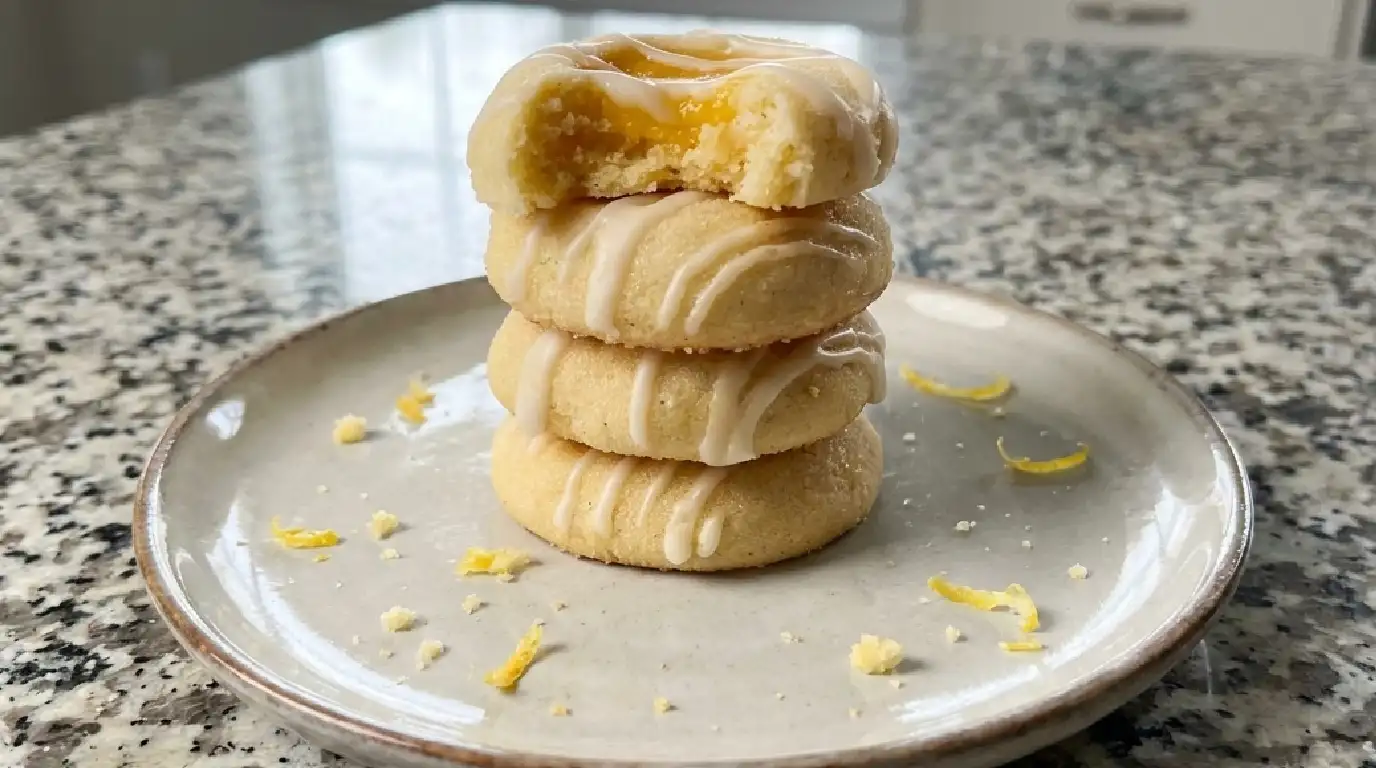
Lemon Thumbprint Cookies Recipe: Buttery, Tangy, and Impossibly Easy
Introduction
There’s something almost magical about the first bite of a lemon thumbprint cookie. The butter melts on your tongue, followed by a burst of tart, jammy sweetness that catches you off guard. I learned to make these on a lazy Sunday afternoon when a friend mentioned her grandmother’s recipe in passing, and now they’re the first thing I reach for when I need something that feels both homemade and elegant.
These cookies sit in that perfect middle ground—simple enough for a weeknight baking session, yet impressive enough to bring to a potluck and watch people go back for seconds. The beauty of lemon thumbprint cookies lies in their contrast: buttery, crumbly dough studded with the bright zing of fresh lemon zest, topped with a glossy jewel of jam that adds sweetness and texture in equal measure.
If you’ve never made thumbprint cookies before, this is your moment. They’re forgiving, adaptable, and they make your kitchen smell like a fancy bakery without the fancy effort.
Why You’ll Love This
- Minimal Ingredients: You likely have most of what you need in your pantry right now—butter, flour, sugar, eggs, lemon, and jam.
- Impressive But Easy: These look professionally made, yet they take minimal skill and just a few minutes of hands-on time.
- Naturally Flexible: Swap jam flavors, try different citrus, or customize to match your taste preferences without compromising the recipe.
- Perfect for Gifting: They transport beautifully in a box, stay fresh for days, and feel special enough for any occasion.
- Kid-Friendly Baking: Young helpers love pressing their thumbs into the dough—it’s therapeutic and fun.
The Backstory
My sister-in-law has spent years skeptical of my baking. “Homemade cookies are nice,” she’d say with that polite smile that clearly meant she preferred store-bought. But when I brought a batch of lemon thumbprint cookies to her birthday brunch, something shifted. She bit into one, raised her eyebrows, and asked for the recipe before finishing her first cookie. Two hours later, she was in her own kitchen making them. She’s baked four batches since. That’s the power of these cookies—they convert even the most committed dessert doubters.
What Makes It Special
- Bright Lemon Zest: Not just lemon extract (though extract works in a pinch), fresh zest brings a natural, vibrant quality that makes these cookies taste alive.
- European-Style Butter: The high fat content creates a tender crumb that’s closer to shortbread than a standard cookie—rich but not heavy.
- Quality Jam: Whether strawberry, raspberry, or apricot, choose a jam with real fruit and minimal corn syrup. It’s the star of the show.
- Subtle Vanilla: A touch of vanilla extract rounds out the flavors without overpowering the lemon.
- Crispy-Tender Texture: The edges get golden and slightly crisp while the centers stay wonderfully tender and buttery.
Making It Happen
Start by creaming two cups of softened butter with one cup of granulated sugar. This takes about three to four minutes with an electric mixer—you want the mixture pale, fluffy, and noticeably lighter than when you started. Add three large egg yolks (save the whites for something else), one at a time, mixing well after each addition. The dough should look smooth and emulsified.
In a separate bowl, whisk together three cups of all-purpose flour, one teaspoon of salt, and the zest of two large lemons. The zest needs to be distributed evenly throughout the flour—this is where your lemon flavor comes from. Fold this dry mixture into your butter mixture gently but thoroughly. The dough will be soft and slightly sticky, which is exactly what you want. Divide it into two portions, wrap in plastic, and refrigerate for at least one hour. Cold dough is much easier to handle.
When you’re ready to shape, preheat your oven to 350 degrees Fahrenheit. Line baking sheets with parchment paper. Working with one portion of dough at a time, roll out between two pieces of parchment paper to about a quarter-inch thickness. Using a two-inch round cutter (or the rim of a glass), cut circles and transfer them to your prepared sheets, spacing them about two inches apart.
This is the fun part: gently press your thumb into the center of each circle, creating a small indent without pushing all the way through to the baking sheet. You’re aiming for a shallow well that will hold the jam. Using a small spoon or a piping tip, fill each indentation with about half a teaspoon of your chosen jam—strawberry jam is classic, but raspberry or apricot works beautifully too.
Bake for twelve to fifteen minutes, until the edges are golden brown but the centers still look slightly underdone. This is crucial. The cookies will continue cooking slightly after removal from the oven, and you want them to stay tender. They should feel firm enough to move but still have a slight give when you press gently on the plain dough areas.
Cool on the baking sheet for five minutes before transferring to a wire rack. Once completely cool, the jam will set slightly and the cookies will firm up further.
You Must Know
- Don’t Skip the Chill: Cold dough is far easier to work with and produces better texture. If your kitchen is warm, refrigerate between batches.
- Zest First, Juice Later: Zest your lemons when they’re whole, then juice them. Trying to zest a halved lemon is frustrating and yields less zest.
- The Jam Line: The jam should sit just above the cookie surface after baking. If it sinks entirely, your indent is too deep; if it spreads too much, your indent is too shallow. A quarter-inch depth is the sweet spot.
- Room Temperature Butter: Cold butter won’t cream properly. Take it out of the fridge thirty minutes before baking.
- Watch the Edges: Golden brown edges mean done, but pale centers are fine. Overbaking leads to hard, brittle cookies instead of tender ones.
Serving Ideas and Pairings
These cookies shine alongside afternoon tea or coffee, but they’re equally at home at brunch with mimosas or as an unexpected dessert after a light dinner. Pair them with champagne for celebration, hot tea for coziness, or cold milk for pure comfort. They work beautifully on a dessert board with fresh lemon curd, candied lemon peel, or other citrus-forward treats.
Make It Different
Try strawberry shortcake cookies by using strawberry jam and adding a tablespoon of freeze-dried strawberry powder to the dough for extra berry flavor. For a more complex lemon profile, add a quarter teaspoon of lemon extract alongside the fresh zest. Swap orange zest for half the lemon zest to create a citrus blend. If you prefer white chocolate accents, add one-third cup of finely chopped white chocolate to the dough. For a vanilla lover’s version, increase the vanilla extract to one and a half teaspoons and reduce the lemon zest by half. You can also experiment with different jams—try passion fruit curd, apricot preserves, or even lemon curd for maximum citrus.
Storage and Reheating
Store these in an airtight container with parchment between layers at room temperature for up to five days. They actually taste better on day two or three as the flavors meld. For longer storage, freeze the baked cookies in a freezer-safe container for up to one month. Thaw at room temperature for about fifteen minutes before serving—no reheating needed. The jam will stay soft and glossy, and the cookies maintain their tender texture beautifully.
Success Tips
The difference between good and exceptional thumbprint cookies often comes down to one detail: the ratio of butter to flour. This recipe is intentionally rich. Don’t be tempted to add more flour if your dough seems soft. The softness is what creates that tender, almost shortbread-like texture. If your kitchen runs warm, work quickly and refrigerate both your dough portions and your cut circles before baking.
Another subtle win: use the back of a rounded measuring teaspoon for your jam indents rather than your actual thumb. This creates a more consistent, professional-looking indent and prevents fingerprints in the dough. If you notice your jam sinking into the warm cookies straight from the oven, let them cool for two minutes on the sheet before transferring to the rack—this gives the cookies just enough structure to hold the jam in place.
Frequently Asked Questions
Can I make the dough in advance? Yes. The dough keeps in the refrigerator for up to three days in an airtight container, or you can freeze it for up to three months. Thaw frozen dough in the refrigerator overnight before rolling and cutting.
What if I don’t have a round cookie cutter? Use a drinking glass, a biscuit cutter, or even a small bowl. Any circular shape works. You can also shape free-form ovals if you prefer. The shape doesn’t matter as much as keeping them roughly the same size so they bake evenly.
Can I use lemon extract instead of fresh zest? You can, but it won’t taste quite the same. Lemon extract is more intense and one-dimensional compared to fresh zest, which has complexity and brightness. If you must use extract, use just a quarter teaspoon alongside a tablespoon of zest for the best result.
How do I keep the jam from spreading too much? Make sure your indent is deep enough but not too deep—about a quarter-inch. Also, don’t overfill. Half a teaspoon is the right amount. If your jam spreads a lot, your oven temperature might be slightly low, causing the cookies to bake slower and the jam to have more time to run.
Can these be made vegan? Yes, with modifications. Substitute vegan butter for regular butter (use the same amount), and use flax eggs (three tablespoons of ground flaxseed mixed with nine tablespoons of water) instead of egg yolks. The texture will be slightly more delicate, but they’ll still be delicious.
Recipe Card Info
Prep Time: 30 minutes Cook Time: 12-15 minutes Total Time: 2 hours 45 minutes (including chill time) Servings: 36 cookies Category: Dessert Difficulty: Easy Cuisine: American Yield: 3 dozen cookies Equipment: Electric mixer, baking sheets, parchment paper, round cookie cutter (2-inch), wire cooling rack
Ingredients
- 2 cups (4 sticks) unsalted butter, softened to room temperature
- 1 cup granulated sugar
- 3 large egg yolks
- 3 cups all-purpose flour
- 1 teaspoon fine sea salt
- Zest of 2 large lemons (about 2 tablespoons)
- 1 teaspoon pure vanilla extract
- 1/2 to 3/4 cup quality jam (strawberry, raspberry, or apricot recommended)
Directions
- In a large bowl, cream the softened butter and granulated sugar together using an electric mixer on medium speed for 3-4 minutes until the mixture is pale, fluffy, and noticeably lighter. Scrape down the bowl as needed.
- Add the egg yolks one at a time, mixing well after each addition until fully incorporated. The mixture should look smooth and emulsified.
- In a separate bowl, whisk together the all-purpose flour, fine sea salt, and lemon zest. Make sure the zest is evenly distributed throughout the flour.
- Gently fold the flour mixture into the butter mixture until just combined. The dough will be soft and slightly sticky.
- Divide the dough into two equal portions. Wrap each in plastic wrap and refrigerate for at least 1 hour, preferably 2 hours.
- Preheat your oven to 350 degrees Fahrenheit. Line baking sheets with parchment paper.
- Working with one portion of dough at a time, place the dough between two sheets of parchment paper and roll to about 1/4-inch thickness.
- Using a 2-inch round cookie cutter, cut circles from the dough and transfer to the prepared baking sheets, spacing them about 2 inches apart.
- Using the back of a measuring teaspoon or your thumb, gently press an indent into the center of each circle. Press just deep enough to create a shallow well without pushing through to the pan.
- Fill each indent with approximately 1/2 teaspoon of jam using a small spoon or piping tip.
- Bake for 12-15 minutes until the edges are golden brown. The centers may still look slightly underdone, which is desired for tender cookies.
- Cool the cookies on the baking sheet for 5 minutes, then carefully transfer to a wire cooling rack to cool completely.
- Repeat with the second portion of dough.
Notes
- These cookies taste even better on the second or third day as the flavors meld together.
- Store in an airtight container with parchment between layers for up to 5 days at room temperature.
- Freeze baked cookies for up to 1 month in a freezer-safe container.
- For extra lemon flavor, add 1/4 teaspoon of lemon extract alongside the fresh zest.
- The type of jam matters. Choose one with real fruit and minimal corn syrup for best results.
Nutrition Information (per cookie)
Calories: 145 Total Fat: 9g Saturated Fat: 5.5g Cholesterol: 22mg Sodium: 95mg Total Carbohydrates: 14g Dietary Fiber: 0g Sugars: 8g Protein: 1g
