
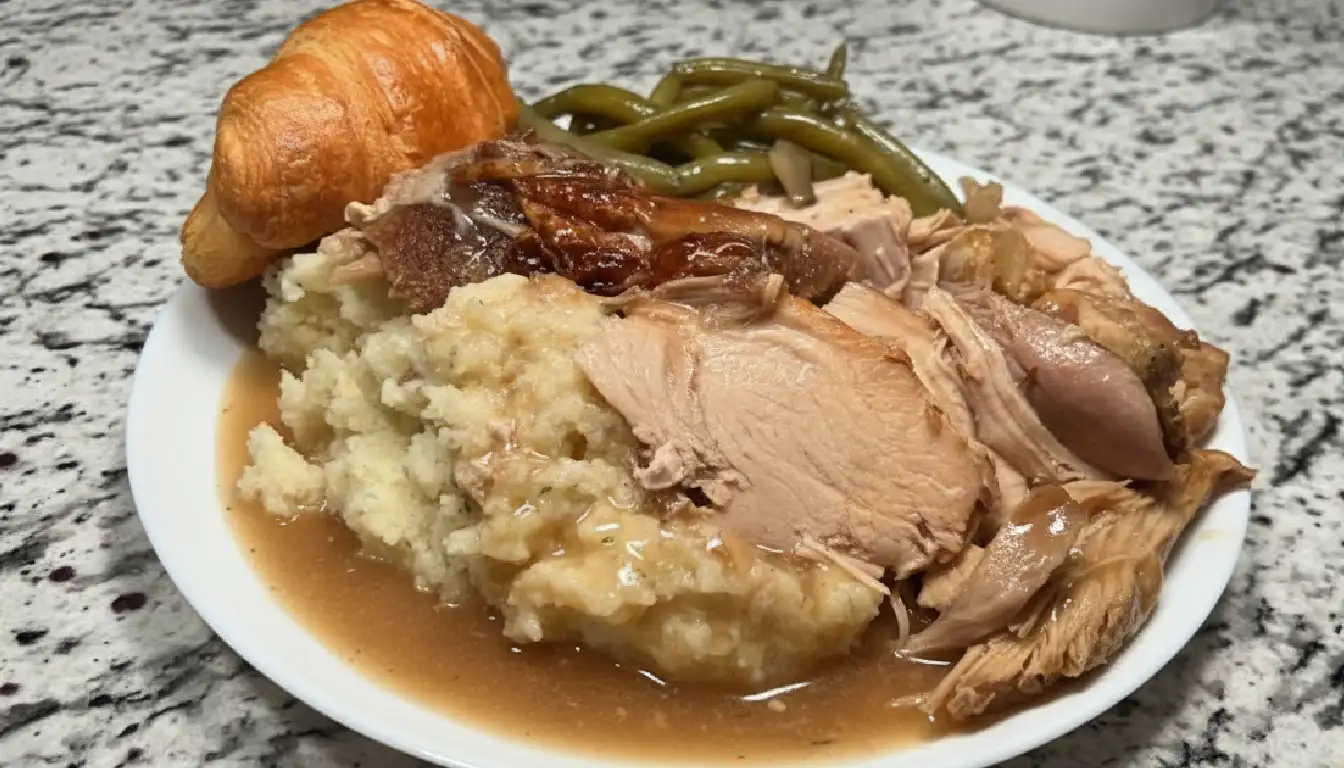
The Ultimate Homemade Turkey and Gravy Recipe: Tender, Juicy, and Foolproof
There is a specific kind of magic that happens when the scent of roasting turkey starts to drift through the hallways. It is the aroma of home, the herald of a gathered family, and the promise of a meal that feels like a warm hug. For many, the turkey is the intimidating center of a holiday table, but it doesn’t have to be. I remember the first time I took charge of the bird; I was terrified of serving something dry or flavorless. But as the butter melted into the skin and the herbs filled the kitchen with an earthy, savory perfume, I realized that great turkey and gravy are about patience and simple, quality ingredients. This recipe is the result of years of refining that process to ensure the meat stays succulent and the gravy turns out velvety every single time.
Why You’ll Love This
The slow-roasting method guarantees a tender, juicy result that puts an end to the “dry turkey” stereotype.
It creates a built-in base for the most flavorful, rich gravy you have ever tasted, using every bit of those precious pan drippings.
The herb-infused butter rub adds layers of aromatic depth and creates a stunning, golden-brown skin that looks like a masterpiece on the platter.
It is a reliable, stress-free formula that allows you to spend less time worrying in the kitchen and more time making memories with your guests.
A Win for the Skeptics
One year, I hosted a friend who had spent his entire life claiming he “wasn’t a turkey person.” He usually filled his plate with sides and left the poultry untouched, insisting it was always too bland or chewy. I didn’t say a word; I just handed him a slice of this herb-roasted turkey draped in a generous spoonful of the silky gravy. After one bite, his eyes widened. He didn’t just finish his serving; he went back for seconds, specifically asking for more of that “liquid gold” gravy. Seeing a self-proclaimed skeptic become a turkey enthusiast is the ultimate testament to how a few right techniques can change everything.
What Makes It Special
Fresh Aromatics: Using a bundle of fresh rosemary, sage, and thyme provides a bright, garden-fresh scent that dried herbs simply cannot match.
The Butter Blanket: Rubbing a compound butter both over and under the skin ensures the breast meat stays moist while the exterior reaches a perfect, crispy finish.
Pan Deglazing: Instead of using just broth, we use the browned bits (the fond) at the bottom of the roasting pan to build a gravy with incredible complexity.
Proper Resting: Allowing the turkey to rest before carving is the secret step that locks in all the savory juices.
Making It Happen
The process begins long before the oven is even turned on. You start by ensuring the turkey is completely thawed and patted dry with paper towels; moisture is the enemy of crispy skin. Once dry, you’ll prepare a lush mixture of softened butter, minced garlic, and chopped herbs. This buttery rub is tucked carefully under the skin of the breast and smoothed over the entire exterior, seasoned generously with salt and cracked black pepper.
As the turkey roasts, the kitchen transforms. You’ll want to baste it occasionally, watching as the skin turns from pale to a deep, honeyed golden-brown. While the bird rests on a carving board, the focus shifts to the roasting pan. You’ll whisk flour into the shimmering drippings, creating a savory roux that smells like toasted hazelnuts. Gradually pouring in high-quality stock while whisking constantly, you will see the liquid transform into a thick, glossy gravy that captures the very essence of the roast. By the time you are ready to carve, the meat is rested and the gravy is steaming, ready to be poured over thick, tender slices.
You Must Know
Invest in a meat thermometer; pulling the turkey out exactly when the thickest part of the thigh reaches 165°F is the only way to guarantee juiciness.
Don’t skip the resting period. Giving the bird at least 30 to 45 minutes to sit allows the fibers to relax and reabsorb the juices.
If your gravy feels too thin, let it simmer a few minutes longer. If it’s too thick, a small splash of broth will bring it back to a pourable, velvety consistency.
Serving Ideas
This dish belongs alongside a mountain of buttery mashed potatoes or a rustic sourdough stuffing that can soak up every drop of the gravy. For a vegetable pairing, roasted Brussels sprouts with a hint of balsamic or honey-glazed carrots offer a lovely sweetness to balance the savory meat. If you are looking for a drink pairing, a crisp Chardonnay or a dry sparkling cider cuts through the richness of the butter and gravy beautifully.
Make It Different
Citrus Twist: Add orange or lemon zest to the herb butter for a bright, citrusy lift that lightens the overall flavor profile.
Gluten-Free: Swap the all-purpose flour in the gravy for a gluten-free flour blend or use a cornstarch slurry for a similar thickening effect.
Smoky Flavor: Add a teaspoon of smoked paprika to the butter rub if you prefer a deeper, slightly smoky undertone to your turkey skin.
Storage and Reheating
Leftover turkey is a gift. Store the meat and gravy in separate airtight containers in the refrigerator for up to four days. To reheat without drying it out, place the turkey slices in a baking dish with a few spoonfuls of gravy or broth, cover tightly with foil, and warm in a 325°F oven until just heated through. The gravy can be reheated on the stovetop over low heat; you may need to add a splash of water or stock to loosen it up as it warms.
Success Tips
For the absolute best results, try dry-brining your turkey the night before by rubbing it with salt and letting it sit uncovered in the fridge. This seasons the meat deeply and helps the skin get even crispier. Also, if you find the breast is browning too quickly during roasting, simply tent it loosely with a piece of aluminum foil to protect it while the legs finish cooking.
Frequently Asked Questions
How much turkey do I need per person?
A good rule of thumb is about 1 to 1.5 pounds of turkey per person. This accounts for the weight of the bones and ensures you have enough for those coveted leftovers.
Should I wash the turkey before cooking?
No, food safety experts recommend against washing poultry. Patting it dry with paper towels is sufficient and prevents the spread of bacteria in your kitchen.
My gravy is lumpy, how do I fix it?
Don’t panic! Simply pour the gravy through a fine-mesh strainer into a clean pot, or give it a quick whirl with an immersion blender to smooth it out.
Can I make the gravy ahead of time?
You can make a base gravy ahead using turkey wings or necks, but the best flavor comes from the drippings of the actual bird you are roasting. I recommend finishing it while the turkey rests.
What if I don’t have a roasting rack?
You can create a natural rack by lining the bottom of your pan with thick slices of onion, celery, and carrots. This keeps the turkey elevated and adds even more flavor to your drippings.
Recipe Card
Prep time: 45 minutes
Cook time: 3 hours (variable based on weight)
Total time: 3 hours 45 minutes
Servings: 10–12 people
Category: Main Course
Difficulty: Intermediate
Cuisine: American
Yield: 1 Roasted Turkey and 3 cups of Gravy
Equipment
Large roasting pan
Roasting rack
Meat thermometer
Fine-mesh whisk
Kitchen twine
Fat separator (optional)
Ingredients
12–14 lb whole turkey, completely thawed
1/2 cup unsalted butter, softened
3 tablespoons fresh herbs (sage, rosemary, thyme), finely chopped
4 cloves garlic, minced
2 teaspoons kosher salt
1 teaspoon freshly cracked black pepper
1 large onion, quartered
1 lemon, halved
1 head of garlic, halved crosswise
4 cups high-quality turkey or chicken stock
1/4 cup all-purpose flour
Salt and pepper to taste for gravy
Instructions
Remove the turkey from the refrigerator about an hour before roasting to take the chill off. Remove the giblets and neck.
Pat the turkey extremely dry inside and out. In a small bowl, mix the softened butter with the chopped herbs, minced garlic, salt, and pepper.
Carefully loosen the skin over the breast meat and spread about half of the butter mixture directly onto the meat. Rub the remaining butter over the entire outside of the skin.
Stuff the cavity with the onion, lemon, and halved garlic head. Tie the legs together with kitchen twine and tuck the wing tips under the body.
Place the turkey on a rack in the roasting pan. Pour 1 cup of stock into the bottom of the pan.
Roast at 325°F. Baste every 45 minutes with the pan juices. If the skin gets too dark, cover the breast loosely with foil.
Cook until the internal temperature reaches 165°F in the thickest part of the thigh. Remove from the oven and transfer the turkey to a carving board, letting it rest for at least 30 minutes.
To make the gravy, strain the pan drippings into a fat separator. Reserve 1/4 cup of the fat and all the dark juices (discard the rest of the fat).
Place the roasting pan (or a saucepan) over medium heat. Add the reserved turkey fat and whisk in the flour. Cook for 2 minutes until bubbly and golden.
Slowly whisk in the remaining 3 cups of stock and the reserved pan juices. Simmer until thickened and smooth. Season with salt and pepper.
Carve the turkey and serve warm with the hot gravy.
Notes
If using a frozen turkey, allow at least 3 days in the refrigerator for it to thaw completely.
For extra-crispy skin, leave the turkey uncovered in the fridge the night before you cook it.
Nutrition
Serving: 6oz turkey with 1/4 cup gravy
Calories: 420 kcal
Protein: 48g
Fat: 22g
Carbohydrates: 4g
