
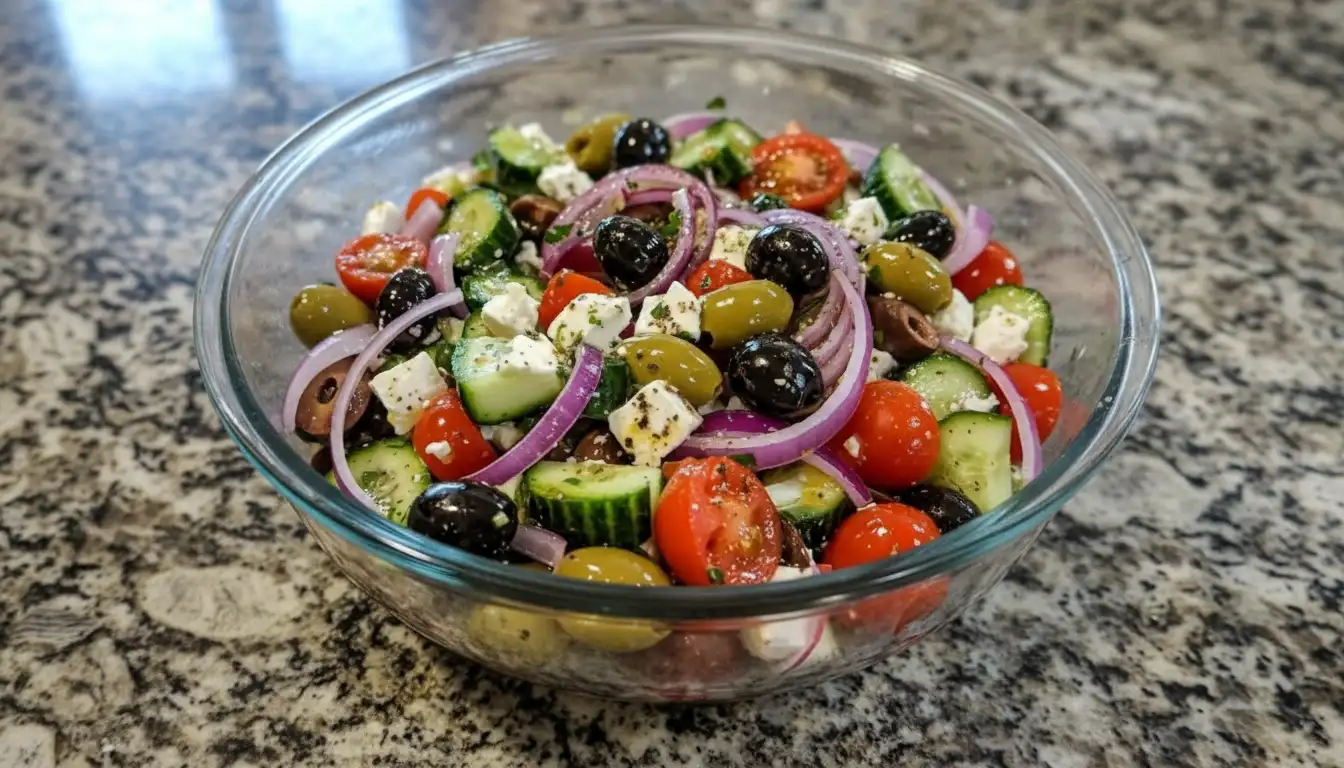
Classic Greek Salad Recipe: The Ultimate Mediterranean Summer Salad
There is a specific kind of magic that happens when the sun is high and the air is thick with the scent of sea salt and blooming jasmine. It takes me back to a small, whitewashed taverna on the edge of a rocky cliff in Santorini. There was no fancy menu, just a wooden table and a bowl of the most vibrant, sun-ripened vegetables I had ever seen. The cucumber was so crisp it practically snapped, and the feta was a creamy, salty revelation. That afternoon, I realized that a true Classic Greek Salad Recipe isn’t just a side dish; it is a celebration of simple, high-quality ingredients handled with respect. This version is my attempt to bottle that Mediterranean sunshine and bring it to your kitchen.
Why You’ll Love This
| Benefit | Why It Matters |
|---|---|
| No-Cook Simplicity | You can have a gourmet-level meal on the table in fifteen minutes without ever turning on the stove. |
| Textural Contrast | The combination of juicy tomatoes, crunchy peppers, and velvet-smooth feta creates a satisfying mouthfeel. |
| Transportive Flavor | One bite of the briny olives and aromatic oregano immediately whisks your senses away to a Greek island. |
| Health-Focused | It is naturally packed with antioxidants, healthy fats from the olive oil, and hydrating vegetables. |
The Skeptic at the Table
I once served this salad to my youngest nephew, a boy whose diet consisted almost exclusively of beige foods and a deep-seated suspicion of anything green. He looked at the bowl with narrow eyes, particularly wary of the blocks of feta. I told him it was “salty cloud cheese” and suggested he try it with a piece of the warm pita bread we had on the side. To everyone’s shock, he didn’t just try it; he started hunting for the olives and cucumbers like they were hidden treasure. By the end of lunch, the platter was wiped clean with a piece of crusty bread, proving that when ingredients are this fresh, even the pickiest eaters can’t resist.
What Makes It Special
| Ingredient | The Value It Adds |
|---|---|
| English Cucumber | Thinner skin and fewer seeds mean every slice stays incredibly crispy and never soggy. |
| Feta in Brine | Buying feta in its liquid keeps it creamy and tangy, providing a much richer experience than pre-crumbled varieties. |
| Extra-Virgin Olive Oil | This is the golden soul of the dish; it carries the flavors of the herbs and coats the vegetables in a buttery finish. |
| Fresh Mint Leaves | A non-traditional but essential addition that provides a cooling, aromatic lift to the heavier, briny notes. |
| Kalamata Olives | Their deep purple hue and meaty texture offer a complex, salty punch that defines the Mediterranean profile. |
Making It Happen
The beauty of this process lies in its lack of fuss. You start by building the foundation of flavor in a small, glass bowl. Whisk together the golden olive oil with the sharp red wine vinegar, letting the minced garlic and dried oregano mingle. Adding a touch of Dijon mustard acts as a bridge, helping the oil and vinegar emulsify into a silky, cohesive dressing.
Once your dressing is ready, turn your attention to the vegetables. Instead of tossing everything into a deep bowl where the heavy ingredients sink to the bottom, use a wide, shallow platter. Lay down the rounds of cool cucumber and the chunks of vibrant green bell pepper. Scatter the halved cherry tomatoes and the translucent slivers of red onion like jewels across the plate. Nestling the cubes of feta and the dark, glossy olives among the vegetables ensures that every guest gets a bit of everything. Drizzle the dressing over the top with a slow, steady hand, then use your fingers or a pair of large spoons to gently turn the vegetables just enough to coat them. A final dusting of oregano and a handful of torn mint leaves completes the masterpiece.
You Must Know
| Strategy | Success Outcome |
|---|---|
| Seed the Cucumber | Removing the watery center ensures the salad stays crisp and the dressing doesn’t get diluted. |
| Room Temperature Feta | Take the cheese out of the fridge ten minutes before serving so it reaches its maximum creaminess. |
| Hand-Crushed Oregano | Rub the dried herbs between your palms before sprinkling to wake up the dormant aromatic oils. |
| Quality Vinegar | Use a high-quality red wine vinegar for a bright acidity that cuts through the richness of the oil. |
Serving Ideas
This salad is a versatile companion. It pairs beautifully with grilled lemon-herb chicken or a piece of flaky, roasted sea bass. For a vegetarian feast, serve it alongside warm, toasted pita points and a generous dollop of creamy hummus.
When it comes to drinks, a crisp, chilled glass of Assyrtiko or a light Sauvignon Blanc complements the acidity of the tomatoes and the saltiness of the feta perfectly. If you prefer something non-alcoholic, a sparkling water with a squeeze of fresh lemon and a sprig of mint mirrors the salad’s refreshing profile.
Make It Different
If you want to turn this into a heartier main course, tossing in a cup of cooked chickpeas or some grilled shrimp adds a wonderful protein boost. For those who prefer a milder onion flavor, you can soak the red onion slices in ice water for ten minutes before adding them to the salad; this removes the “bite” while keeping the crunch. If you are avoiding dairy, a handful of toasted pine nuts or a dollop of almond-based ricotta can provide a similar creamy contrast to the crisp vegetables.
Storage and Recipe Tips
A Classic Greek Salad Recipe is best enjoyed immediately after assembly when the vegetables are at their peak crunch. However, if you have leftovers, they will keep in an airtight container in the refrigerator for up to twenty-four hours. Be aware that the salt will draw moisture out of the tomatoes and cucumbers over time, so the salad will be “juicier” the next day. This leftover liquid is actually delicious when soaked up with a piece of bread. Do not attempt to freeze or reheat this dish, as the fresh textures will be lost.
Success Tips
The most important advice for a stellar result is to avoid over-mixing. You want the feta to remain in distinct cubes rather than breaking down and clouding the dressing. Also, pay attention to the seasons; while cherry tomatoes are generally reliable year-round, this salad truly shines in the height of summer when tomatoes are heavy with sugar and sun. Finally, don’t be shy with the black pepper—a few extra grinds at the end provide a woody heat that balances the cool mint and tangy vinegar.
Frequently Asked Questions
| Question | Answer |
|---|---|
| Can I use dried mint instead of fresh? | While fresh is preferred for its cooling brightness, you can use a smaller amount of dried mint if necessary. |
| Is it okay to use pre-crumbled feta? | You can, but it tends to be drier. Feta sold in a block of brine offers a far superior, creamy texture. |
| Why is there no lettuce in this recipe? | An authentic Greek salad, or Horiatiki, traditionally does not include leafy greens like lettuce. |
| Can I make the dressing in advance? | Yes, the dressing can be made up to three days early and stored in the fridge. Just shake it well before using. |
| What is the best substitute for Kalamata olives? | Any brined, dark olive like Niçoise or Gaeta will work, though the flavor profile will shift slightly. |
Recipe Details
| Category | Information |
|---|---|
| Prep Time | 15 Minutes |
| Cook Time | 0 Minutes |
| Total Time | 15 Minutes |
| Servings | 4 People |
| Category | Salad / Side Dish |
| Difficulty | Easy |
| Cuisine | Greek / Mediterranean |
| Yield | 1 Large Platter |
| Equipment | Small Whisk, Large Platter, Chef’s Knife |
Ingredients
For the Dressing
- ¼ cup extra-virgin olive oil
- 3 tablespoons red wine vinegar
- 1 garlic clove, minced
- ½ teaspoon dried oregano, more for sprinkling
- ¼ teaspoon Dijon mustard
- ¼ teaspoon sea salt
- Freshly ground black pepper
For the Salad
- 1 English cucumber, cut lengthwise, seeded, and sliced ¼-inch thick
- 1 green bell pepper, chopped into 1-inch pieces
- 2 cups halved cherry tomatoes
- 5 ounces feta cheese, cut into ½ inch cubes (feta in brine is best)
- ⅓ cup thinly sliced red onion
- ⅓ cup pitted Kalamata olives
- ⅓ cup fresh mint leaves
Instructions
Prepare the Dressing
In a small bowl, whisk together the olive oil, red wine vinegar, minced garlic, dried oregano, Dijon mustard, and sea salt. Add several generous grinds of black pepper and whisk until the mixture is slightly thickened and well combined.
Assemble the Salad
On a large, shallow platter, arrange the prepared cucumber slices, green pepper pieces, and halved cherry tomatoes. Evenly distribute the feta cheese cubes, red onion slices, and Kalamata olives over the vegetables.
Dress and Finish
Drizzle the prepared dressing over the entire platter. Very gently toss the ingredients to ensure everything is lightly coated without breaking the feta. Sprinkle with a few extra pinches of dried oregano and top with the fresh mint leaves. Season with additional salt or pepper to taste and serve immediately.
Notes
Using feta stored in brine is the secret to a professional-tasting salad. The brine keeps the cheese moist and adds an extra layer of seasoned tanginess that dry-packed feta lacks.
Nutrition (Estimated)
| Nutrient | Amount Per Serving |
|---|---|
| Calories | 210 kcal |
| Healthy Fats | 18g |
| Carbohydrates | 9g |
| Protein | 5g |
I hope this salad brings a bit of Mediterranean joy to your next meal. Do you usually serve your Greek salad as a side, or do you like to add a protein to make it the star of the show?
