
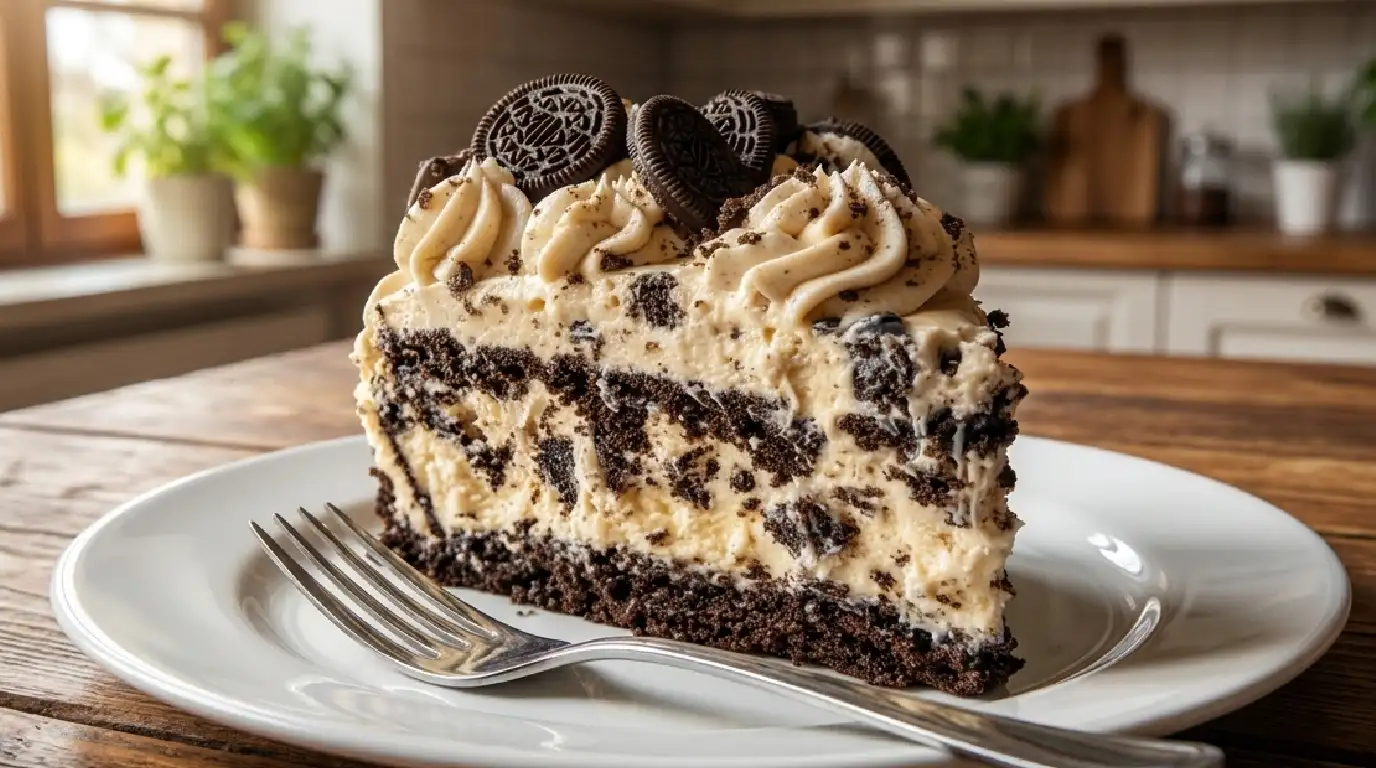
Oreo Cheesecake: The No-Fail Recipe for Creamy, Cookie-Filled Perfection
Introduction
There’s something almost magical about biting into a slice of cheesecake that’s equal parts silky cream cheese and chocolate cookie goodness. This Oreo cheesecake sits at that perfect intersection where cookie-lovers and cheesecake devotees finally agree on something. The recipe isn’t complicated—it’s actually forgiving—but the results taste like you’ve been perfecting it for years. What makes this version work is the balance: a butter-soaked cookie crust that holds everything together, a thick, velvety cream cheese filling that stays smooth (no cracks), and crushed Oreos distributed throughout that burst with chocolate flavor on every single bite. If you’ve ever worried about making cheesecake at home, this is the one that changes that.
Why You’ll Love This
- No cracking, no stress. This filling stays creamy and smooth from oven to table because of how we treat it during baking—no water bath required, no complicated tricks.
- Oreo flavor runs deep. We’re not just sprinkling cookies on top. They’re crushed into the filling, pressed into the crust, and you can scatter more on top for that Instagram-worthy contrast.
- Actually tastes homemade. There’s nothing artificial about it. Real cream cheese, butter, sugar, eggs, and those beloved chocolate cookies do all the heavy lifting.
- Holds up for days. Unlike some desserts that go downhill after a few hours, this one tastes better the next day when the flavors have time to settle and meld.
- Easier than you think. Seriously. If you can mix ingredients and use an oven, you can do this.
The Backstory
My sister-in-law showed up to Thanksgiving convinced she didn’t like cheesecake. She’d had too many dense, grainy, overly sweet versions at diners. She was polite about it, but you could tell when dessert came around, she was bracing herself. I’d made this Oreo version that year, and when she took that first bite, something shifted. She went quiet—not the awkward kind, but the kind where you’re genuinely experiencing something. She ended up eating a second slice before the night was over and now asks specifically for it at every gathering. That’s when you know a recipe is doing something right.
What Makes It Special
- Cream cheese base. Full-fat cream cheese is non-negotiable here. Room temperature matters because it blends smooth without lumps. No shortcuts.
- Brown sugar, not just white. It adds a subtle molasses depth that plain sugar can’t touch, and it keeps the filling from tasting one-dimensional.
- Crushed Oreos throughout. We’re using them in the crust, folded into the filling, and scattered on top. Every layer gets that chocolate-cookie presence.
- Egg yolks matter. They keep the filling rich and tender. This isn’t a baked custard—it’s a creamy, dense filling that sets gently.
- Butter crust. Toast the crumbs in melted butter first. It builds flavor instead of just holding things together.
Making It Happen
Start by preheating your oven to 325 degrees. You want the environment warm but not aggressive—too high and the top browns before the center sets. While that warms up, grab about 20 Oreos and crush them until you’ve got a mix of fine crumbs and thumbnail-sized chunks. Don’t go too fine; you want some texture. Melt 5 tablespoons of butter in a bowl, add those crumbs, and stir until the whole mixture is the color of wet sand. Press this firmly into the bottom of a 9-inch springform pan. Get it even, especially into the corners. Pop this into the oven for about 8 minutes just to set it, then set it aside.
For the filling, take 32 ounces of cream cheese—that’s four 8-ounce packages—and let it sit on the counter until it’s actually soft. This isn’t optional. Cold cream cheese wins no battles. Beat it with a hand mixer for about 2 minutes until it’s smooth and creamy. Add 1 cup of brown sugar and a pinch of salt. Beat again for another minute. Crack in four eggs, one at a time, beating briefly after each addition. Don’t overmix once the eggs are in; you’re just combining, not whipping air in. Stir in 2 teaspoons of vanilla extract. Now take 12 Oreos, crush them into chunky pieces, and fold them gently into the filling with a rubber spatula.
Pour this into your crust, smooth the top, and bake at 325 degrees for 55 to 65 minutes. You’re looking for the edges to be set and slightly puffed, but the center should have just a tiny bit of jiggle when you gently shake the pan. It’ll look slightly underbaked, and that’s exactly right. Take it out, let it cool in the oven for 30 minutes with the door cracked open. Then cool it completely at room temperature, and finally refrigerate it for at least 6 hours, ideally overnight.
You Must Know
- Room temperature cream cheese is everything. Pull it out of the fridge 30 minutes before you start. Cold cream cheese won’t blend properly and you’ll end up with lumps. No fun.
- Don’t skip the cooling-in-the-oven step. That gradual temperature change prevents the dramatic cracking that happens when cheesecake goes from hot to cold too fast.
- Don’t open the oven while it’s baking. Seriously. That temperature drop can throw everything off. Trust the timing.
- A slight jiggle in the center is your cue to stop. An inch or so of wobble in the middle is perfect. It’ll continue to set as it cools. Overbaking leads to a drier texture.
- Chill it overnight if you can. Cheesecake is patient. The flavors will be rounder and more integrated, and slicing will be cleaner.
Serving Ideas & Pairings
Serve slices with a simple dusting of crushed Oreos on top or a drizzle of warm chocolate sauce. A cup of strong black coffee cuts through the richness beautifully. If you want to go sweeter, cold milk or a glass of cold cream works too. Fresh berries on the side add brightness without competing with the chocolate-cookie theme.
Make It Different
For a less sweet version, swap half the brown sugar for a neutral sugar and reduce the total sugar by an ounce or two. You’ll still get plenty of sweetness from the cookies.
For a chocolate lover’s version, add 2 tablespoons of cocoa powder to the filling and reduce the sugar slightly to balance the bitterness.
For a chewy cookie crust, mix the crumb mixture with a beaten egg white before pressing it in. It’ll hold together better and be less sandy.
For a mocha twist, replace the vanilla extract with 1 teaspoon of instant espresso dissolved in a tablespoon of warm water. The coffee won’t be obvious, just deepening everything.
For a dairy-free adaptation, use a high-quality dairy-free cream cheese alternative and make sure your Oreos are the dairy-free version. The result won’t be identical, but it works.
Storage & Reheating
Keep this cheesecake covered in the refrigerator for up to 5 days. The crust stays stable and the filling keeps its texture beautifully. You can freeze it for up to 2 months. Wrap the whole thing tightly in plastic wrap and then foil, or slice it first and freeze the slices in an airtight container with parchment between each slice.
Frozen cheesecake thaws best overnight in the refrigerator. Don’t leave it on the counter where condensation can make the crust soggy. If you’re in a hurry, slices thaw at room temperature in about 30 minutes. Cheesecake doesn’t need reheating—it’s better served cold or at cool room temperature.
Success Tips
The texture of the filling depends partly on how much air gets beaten into the cream cheese. Mix it until smooth, but don’t go overboard. Similarly, when folding in the crushed Oreos, use a gentle hand. You want them distributed, not broken into dust.
If you notice any cracks appearing, don’t panic for the next time. Cracks usually mean the filling dried out during baking or cooled too fast. This recipe’s method minimizes that, but if you see one, a topping like chocolate sauce or whipped cream covers it gracefully.
The springform pan is worth using. It makes release so much cleaner. If you don’t have one, a regular 9-inch cake pan works, but you’ll need to run a thin knife around the edges after cooling to loosen it before inverting onto a serving plate.
Frequently Asked Questions
Q: Can I make this without a springform pan? A: Yes, but it’s trickier. Use parchment paper to line a regular cake pan with overhang on the sides. After chilling, you can lift it out using the parchment. Slicing is easier, but plating takes more care.
Q: What if my cream cheese is still cold when I start mixing? A: Your filling will be lumpy and grainy. If this happens, keep beating it gently and let it sit out for a few more minutes. You might not achieve perfect smoothness, but keep going and it’ll improve.
Q: Can I use store-bought Oreo filling instead of whole cookies? A: You can, but whole cookies add texture. If you use just the filling, you lose that pleasant little bursts of cookie crumb. Not recommended.
Q: How do I get clean slices? A: A thin, sharp knife dipped in hot water and wiped clean between cuts works beautifully. Cold cheesecake cuts cleaner than room-temperature cheesecake, so make sure it’s refrigerated.
Q: Can I reduce the sugar? A: Yes, by about 1 to 2 ounces without throwing off the structure. The Oreos provide plenty of sweetness. Less sugar means a tangier, less sweet result, which some people prefer.
Recipe Card Info
Prep Time: 20 minutes
Cook Time: 60 minutes
Total Time: 6 hours 20 minutes (including chill time)
Servings: 12
Category: Dessert
Difficulty: Easy
Cuisine: American
Yield: One 9-inch cheesecake
Equipment: 9-inch springform pan, hand mixer, rubber spatula, measuring cups and spoons, mixing bowls
Ingredients
4 packages (32 ounces) cream cheese, room temperature
1 cup brown sugar, packed
4 large eggs, room temperature
2 teaspoons vanilla extract
1 pinch of salt
20 whole Oreo cookies, divided
5 tablespoons unsalted butter
12 whole Oreo cookies, crushed for filling
Directions
Step 1: Prepare the crust. Preheat your oven to 325 degrees. Crush 20 Oreos into a mix of fine crumbs and chunks. Melt 5 tablespoons of butter, mix with the crumbs, and press firmly into the bottom of a 9-inch springform pan. Bake for 8 minutes and set aside.
Step 2: Beat the cream cheese. In a large bowl, beat the room-temperature cream cheese with a hand mixer for 2 minutes until smooth and creamy, scraping the sides as needed.
Step 3: Add sugar and salt. Add 1 cup of brown sugar and a pinch of salt. Beat for another minute until well combined.
Step 4: Incorporate eggs. Add eggs one at a time, beating briefly after each addition. Do not overmix once eggs are added.
Step 5: Add vanilla and Oreos. Stir in 2 teaspoons of vanilla extract. Fold in 12 crushed Oreos gently with a rubber spatula until just combined.
Step 6: Bake the cheesecake. Pour the filling into the prepared crust and smooth the top. Bake at 325 degrees for 55 to 65 minutes. The edges should be set and slightly puffed; the center should have a slight jiggle.
Step 7: Cool gradually. Turn off the oven and crack the door open. Leave the cheesecake inside for 30 minutes. Then remove it and cool to room temperature on the counter, about 1 hour.
Step 8: Chill overnight. Cover the cheesecake and refrigerate for at least 6 hours, ideally overnight.
Step 9: Slice and serve. Use a thin, sharp knife dipped in hot water and wiped clean between cuts for neat slices.
Notes
Room-temperature cream cheese is essential for a smooth filling without lumps. Cold cream cheese will result in a grainy texture no matter how much you mix it.
Do not skip the cooling-in-the-oven step. This gradual cooling prevents cracks from forming.
Store the cheesecake covered in the refrigerator for up to 5 days or frozen for up to 2 months.
A slight jiggle in the center of the cheesecake when you gently shake the pan indicates it’s done. It will continue to set as it cools.
Nutrition
Per serving (1 slice of 12):
Calories: 520
Total Fat: 38g
Saturated Fat: 22g
Cholesterol: 135mg
Sodium: 380mg
Total Carbohydrates: 42g
Dietary Fiber: 0g
Sugars: 36g
Protein: 9g
