
Meyer Lemon Upside Down Cake: A Delightful Dessert You Can’t Resist
There is a specific kind of magic that happens in the kitchen when the afternoon sun hits a bowl of Meyer lemons. These aren’t your standard grocery store lemons; they are deeper in color, almost leaning toward a soft orange, with a floral fragrance that fills a room before you even slice into them. I first made this Meyer lemon upside down cake on a particularly gray Tuesday when I needed a reminder that spring was coming.
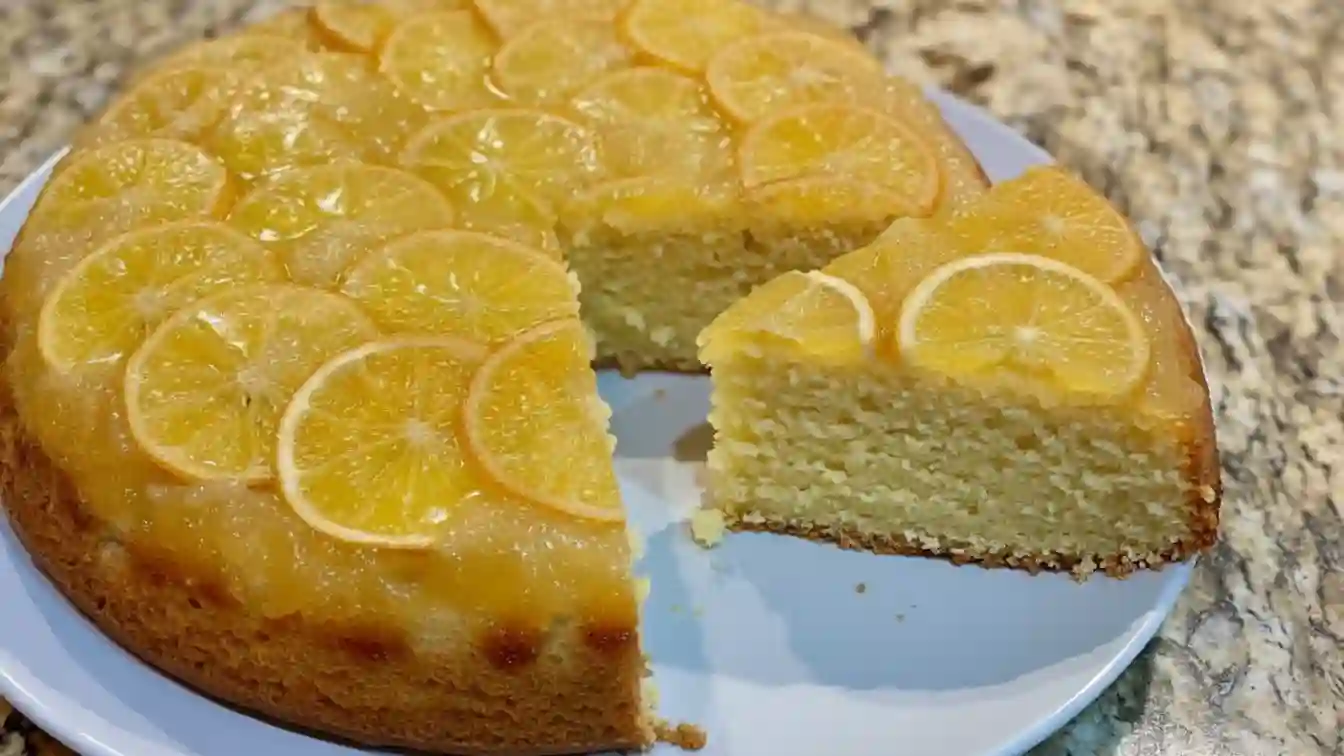
As the cake bakes, the kitchen transforms. The scent of browning butter and caramelizing citrus zest begins to drift from the oven, promising something far more sophisticated than a standard sponge. When you finally flip the pan, you are rewarded with a shimmering, stained-glass mosaic of citrus wheels nestled in a golden, buttery syrup. It is a bright, cheerful dessert that tastes exactly like a sunny day feels.
Why You’ll Love This
The Perfect Balance: Unlike traditional lemon cakes that can be overly sharp, Meyer lemons offer a mellow, floral sweetness that balances the rich caramel topping.
A Textural Dream: The buttermilk ensures a tender, moist crumb that holds up beautifully against the jammy, candied lemon slices.
Warm Spice Profile: A subtle trio of nutmeg, ginger, and cardamom adds an unexpected depth that makes this feel like a cozy, artisan bakery find.
No-Fuss Elegance: It looks like a masterpiece from a professional pastry chef, yet the “decoration” happens naturally at the bottom of the pan while it bakes.
The Skeptic’s Favorite Slice
I have a close friend who famously avoids fruit-based desserts. He’s a “chocolate or nothing” person who usually politely declines a slice of anything involving citrus. However, when I pulled this cake out of the oven, the caramelized brown sugar crust was too much for him to resist. He tried a small corner, then promptly asked for a full slice, and then another. He later confessed it was the first lemon dessert he actually enjoyed because the spices and the buttery topping tempered the acidity, turning the lemons into something closer to a marmalade treat.
What Makes It Special
Meyer Lemons: Their thin skins and high sugar content mean the entire slice—rind and all—becomes tender and edible after baking.
Fragrant Citrus Sugar: Rubbing the zest into the granulated sugar releases essential oils, ensuring every bite of the cake is infused with lemon.
The Spice Blend: The combination of ginger and cardamom provides a sophisticated backbone that elevates the fruit.
Buttermilk: This is the secret to a soft, velvety texture that stays moist for days.
Making It Happen
The process begins right in the cake pan. You’ll let the oven melt the butter directly in the pan, creating a pool of liquid gold that you’ll then coat with a layer of rich brown sugar. This becomes the foundation for your lemon slices. When arranging the fruit, I like to overlap them slightly in a concentric circle; this ensures that every single bite of the finished cake has a bit of that jammy citrus.
While the lemons are getting ready, you’ll whisk together your dry ingredients, making sure the spices are evenly distributed. In a separate bowl, there is a tactile step I never skip: rubbing the lemon zest into the sugar with your fingertips. It feels like a small thing, but the way the sugar turns damp and fragrant is the key to a truly flavorful cake.
After creaming the butter and citrus sugar until light and fluffy, you’ll alternate adding the dry ingredients and the buttermilk. This method prevents the batter from breaking and keeps the crumb light. Once the batter is smooth, you’ll spread it gently over your lemon “mosaic,” careful not to disturb the pattern below. As it bakes, the cake rises around the lemons, and the brown sugar bubbles up to candy the fruit.
You Must Know
The 10-Minute Rule: You must invert the cake after exactly 10 minutes of cooling. If you wait too long, the caramel will set and the lemons will stick to the pan. If you do it too soon, the cake may be too fragile and break.
Slice Thinly: Aim for 1/4-inch slices or even slightly thinner. This ensures the rind softens completely and becomes part of the cake’s texture.
Room Temperature Ingredients: Ensure your eggs, butter, and buttermilk are at room temperature to achieve a perfectly smooth, emulsified batter.
Serving Ideas
This cake is spectacular when served slightly warm, perhaps with a dollop of lightly sweetened whipped cream or a scoop of high-quality vanilla bean ice cream to balance the citrus.
For a drink pairing, a crisp glass of Prosecco or a hot cup of Earl Grey tea complements the floral notes of the Meyer lemons beautifully. If you’re serving this for brunch, a cold-brew coffee with a splash of cream provides a lovely bitter contrast to the sweet, caramelized topping.
Make It Different
The Citrus Swap: If you can’t find Meyer lemons, you can use regular Eureka lemons, but slice them even thinner. Alternatively, blood oranges or cara cara oranges make for a stunning visual variation.
Gluten-Free Option: A high-quality 1:1 gluten-free flour blend works well here, as the moisture from the buttermilk helps maintain the structure.
Spice Adjustment: If you prefer a brighter profile, omit the nutmeg and cardamom and double the amount of lemon zest.
Storage and Reheating
This cake keeps remarkably well thanks to the moist buttermilk base. Store any leftovers in an airtight container at room temperature for up to two days, or in the refrigerator for up to five days. To recapture that fresh-out-of-the-oven feel, warm individual slices in the microwave for 10–15 seconds or in a low oven until the caramel topping begins to soften again.
Success Tips
To ensure a clean release every time, don’t forget to brush the melted butter all the way up the sides of the cake pan before adding the sugar. Also, use a heavy-bottomed cake pan if possible; this helps the heat distribute evenly so the brown sugar caramelizes without burning in spots. Finally, if you notice the top of the cake browning too quickly in the oven, simply tent it loosely with a piece of aluminum foil for the final 10 minutes of baking.
Frequently Asked Questions
Can I use bottled lemon juice instead of fresh?
For this recipe, fresh is essential. You need the whole fruit for the topping and the fresh zest for the batter. Bottled juice lacks the floral oils and the physical structure required for the upside-down effect.
What if I don’t have buttermilk?
You can make a quick substitute by adding one tablespoon of lemon juice or white vinegar to 3/4 cup of whole milk. Let it sit for five minutes before using.
Do I need to peel the lemons?
No! That is the beauty of Meyer lemons. The skin is very thin and sweetens significantly as it bakes in the butter and sugar.
Can I bake this in a springform pan?
I recommend a solid 9-inch round cake pan. Springform pans can sometimes leak the precious caramel syrup out of the bottom, which creates a mess in your oven and leaves the cake dry.
My cake stuck to the pan, what happened?
This usually happens if the cake cooled for too long. If it sticks, place the bottom of the pan over a low stovetop burner for 30 seconds to re-melt the sugar, then try flipping it again.
Meyer Lemon Upside Down Cake
Prep time: 20 minutes
Cook time: 45 minutes
Total time: 1 hour 5 minutes
Servings: 8–10
Category: Dessert
Difficulty: Medium
Cuisine: American
Yield: One 9-inch cake
Equipment
9-inch round cake pan
Stand mixer or hand mixer
Medium mixing bowl
Offset spatula
Pastry brush
Ingredients
For the Topping:
1/4 cup (57 grams) unsalted butter
3/4 cup (150 grams) packed light brown sugar
3 Meyer lemons sliced 1/4-inch thick (seeds removed)
For the Cake:
1 1/2 cups (195 grams) all-purpose flour
1 1/2 teaspoons baking powder
1/4 teaspoon baking soda
1/2 teaspoon kosher salt
1/4 teaspoon ground nutmeg
1/2 teaspoon ground ginger
1/4 teaspoon ground cardamom
1 cup (200 grams) granulated sugar
2 teaspoons lemon zest (from about 2 lemons)
1/2 cup (114 grams) unsalted butter, room temperature
2 teaspoons vanilla extract
2 large eggs, room temperature
3/4 cup buttermilk
Instructions
Preheat your oven to 350°F. While the oven preheats, cut the 1/4 cup of butter into pieces and place them in the 9-inch round cake pan. Slide the pan into the oven for a few minutes until the butter is just melted.
Remove the pan and use a pastry brush to spread the melted butter all the way up the sides. Evenly sprinkle the light brown sugar over the butter. Arrange your Meyer lemon slices over the sugar in an attractive, slightly overlapping pattern.
In a medium bowl, whisk together the flour, salt, baking powder, baking soda, nutmeg, ginger, and cardamom for about 30 seconds to ensure the leavening agents and spices are well-distributed.
In the bowl of your stand mixer, combine the granulated sugar and the 2 teaspoons of fresh lemon zest. Use your fingers to rub the zest into the sugar until it is fragrant and damp.
Add the 1/2 cup of room-temperature butter and the vanilla extract to the citrus sugar. Beat on medium speed for 3 to 4 minutes until the mixture is pale and fluffy.
Add the eggs one at a time, beating well after each addition.
Turn the mixer to low and add half of the flour mixture. Mix until just combined. Pour in all of the buttermilk and mix on medium speed until smooth.
Add the remaining flour mixture and mix on low. Use a spatula to scrape the bottom and sides of the bowl, then give it one final 10-second mix to ensure no dry pockets remain.
Gently pour the batter over the arranged lemons. Use an offset spatula to smooth the top.
Bake for approximately 45 minutes, or until a cake tester inserted into the center comes out clean.
Let the cake cool in the pan on a wire rack for exactly 10 minutes. Run a thin knife around the edges to loosen the cake, then carefully invert it onto a serving platter.
Nutrition (Per Serving)
Calories: 345 kcal
Total Fat: 16g
Saturated Fat: 10g
Cholesterol: 75mg
Sodium: 210mg
Total Carbohydrates: 48g
Dietary Fiber: 1g
Sugars: 32g
Protein: 4g
