
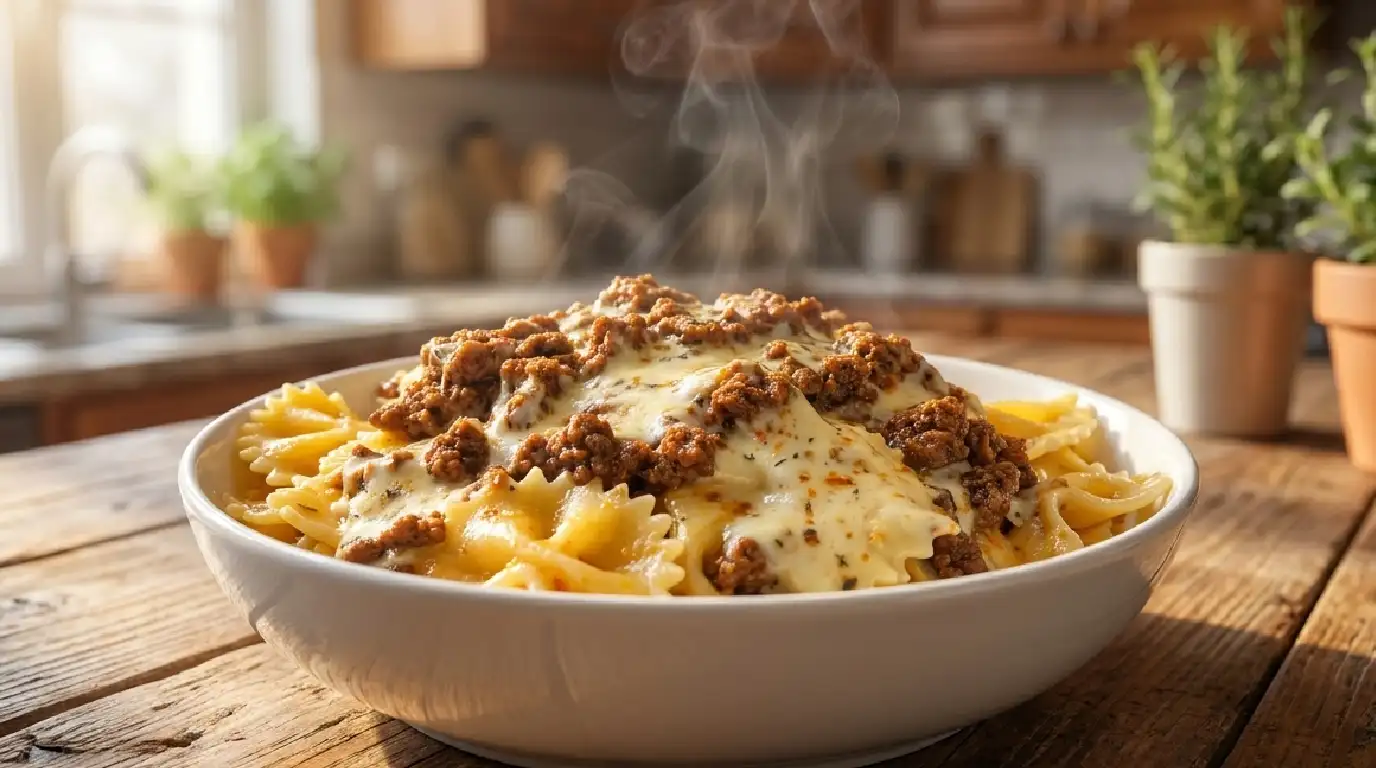
Creamy Beef Farfalle with Garlic, Cheddar & Mozzarella – A Restaurant-Quality Pasta Dinner
Introduction
There’s something about a bowl of rich, creamy pasta that feels like coming home. This beef farfalle with garlic, cheddar, and melted mozzarella hits different—it’s the kind of dish that makes people pause mid-bite and ask for seconds before they’ve finished their first serving. The beef is tender and brown-edged, the sauce clings to every butterfly-shaped piece of pasta, and there’s this golden, cheese-forward finish that lingers. What started as an experiment on a weeknight has become the recipe I keep coming back to when I want to feel like I’ve actually cooked something impressive, even though it takes less than 45 minutes from start to finish.
Why You’ll Love This
- The sauce is genuinely creamy without being heavy or feeling like it’ll sit in your stomach for hours
- Beef and pasta together mean this is a one-pan dinner that’s substantial enough to be the whole meal
- The combination of sharp cheddar and melted mozzarella creates a cheese depth that tastes like you spent hours on it
- It’s forgiving—slight tweaks to heat or cheese ratios won’t throw the whole thing off
- Garlic lovers will appreciate how the roasted garlic flavor develops without turning bitter or overpowering
The Backstory
My brother-in-law showed up to dinner unannounced one Thursday, and I had maybe 20 minutes to figure something out. He’s one of those people who picks through most pasta dishes—he’ll eat around things, critique the sauce consistency, the works. I threw together whatever I had: ground beef, farfalle, cream, garlic, and the two cheeses sitting in my fridge. He ate two bowls. Two. And the next time he visited, his first question wasn’t “how are you” but “are we having that pasta thing again?” That’s when I knew I’d actually landed on something worth documenting.
What Makes It Special
- Ground Beef: Gives the sauce body and richness. Brown it until it’s got color and texture, not gray and broken up.
- Fresh Garlic: Sautéed until it’s golden and fragrant—this is where the depth of flavor comes from. No garlic powder can replicate this.
- Sharp Cheddar: Adds a tangy, complex cheese note that keeps the sauce interesting instead of one-dimensional.
- Mozzarella: Provides stretch and a creamy texture. Use whole milk mozzarella, not low-fat.
- Heavy Cream: The backbone of the sauce. It stabilizes everything and prevents the cheese from becoming grainy or separated.
- Pasta Water: A small amount helps the sauce coat the pasta properly and gives it the right consistency.
Making It Happen
Start by heating a large skillet over medium-high heat and browning the ground beef. Let it sit for a minute or two before stirring—this is how you get those browned, flavorful edges. Once it’s cooked through and has color, pull it to the side of the pan and add the minced garlic to the fat. You’ll smell it right away. Let it cook for just 30 seconds to a minute. You want it fragrant, not burned.
Reduce the heat to medium and pour in the heavy cream. Stir constantly so the dairy doesn’t catch on the bottom. Once it’s warmed and starting to thicken slightly, add the shredded cheddar a handful at a time, stirring between additions. The cheese will melt into the cream and create a smooth, golden sauce. When the cheddar is fully incorporated, add the mozzarella the same way—in parts, stirring to make sure it melds evenly.
While the sauce is coming together, cook your farfalle according to the package directions, but pull it about a minute before the package says it’s done. It’ll finish cooking in the sauce and absorb all those flavors. Drain it, reserving about a cup of the pasta water. Add the pasta directly to the sauce and toss well. If it looks too thick, add pasta water a few tablespoons at a time until you’ve got a silky consistency. Season with salt and pepper to taste. The whole process from beef to plate takes around 35 minutes.
You Must Know
- Brown the beef in a single layer first, then break it up. This develops flavor in a way that browning ground pieces from the start doesn’t.
- Don’t rush the garlic. 30 seconds to a minute is the sweet spot. Beyond that and it turns bitter and loses its charm.
- Use a good quality cheddar—not the pre-shredded kind with anti-caking agents. The sauce will be noticeably smoother.
- Stir frequently once the cream goes in. Dairy can break or stick if you’re not paying attention.
- If the sauce looks too thick when you combine it with the pasta, don’t panic. Add pasta water gradually. It’s easier to thin it than to thicken it back up.
Serving Ideas & Pairings
Serve this with garlic bread or a simple green salad dressed with lemon vinaigrette—the acid cuts through the richness beautifully. A crusty bread works too if you want something to soak up extra sauce. For drinks, a light red wine like Pinot Noir or even a crisp white like Sauvignon Blanc pairs well. If you’re going non-alcoholic, sparkling water with lemon or a simple iced tea won’t compete with the creamy, savory flavors.
Make It Different
For a lighter version: Use half and half instead of heavy cream, and reduce the cheese amounts by about 20 percent. The sauce will be thinner but still creamy.
For extra richness: Add a tablespoon of cream cheese or mascarpone after the mozzarella melts. Stir it in off heat so it doesn’t get grainy.
For more heat: Stir in red pepper flakes after you add the pasta, or cook a diced jalapeño with the garlic.
For vegetables: Sauté mushrooms, spinach, or sun-dried tomatoes separately and fold them in at the end. They won’t water down the sauce this way.
For different cheese: Swap half the cheddar for Gruyère or use white cheddar instead of yellow for a different flavor profile.
Storage & Reheating
This pasta keeps in an airtight container in the fridge for up to 3 days. The sauce will thicken as it cools. To reheat, place it in a skillet over medium-low heat and add a splash of cream or milk—just a couple of tablespoons. Stir gently until it’s warmed through and the sauce loosens back up. You can also reheat it in the microwave in 30-second intervals, stirring between each one, though the stovetop method keeps the texture better.
Freezing isn’t ideal because the cream-based sauce can separate, but if you do freeze it, thaw it completely in the fridge first and add extra cream when reheating.
Success Tips
The timing of when you add each ingredient matters more than the exact amounts. Add the cream after the beef is cooked and resting, the garlic after the cream starts warming, and the cheeses once the cream is hot enough to melt them without clumping. Room temperature cheese melts more smoothly than cold cheese straight from the fridge.
Salt the beef while it’s cooking, not after. This seasons it evenly rather than just hitting the surface. Taste the sauce before you finish—you might need more salt than you’d expect because the pasta water will dilute it slightly.
Keep the heat at medium once the cream is in. High heat risks breaking the cream or causing the sauce to cook unevenly. Patience here pays off.
Frequently Asked Questions
Can I use pre-shredded cheese? You technically can, but the anti-caking agents in pre-shredded cheese can make the sauce grainy or separated-looking. Fresh-shredded is worth the two minutes it takes.
What if my sauce breaks or looks separated? Remove it from heat immediately and whisk in a tablespoon of cold cream. This usually brings it back together. If it’s severely broken, strain the pasta, make a fresh quick sauce with butter and cream, and toss the pasta in that.
Can I make this with ground turkey or chicken? Absolutely. The cooking time is the same. The sauce will be lighter in flavor, so you might want to add a splash of Worcestershire sauce or a pinch of smoked paprika to compensate.
Is this reheatable for meal prep? Yes, but add cream when reheating. The sauce thickens significantly as it cools, and adding liquid when you warm it back up restores the original texture.
How do I know when the pasta is done cooking? Pull it a minute before the package directions recommend. It should still have a tiny bit of bite to it. Once it hits the hot sauce, it’ll continue cooking and soften.
Recipe Card Info
Prep Time: 10 minutes
Cook Time: 30 minutes
Total Time: 40 minutes
Servings: 4
Category: Dinner
Difficulty: Easy
Cuisine: Italian-American
Yield: About 8 cups
Equipment: Large skillet, wooden spoon, pasta pot, colander, measuring cups and spoons
Ingredients
- 1 pound ground beef
- 8 ounces farfalle pasta
- 4 cloves garlic, minced
- 1 cup heavy cream
- 1 cup sharp cheddar cheese, shredded
- 1 cup whole milk mozzarella, shredded
- 2 tablespoons butter
- Salt and freshly ground black pepper to taste
- 1/4 teaspoon red pepper flakes (optional)
- Pasta water (reserved)
Directions
Step 1: Brown the Beef Heat the butter in a large skillet over medium-high heat. Add the ground beef and let it sit undisturbed for 2 to 3 minutes to develop color. Break it up with a wooden spoon and continue cooking until browned throughout, about 5 to 7 minutes total. Season with salt and pepper.
Step 2: Cook the Garlic Push the beef to the side of the skillet and add the minced garlic to the center. Let it cook for about 30 seconds to 1 minute until fragrant. Don’t let it brown or it will taste bitter.
Step 3: Add the Cream Reduce heat to medium and pour in the heavy cream, stirring constantly. Bring it to a gentle simmer and let it warm through for about 2 minutes.
Step 4: Melt the Cheeses Add the shredded cheddar cheese a handful at a time, stirring after each addition until fully melted and smooth. Repeat with the mozzarella, stirring until the sauce is creamy and golden.
Step 5: Cook the Pasta While the sauce simmers, bring a large pot of salted water to a boil. Add the farfalle and cook according to package directions, but drain it about 1 minute before it’s fully cooked.
Step 6: Combine Add the drained pasta to the cheese sauce and toss well, coating every piece. Add pasta water a few tablespoons at a time if the sauce is too thick. Aim for a sauce that clings to the pasta without pooling.
Step 7: Season and Serve Taste and adjust salt and pepper as needed. Serve immediately while the sauce is at its creamiest.
Notes
- For a thinner sauce, add more pasta water gradually until you reach the desired consistency.
- This dish is best served immediately, while the sauce is at its most velvety.
- If making for a crowd, the recipe doubles easily.
- Leftovers reheat best on the stovetop with a splash of cream added back in.
Nutrition
Per serving (approximate):
- Calories: 680
- Protein: 38g
- Carbohydrates: 48g
- Fat: 42g
- Saturated Fat: 22g
- Cholesterol: 115mg
- Sodium: 520mg
- Fiber: 2g
- Sugar: 2g
