
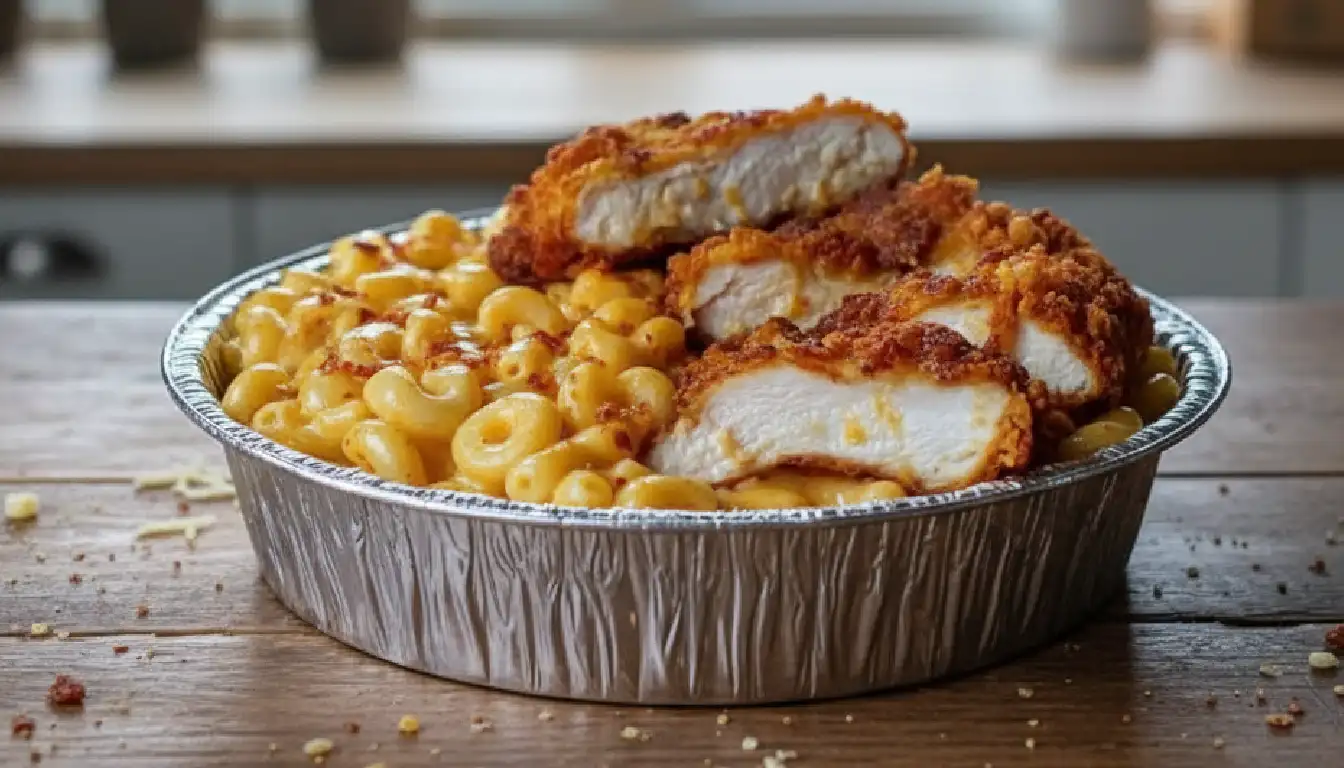
The Ultimate Southern Fried Chicken with Creamy Mac and Cheese Recipe
There is a specific kind of quiet that falls over a dining room when a platter of golden-brown fried chicken and a bubbling dish of stovetop-to-oven mac and cheese hits the table. It is the sound of anticipation. I remember my grandmother’s kitchen on Sunday afternoons, the air thick with the scent of shimmering peanut oil and the sharp, salty tang of aged cheddar. This recipe isn’t just about feeding people; it is about that feeling of being completely looked after. The chicken carries a craggy, seasoned crust that shatters with a satisfying crunch, revealing tender, buttermilk-soaked meat beneath. Paired with a macaroni and cheese so velvety it feels like a hug, this duo is the definitive language of Southern hospitality.
Why You’ll Love This
The Contrast: You get the ultimate textural play between the crisp, jagged edges of the fried chicken and the silkiness of the cheese sauce.
Deep Flavor Development: A long buttermilk brine ensures the chicken is seasoned all the way to the bone, not just on the surface.
The Comfort Factor: This is “core memory” food that satisfies cravings and brings everyone to the table without a second ask.
Tried and True Techniques: The recipe uses simple, accessible ingredients but relies on techniques that guarantee a professional, non-greasy finish.
One of my closest friends is a self-proclaimed “texture snob” who usually avoids fried foods, claiming they are often too heavy or oily. I invited him over when I was perfecting this recipe, and I watched him skeptically poke at a drumstick. After the first bite—that audible, glorious crunch—the skepticism vanished. He didn’t just finish his plate; he spent the next ten minutes asking about the spice blend in the flour and helped himself to a third scoop of the mac and cheese. Seeing someone who usually skips comfort food dive back in for seconds is the highest praise this meal can receive.
What Makes It Special
Bone-In, Skin-On Chicken: Using dark meat like thighs and drumsticks provides more fat and moisture, which is essential for surviving the high heat of the fryer.
The Buttermilk Bath: Beyond adding flavor, the acidity in buttermilk tenderizes the protein, ensuring the chicken stays juicy.
Double-Dredge Method: By dipping the chicken in the flour, then back in the liquid, and once more in the flour, you create those iconic “nooks and crannies” that catch the oil and turn extra crispy.
Three-Cheese Blend: Using a mix of sharp cheddar for bite, Gruyère for nuttiness, and a touch of mozzarella for that perfect pull makes the mac and cheese stand out.
Smoked Paprika and Cayenne: These provide a subtle heat and a rich, sunset color to the breading that makes the chicken look as good as it tastes.
Making It Happen
Success starts at least four hours before you plan to eat. You begin by submerging your chicken pieces in a seasoned buttermilk brine, letting the salt and spices penetrate deep into the meat. While the chicken rests, you can focus on the mac and cheese. Start by boiling your pasta just until it is shy of al dente—it will finish cooking in the cheese sauce later. In a separate heavy-bottomed pot, whisk together butter and flour to create a pale roux, then slowly stream in whole milk until you have a thick, glossy béchamel. Turn off the heat before folding in your shredded cheeses; this prevents the sauce from becoming grainy.
When it’s time to fry, the process becomes a rhythmic dance. You lift the chicken from the brine, dredge it thoroughly in the seasoned flour, and let it rest on a wire rack for a few minutes. This resting period is the secret to keeping the breading attached to the chicken rather than the bottom of your pan. Carefully drop the pieces into a heavy cast-iron skillet filled with hot oil. The sizzle should be immediate. As the chicken turns a deep, mahogany gold, the mac and cheese can be transferred to a baking dish, topped with a few extra handfuls of cheese, and slipped into the oven just long enough to create a bubbly, toasted crust.
You Must Know
Temperature is Everything: Use a meat thermometer to ensure your oil stays between 325°F and 350°F. If it’s too cold, the chicken gets greasy; too hot, and the outside burns before the inside is done.
Don’t Overcrowd the Pan: Frying too many pieces at once drops the oil temperature significantly. Fry in batches to maintain that perfect crunch.
Shred Your Own Cheese: Pre-shredded cheese is coated in potato starch to prevent clumping, which can lead to a gritty, less-than-creamy mac and cheese sauce.
Room Temperature Chicken: Take your chicken out of the fridge about 20 minutes before frying so it cooks evenly.
Serving Ideas
This heavy-hitter pair deserves a little brightness to cut through the richness. A crisp, vinegary coleslaw or some slow-simmered collard greens with a splash of hot sauce work beautifully. For drinks, a cold glass of sweet tea is the traditional choice, but if you’re looking for something with a kick, a dry sparkling cider or a crisp Pilsner balances the salty, savory notes of the fried chicken perfectly.
Make It Different
Add Some Heat: If you want Nashville-style spice, whisk some of the hot frying oil with extra cayenne, garlic powder, and brown sugar, then brush it over the finished chicken.
Gluten-Free Option: Use a high-quality 1-to-1 gluten-free flour blend for the chicken and cornstarch for the mac and cheese sauce, paired with your favorite GF pasta.
Herb Infusion: Stir fresh thyme or rosemary into the flour mixture for an earthy, aromatic twist on the traditional Southern crust.
Storage and Reheating
Fried chicken is best enjoyed fresh, but if you have leftovers, avoid the microwave at all costs—it will turn the crust soggy. Instead, place the chicken on a wire rack over a baking sheet and heat it in a 375°F oven for about 10 minutes. For the mac and cheese, add a splash of milk before reheating it on the stovetop or in the oven to loosen the sauce and restore its creaminess.
Success Tips
The most important thing to remember is patience. Don’t rush the brine, and don’t rush the frying process. If you notice the chicken is browning too quickly, lower the heat slightly and flip it more frequently. Also, always salt your chicken the moment it comes out of the oil; the hot surface will grab the salt crystals and lock in the flavor.
Frequently Asked Questions
Which oil is best for frying chicken?
Peanut oil is the gold standard because of its high smoke point and neutral flavor, but vegetable oil or canola oil also work very well.
Can I use chicken breasts instead of thighs?
Yes, but be careful not to overcook them. Breasts dry out faster than dark meat. I recommend cutting large breasts in half so they cook at a similar rate to the wings and drumsticks.
Why is my mac and cheese sauce oily?
This usually happens if the heat is too high when you add the cheese. Always remove the sauce from the heat source before stirring in your shredded cheese to keep the emulsion smooth.
How do I know when the chicken is fully cooked?
The safest way is to use an instant-read thermometer. The internal temperature should reach 165°F for breasts and 170°F-175°F for thighs and drumsticks.
Can I make the mac and cheese ahead of time?
You can prepare the sauce and pasta, combine them, and keep them in the fridge. When you’re ready to eat, add a little extra milk, top with cheese, and bake.
Recipe Card
Prep time: 30 minutes (plus 4 hours marinating)
Cook time: 45 minutes
Total time: 1 hour 15 minutes
Servings: 6
Category: Main Course
Difficulty: Medium
Cuisine: Southern American
Yield: 8-10 pieces of chicken and 1 large pan of Mac and Cheese
Equipment
Large cast-iron skillet or deep fryer
Instant-read meat thermometer
Wire cooling rack
Large pot for pasta
Whisk and saucepan for cheese sauce
Baking dish (9×13)
Ingredients
For the Chicken:
3 lbs bone-in, skin-on chicken pieces (thighs, drumsticks, wings)
2 cups buttermilk
2 tablespoons hot sauce
3 cups all-purpose flour
1 tablespoon garlic powder
1 tablespoon onion powder
2 teaspoons smoked paprika
1 teaspoon cayenne pepper
Salt and black pepper to taste
Peanut oil for frying
For the Mac and Cheese:
1 lb elbow macaroni or cavatappi
1/4 cup unsalted butter
1/4 cup all-purpose flour
3 cups whole milk
1 cup heavy cream
4 cups shredded sharp cheddar (hand-shredded)
1 cup shredded Gruyère
1/2 teaspoon ground mustard
Pinch of nutmeg
Salt and pepper to taste
Instructions
In a large bowl, whisk together buttermilk, hot sauce, and a teaspoon of salt. Add the chicken, cover, and refrigerate for at least 4 hours or overnight.
In a shallow dish, combine flour, garlic powder, onion powder, paprika, cayenne, salt, and pepper.
Remove chicken from the brine. Dredge each piece in the flour, dip back into the buttermilk briefly, and dredge in the flour again. Set on a wire rack for 15 minutes.
Heat 2 inches of oil in a cast-iron skillet to 350°F. Fry chicken in batches for 12-15 minutes, turning occasionally, until the internal temperature hits 165°F-175°F. Drain on a clean wire rack.
Boil pasta in salted water for 2 minutes less than the package instructions. Drain.
In a pot, melt butter over medium heat. Whisk in flour for 1 minute. Slowly whisk in milk and cream. Simmer until thickened.
Remove from heat. Stir in 4 cups of the cheese, mustard, nutmeg, salt, and pepper until smooth.
Fold in the pasta. Transfer to a baking dish, top with remaining cheese, and broil or bake at 400°F for 10-15 minutes until bubbly.
Notes
Always use a wire rack for draining fried chicken; paper towels can steam the bottom of the chicken and make it soggy.
If the cheese sauce is too thick, add an extra splash of milk before mixing with the pasta.
Nutrition
Calories: 850 kcal
Fat: 48g
Carbohydrates: 62g
Protein: 42g
