
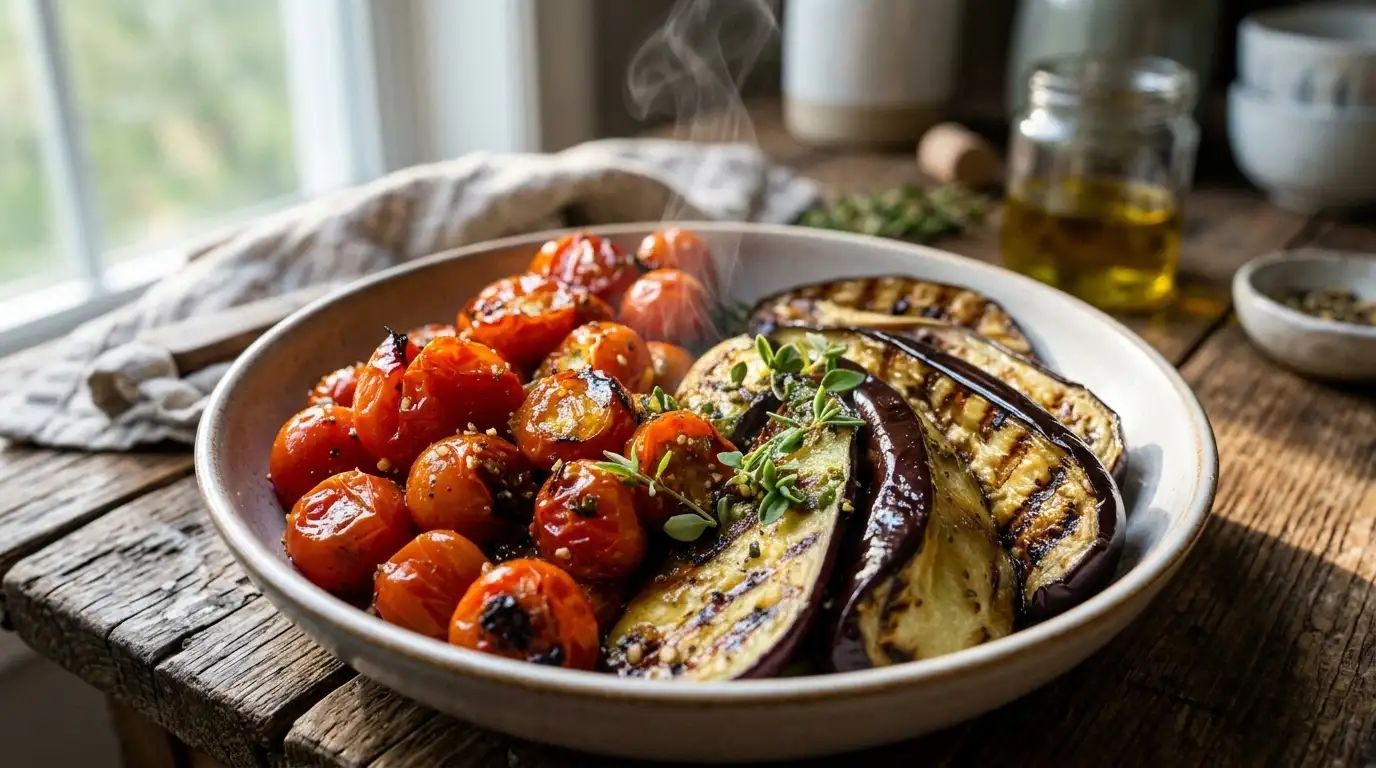
Smoky Charred Grilled Eggplant: A Mediterranean Recipe That Turns Skeptics Into Believers
Eggplant has a reputation problem. Ask around and you’ll hear the same complaints: spongy texture, bitter aftertaste, that weird gray color when it’s cooked wrong. I used to agree with all of it, until a neighbor handed me a plate of charred eggplant straight off her grill one August evening and changed my mind in about four bites.
The skin had gone almost black in places, blistered and cracked. Underneath, the flesh had collapsed into something soft and custardy, smoky in a way that reminded me of good baba ganoush but with more texture, more bite. She’d drizzled it with good olive oil, a scatter of parsley, a squeeze of lemon, and a few crumbles of feta that were slowly melting into the warm flesh. That was it. No breading, no frying, no elaborate sauce hiding the vegetable underneath.
This Mediterranean-style grilled eggplant recipe is my version of that plate. It leans on the char, the smoke, and a handful of bright, punchy ingredients to do the work. It’s the kind of dish that looks rustic and a little imperfect on the plate, and tastes like it took far more effort than it actually did.
Why You’ll Love This
- It comes together with basic pantry ingredients: olive oil, lemon, garlic, salt, and whatever herbs you have on hand.
- The grill does most of the flavor work, so you’re not standing over a pan babysitting anything.
- It’s naturally vegetarian and easy to make vegan or dairy-free with one small swap.
- The smoky, charred flavor makes it taste far more indulgent than the calorie count suggests.
- It works as a side, a starter, a sandwich filling, or a topping for grain bowls, so one batch stretches across several meals.
The Backstory
My father-in-law is, by his own admission, “not a vegetable guy.” Family dinners at his house involve meat, more meat, and maybe a token salad nobody touches. So when I brought this eggplant to a summer cookout, I honestly didn’t expect him to try it. He did, mostly out of politeness, and went quiet for a second the way people do when a bite surprises them. Then he asked what was in it. Then he had a second helping, without any prompting from me. My mother-in-law still brings this up as though it were a minor miracle. It isn’t magic. It’s just what happens when eggplant gets cooked hot and fast until the sugars start to caramelize and the smoke has somewhere to go.
What Makes It Special
- Eggplant — the star of the dish. Grilling draws out its natural sweetness and gives the flesh a silky, almost creamy texture once it softens.
- Olive oil — a generous, good-quality one carries the smoky flavor and keeps the eggplant from drying out or sticking to the grates.
- Garlic — just a little, either raw and finely grated into the dressing or lightly charred alongside the eggplant for a mellower bite.
- Lemon juice — cuts through the richness and wakes up every other flavor on the plate.
- Fresh herbs — parsley, mint, or a mix of both add a vibrant, green freshness against the smoky base.
- Feta or labneh — a salty, tangy finish that plays off the sweetness of the charred eggplant (skip or swap for a vegan version).
- A pinch of chili flakes or sumac — optional, but it adds a small vibrant heat or tang that keeps the dish interesting bite after bite.
Making It Happen
Start by slicing your eggplant into rounds or lengthwise planks, somewhere around half an inch thick. Thinner and they’ll fall apart on the grill; thicker and the centers stay tough while the outside burns. Salt the slices and let them sit in a colander for twenty to thirty minutes. This isn’t just about drawing out bitterness, which modern eggplant varieties have much less of anyway. It’s about pulling out excess moisture so the flesh grills instead of steams, which is where that creamy texture actually comes from.
Pat the slices dry, then brush both sides generously with olive oil and season with salt and pepper. Get your grill hot, somewhere in the medium-high range, and lay the eggplant down without crowding the grates. Resist the urge to move the pieces around. Let them sit until you see real char marks forming, then flip once. Depending on thickness, you’re looking at somewhere between four and seven minutes per side. You’ll know it’s ready when a knife slides in with almost no resistance and the surface has that deep golden-brown to black striping.
While the eggplant grills, whisk together your dressing: olive oil, lemon juice, a small clove of grated garlic, and a pinch of salt. Some people like to add a spoonful of tahini here for a thicker, nuttier sauce, which works beautifully if you’re leaning into the baba ganoush side of things.
Once the eggplant comes off the grill, arrange it on a platter while it’s still warm. Drizzle the dressing over top immediately so it seeps into the charred surface. Scatter over your herbs, crumble the feta if using, and finish with a pinch of chili flakes or sumac. Serve it warm or at room temperature. It’s genuinely better after sitting for ten or fifteen minutes, once the flavors have had a chance to settle into the flesh.
You Must Know
- Salting the eggplant beforehand is not optional if you want that creamy, custard-like interior rather than a spongy one.
- Don’t skimp on the oil. Eggplant absorbs fat readily, and a dry piece will taste dry and slightly bitter no matter how well it’s grilled.
- Let the grill do its job before flipping. Moving the eggplant too early tears the flesh and prevents proper charring.
- A cast-iron grill pan works nearly as well as an outdoor grill if you don’t have access to one.
- Serve it warm rather than piping hot. The flavors are more pronounced once it’s had a few minutes to rest.
Serving Ideas & Pairings
This eggplant works well alongside grilled lamb chops, roasted chicken thighs, or a simple piece of grilled fish, since the smokiness pairs naturally with other charred proteins. It also sits comfortably on a mezze spread next to hummus, warm pita, olives, and a cucumber salad. For something lighter, spoon it over creamy hummus or whipped labneh as a starter with crusty bread for scooping.
On the drink side, a chilled dry rosé or a crisp white like Assyrtiko complements the smoky, tangy flavors nicely. If you’re avoiding alcohol, a mint and lemon-infused sparkling water or a glass of chilled hibiscus tea does the job just as well.
Make It Different
- Vegan version: skip the feta and swap in a dollop of cashew cream or a drizzle of tahini sauce for the same richness without dairy.
- Spicier take: add a spoonful of harissa to the dressing, or finish with fresh chopped chili instead of flakes.
- Different herbs: swap parsley and mint for fresh basil or dill if that’s what you have growing or leftover in the fridge.
- Smokier flavor: add a small pinch of smoked paprika to the oil before brushing it onto the eggplant.
- Heartier meal: toss the finished eggplant with warm farro or bulgur, chickpeas, and extra dressing for a full grain bowl.
- No grill: broil the salted, oiled slices on high for four to five minutes per side, watching closely, since broilers vary a lot in intensity.
Storage & Reheating
Leftovers keep well in an airtight container in the fridge for up to three days. The flavor actually deepens overnight as the dressing continues to soak into the flesh, so don’t be surprised if it tastes even better the next day cold, straight out of the fridge, tossed into a sandwich or a salad.
To reheat, a low oven around 300°F for ten minutes brings back some of the original texture without drying it out. Avoid the microwave if you can, since it tends to turn the eggplant rubbery. If you’re serving it cold or at room temperature, there’s no need to reheat at all.
Success Tips
Buy eggplants that feel heavy for their size and have smooth, tight skin, since these signs usually mean fewer seeds and a creamier interior. Avoid anything with soft spots or a dull, wrinkled surface. If your grill runs uneven, rotate the slices rather than moving them to a cooler spot, so the char stays consistent across the batch. And don’t dress the eggplant too far ahead of serving if you want to keep some textural contrast between the soft flesh and the charred edges; a few minutes before serving is the sweet spot.
Frequently Asked Questions
Do I need to peel the eggplant before grilling? No, the skin is completely fine to eat once it’s charred and softened, and it actually helps hold the slices together on the grill. Some people peel strips off for a more rustic, striped look, but it’s purely a style choice.
Why is my grilled eggplant still bitter? Older or larger eggplants sometimes carry more bitterness, especially if they weren’t salted first. Salting and letting the slices sit for at least twenty minutes pulls out a good amount of that bitterness before they hit the grill.
Can I make this ahead of time for a party? Yes. Grill the eggplant a few hours ahead and let it sit at room temperature, then add the dressing and toppings closer to serving time so everything stays fresh and vibrant rather than soggy.
What’s the best type of eggplant to use? Regular globe eggplant works great, but Italian or Japanese eggplants are also good choices since they tend to have fewer seeds and a slightly sweeter flavor.
Can I freeze leftover grilled eggplant? It’s possible, but the texture suffers quite a bit once thawed, turning noticeably softer and more watery. It’s best enjoyed fresh or within a few days in the fridge rather than frozen.
Recipe Card Info
Prep time: 15 minutes (plus 20-30 minutes salting time) Cook time: 15 minutes Total time: 50 minutes Servings: 4 Category: Side Dish / Appetizer Difficulty: Easy Cuisine: Mediterranean Yield: 4 servings
Equipment: Outdoor grill or grill pan, colander, mixing bowl, whisk, tongs, sharp knife, cutting board
Ingredients
- 2 large eggplants, sliced into ½-inch rounds or lengthwise planks
- 1 teaspoon salt (for drawing out moisture)
- 4 tablespoons extra virgin olive oil, divided
- 1 small garlic clove, finely grated
- 2 tablespoons fresh lemon juice
- ¼ cup crumbled feta (optional)
- 2 tablespoons fresh parsley, chopped
- 1 tablespoon fresh mint, chopped
- ¼ teaspoon chili flakes or sumac (optional)
- Salt and black pepper, to taste
Directions
Step 1: Salt the eggplant Lay the sliced eggplant in a colander and sprinkle both sides with 1 teaspoon of salt. Let it sit for 20-30 minutes to draw out excess moisture.
Step 2: Pat dry and season Pat each slice thoroughly dry with paper towels. Brush both sides with about 2 tablespoons of olive oil and season with salt and pepper.
Step 3: Heat the grill Preheat your grill or grill pan to medium-high heat. Make sure the grates are clean and lightly oiled to prevent sticking.
Step 4: Grill the eggplant Place the eggplant slices on the grill without overcrowding. Cook for 4-7 minutes per side, undisturbed, until deep char marks form and the flesh is tender when pierced with a knife.
Step 5: Make the dressing While the eggplant grills, whisk together the remaining 2 tablespoons of olive oil, grated garlic, lemon juice, and a pinch of salt.
Step 6: Assemble Arrange the warm grilled eggplant on a serving platter. Drizzle the dressing evenly over the top while it’s still warm.
Step 7: Finish and serve Scatter the parsley, mint, and feta over the top, then finish with chili flakes or sumac if using. Let it rest for 10 minutes before serving warm or at room temperature.
Notes
- Salting the eggplant is the single most important step for achieving a creamy, non-spongy texture.
- A cast-iron grill pan indoors works nearly as well as an outdoor grill if needed.
- For a vegan version, omit the feta and add a drizzle of tahini or cashew cream instead.
- Leftovers taste even better the next day once the dressing has fully soaked in.
Nutrition
(Per serving, approximate) Calories: 180 Total Fat: 15g Saturated Fat: 3g Carbohydrates: 12g Fiber: 5g Sugar: 6g Protein: 3g Sodium: 320mg
Nutrition values are estimates and will vary based on specific ingredients and portion sizes used.
