
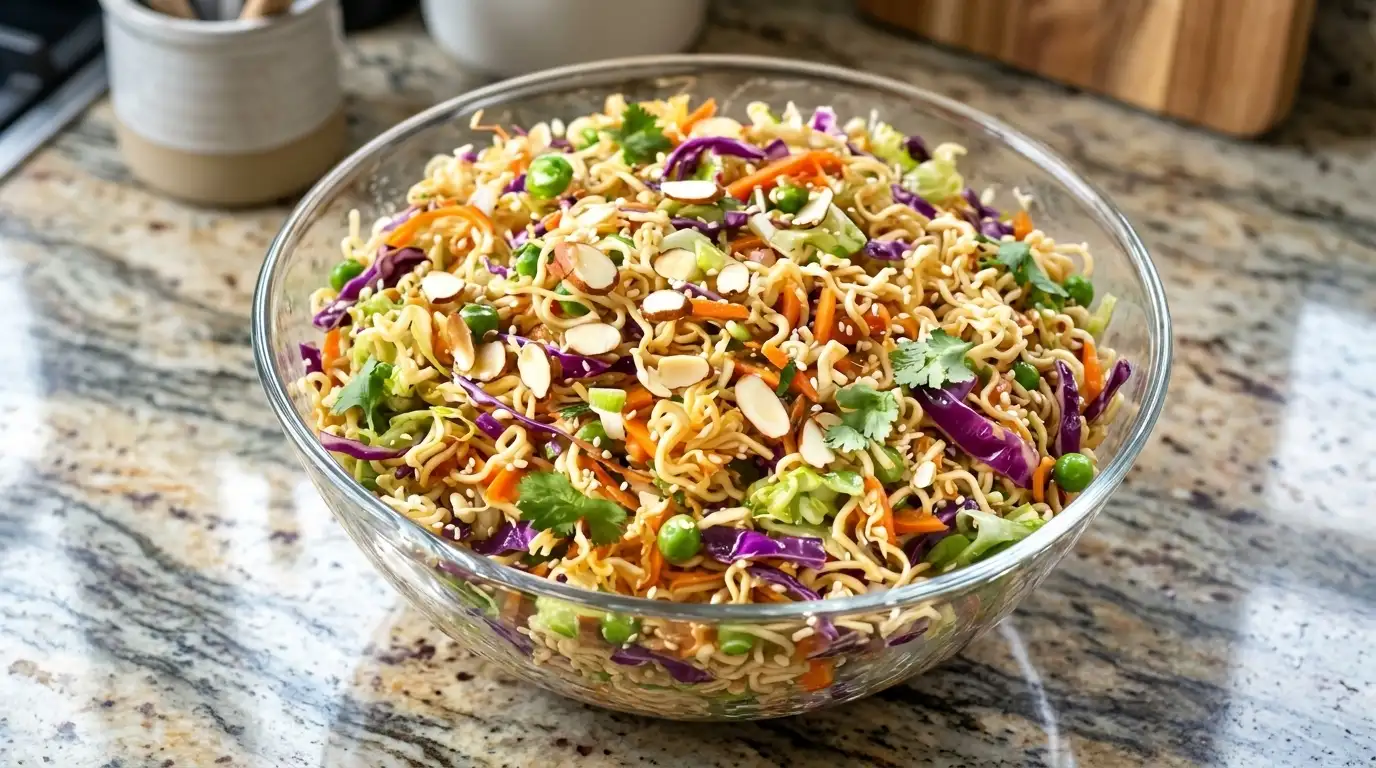
Asian Ramen Noodle Salad Recipe: Crunchy, Fresh, and Surprisingly Easy
Introduction
There’s something magical about a bowl that manages to be both light and deeply satisfying. The first time I made an Asian ramen noodle salad, I wasn’t expecting much—just another weeknight dinner thrown together from pantry staples. But the moment I tossed that warm ramen into a base of cool, crisp greens and doused everything with a ginger-soy vinaigrette, something clicked. The noodles went soft at the edges while staying chewy in the center. The vegetables stayed snappy. The dressing coated every strand, every leaf, in a flavor that’s tangy, slightly sweet, and unapologetically savory. It became the recipe I make when I want to feel accomplished in the kitchen without spending hours there.
This Asian ramen noodle salad is built on a simple principle: contrast. Hot against cold. Tender against crunchy. Familiar against unexpected. It’s the kind of dish that works for lazy lunches, impressive dinners, and everything in between. Once you master the basic technique, you’ll find yourself making it again and again.
Why You’ll Love This
- It comes together in roughly 30 minutes from start to finish, making it perfect for busy weeknights when you don’t want takeout
- The warm-and-cold combination keeps things interesting—the noodles soften just slightly while the vegetables maintain their snap
- It’s naturally customizable; swap proteins, vegetables, and toppings based on what you have or what you’re craving
- The dressing is so good you’ll want to bottle it and pour it on everything
- It’s filling enough to stand alone as a complete meal, yet light enough to enjoy even on warm evenings
The Backstory
My sister-in-law arrives at family dinners with firm opinions about food. She doesn’t do “fancy.” She doesn’t do fusion. She wants what she knows. When I served her this Asian ramen noodle salad last summer, I watched her face shift from skeptical to curious to genuinely impressed. She went back for seconds. What won her over wasn’t any single element—it was the balance. The ramen didn’t taste like what she expected ramen to taste like. The dressing wasn’t heavy or overwhelming. The vegetables felt like an actual part of the dish, not an afterthought. She texted me a week later asking if I could write down the recipe. That’s when I knew this one was special.
What Makes It Special
- Fresh ramen noodles, boiled until just tender, bring a chewy texture and a familiar comfort-food foundation
- A ginger-soy vinaigrette built with rice vinegar, sesame oil, and fresh ginger delivers brightness and depth in equal measure
- Shredded cabbage and bell peppers add crunch and natural sweetness that balance the savory elements
- Sliced green onions provide a fresh allium bite that ties everything together
- Sesame seeds and crispy fried onions offer textural layers that prevent the salad from feeling monotonous
- Optional proteins like grilled chicken, shrimp, or crispy tofu transform this side into a complete meal
Making It Happen
Start by bringing a large pot of salted water to a boil. The water should taste like the sea—not just a pinch of salt, but enough to flavor the noodles themselves. Fresh ramen noodles cook fast, usually in about three to four minutes. You’re looking for that sweet spot where they’ve lost their raw edge but still have some resistance when you bite into them. Overcooking turns them into mush, so set a timer and don’t walk away.
While the water heats, prepare everything else. Shred your cabbage thinly—this isn’t the time to use thick chunks. Slice your bell peppers into thin strips rather than chunks; they’ll distribute better through the salad and feel more elegant on the plate. Chop your green onions, keeping the white and light green parts separate from the darker green tops. You’ll use the darker parts as a garnish. If you’re using a protein, now’s the time to get it cooking.
For the dressing, whisk together three tablespoons of rice vinegar, two tablespoons of sesame oil, one tablespoon of soy sauce, one teaspoon of minced fresh ginger, and a quarter teaspoon of crushed red pepper if you like heat. Some people add a touch of honey here; others prefer a minced garlic clove instead of or alongside the ginger. Don’t overthink it. Taste as you go and adjust to your preference. The dressing should smell fragrant and make your mouth water a little.
Drain the cooked ramen and immediately place it in a large bowl. Pour about half the dressing over the hot noodles while they’re still steaming. This helps them absorb the flavors. Let them sit for a minute, then add your shredded cabbage, sliced bell peppers, and the white parts of the green onions. Toss everything together gently. The warmth of the noodles will slightly soften the vegetables without cooking them into submission.
If you’re making this salad ahead of time, you can stop here. The components will keep in the fridge for a few hours. When you’re ready to eat, dress the salad with the remaining vinaigrette, top with sesame seeds, crispy fried onions, and the dark green parts of your green onions. If you’re eating immediately, add these toppings right now. The sesame seeds toast slightly from the residual warmth of the noodles, releasing their nutty aroma.
You Must Know
- Don’t skip the step of dressing the warm noodles; they’ll absorb the flavors far better than cold noodles
- Fresh ramen noodles cook in minutes, so stay close to the pot. Overcooked noodles will ruin the entire dish
- The dressing should taste slightly more intense than you want the final dish to taste; the vegetables and noodles dilute it as they sit
- Crispy fried onions stay crunchy longest if you add them just before serving; add them too early and they’ll soften from the moisture in the salad
- If you’re making this for a crowd, keep the components separate and assemble just before serving for maximum textural contrast
Serving Ideas & Pairings
This Asian ramen noodle salad pairs beautifully with grilled proteins like chicken, shrimp, or flank steak. It also works wonderfully alongside spring rolls, gyoza, or steamed dumplings for a more substantial meal. For beverages, consider a crisp white wine like Sauvignon Blanc, a light pilsner, or simply iced green tea. In warmer months, serve it chilled; in cooler seasons, it’s equally satisfying at room temperature.
Make It Different
If you’re avoiding gluten, use tamari or a certified gluten-free soy sauce. For a completely different flavor profile, swap the ginger-soy dressing for a peanut-based one—combine peanut butter, rice vinegar, sesame oil, soy sauce, and a touch of sriracha. Vegetarians can skip the protein entirely or add roasted chickpeas, baked tofu, or edamame. Want more spice? Add a minced Thai chili or sriracha to the dressing. For a sweeter, more Asian-fusion approach, include sliced mango or pineapple chunks. If you don’t have rice vinegar, white wine vinegar or apple cider vinegar work in a pinch, though the flavor profile shifts slightly.
Storage & Reheating
This salad is best eaten fresh, but the components keep well separately. Store the dressed noodles and vegetables in an airtight container in the refrigerator for up to two days. Keep the dressing separate if you made extra. Store crispy toppings like sesame seeds and fried onions in their own container so they don’t absorb moisture and lose their crunch. When ready to eat, simply toss everything together and add fresh toppings. You don’t need to reheat an Asian ramen noodle salad—it’s designed to be enjoyed at whatever temperature it’s at when you assemble it.
Success Tips
The temperature contrast is what makes this dish work. If everything sits in the refrigerator for hours, it becomes just another cold noodle salad. Instead, dress the warm ramen while it’s still steaming and let it cool naturally with the vegetables. This creates noodles that are tender but not mushy, with vegetables that are cool and crisp but not raw-tasting.
Consider your knife skills when prepping vegetables. Thin, uniform slices of cabbage and peppers will make a difference in how the salad feels in your mouth. A sharp knife and a confident hand matter more than fancy equipment.
The sesame oil is not negotiable. Regular vegetable oil won’t give you that toasty, nutty undertone that makes this dressing memorable. A little goes a long way, though—sesame oil is potent and can easily overwhelm if you’re heavy-handed.
Frequently Asked Questions
Can I make this salad the night before?
Yes, but assemble it strategically. Cook the noodles and toss them with half the dressing while warm. Add the vegetables. Cover and refrigerate. Just before serving, add the remaining dressing and top with sesame seeds and fried onions so they stay crispy.
What type of ramen noodles should I use?
Fresh ramen noodles—the kind you find in the refrigerated section near tofu or in Asian markets—work best. They cook quickly and have a superior texture compared to dried ramen. If you can’t find fresh ones, dried ramen works too; just cook according to package directions.
Can I use a different vinegar?
Rice vinegar is preferred for its subtle sweetness and mild acidity. White wine vinegar or apple cider vinegar can substitute, but the flavor will shift. Avoid distilled white vinegar, which tastes too sharp.
Is this salad good for meal prep?
Partially. Prep your vegetables and make the dressing ahead of time. Cook the noodles and assemble the salad no more than a few hours before serving. Crispy toppings should always go on just before you eat.
Can I add more protein to make it heartier?
Absolutely. Grilled or rotisserie chicken, pan-seared shrimp, crumbled bacon, or crispy tofu all work beautifully. Add about one to one-and-a-half cups of cooked protein per salad serving.
Recipe Card Info
Prep Time: 15 minutes Cook Time: 10 minutes Total Time: 25 minutes Servings: 4 as a side dish, 2 as a main course Category: Salads Difficulty: Easy Cuisine: Asian Fusion Yield: 4 servings Equipment: Large pot, cutting board, sharp knife, small bowl for dressing, large mixing bowl, whisk
Ingredients
- 12 ounces fresh ramen noodles
- 3 cups shredded green cabbage
- 1 large red bell pepper, thinly sliced
- 1 large yellow or orange bell pepper, thinly sliced
- 4 green onions, white and light green parts chopped, dark green parts reserved for garnish
- 1/4 cup rice vinegar
- 3 tablespoons sesame oil
- 2 tablespoons soy sauce
- 2 teaspoons minced fresh ginger
- 1/4 teaspoon crushed red pepper flakes (optional, adjust to taste)
- 3 tablespoons sesame seeds (white, black, or a mix)
- 1/4 cup crispy fried onions
- Salt and black pepper to taste
- Optional: cooked protein of choice (grilled chicken, shrimp, tofu)
Directions
Bring a large pot of salted water to a boil. The water should taste noticeably salty, similar to seawater. Add fresh ramen noodles and cook for three to four minutes, stirring occasionally to prevent sticking. Test for doneness; the noodles should be tender but still have a slight chew. Drain in a colander and set aside.
While the water heats and noodles cook, whisk together rice vinegar, sesame oil, soy sauce, minced ginger, and red pepper flakes in a small bowl. Stir well and taste. Adjust the balance of acid, salt, and heat to your preference. Set the dressing aside.
Prepare your vegetables while the noodles cook. Shred the cabbage thinly using a sharp knife or mandoline. Slice the bell peppers into thin strips, removing all seeds and white pith. Chop the green onions, keeping the white and light green parts separate from the darker tops.
Place the hot, drained noodles into a large mixing bowl. Pour half the dressing over the warm noodles and toss gently but thoroughly. The heat will help the noodles absorb the flavors.
Add the shredded cabbage, sliced bell peppers, and the white and light green parts of the green onions to the noodles. Toss everything together until well combined. The warmth of the noodles will slightly soften the vegetables while they remain crisp.
If serving immediately, pour the remaining dressing over the salad and toss again. Top with sesame seeds, crispy fried onions, and the reserved dark green parts of the green onions. If making ahead, refrigerate the dressed noodles and vegetables separately from the toppings, and assemble just before serving.
Notes
This salad tastes best when assembled and served within a few hours of cooking the noodles, though components can be prepared ahead. For added protein, top each serving with grilled chicken, pan-seared shrimp, baked tofu, or roasted chickpeas. The dressing recipe makes enough for four generous servings; double it if you prefer your salad more heavily dressed. Crispy toppings like sesame seeds and fried onions should always be added just before eating to maintain their crunch. For a spicier version, increase the red pepper flakes or add minced Thai chili to the dressing.
Nutrition
Per serving (as a side dish): Calories: Approximately 380 Protein: 8g Carbohydrates: 48g Dietary Fiber: 3g Total Fat: 18g Saturated Fat: 3g Sodium: 520mg Sugars: 4g
Note: Nutrition facts are approximate and based on standard ingredient amounts. Actual nutrition will vary depending on specific brands used, portion sizes, and any added proteins or modifications.
