
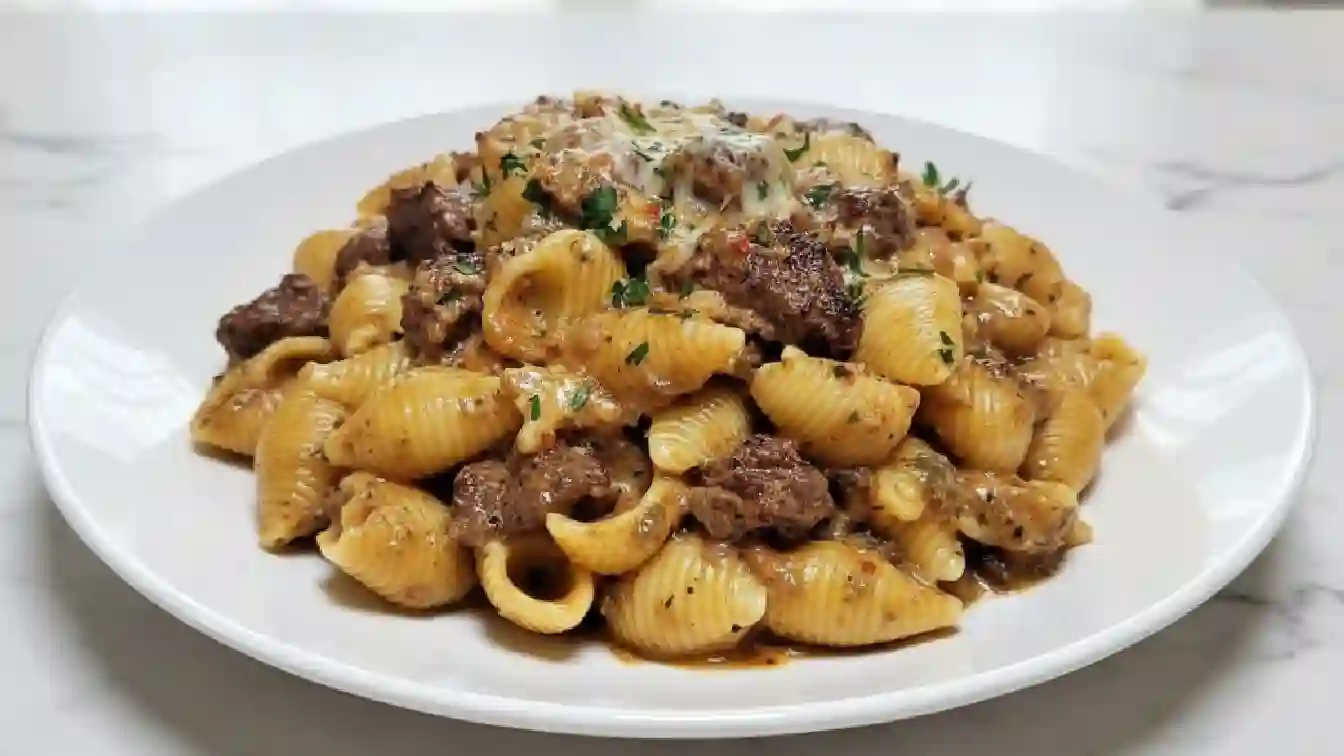
Creamy Paprika Steak Shells: The Ultimate 30-Minute Comfort Pasta
There is something deeply grounding about the sound of steak hitting a hot skillet. That initial hiss, followed by the rich, savory aroma of browning meat and melted butter, always seems to draw people into the kitchen. I first put this Creamy Paprika Steak Shells recipe together on one of those Tuesday nights when the fridge looked bare, but the craving for something indulgent was high. By the time the smoked paprika hit the cream and turned the sauce into a beautiful, sunset orange, I knew I had stumbled onto a winner. It is a dish that feels like a fancy bistro meal but comes together in the time it takes to boil a pot of water.
Why You’ll Love This
Effortless Luxury: It uses simple pantry staples like dried pasta and heavy cream to create a result that tastes expensive.
The Perfect Texture: Small pasta shells act like little scoops, capturing the velvet-smooth sauce and tiny bits of garlic in every single bite.
Balance of Flavor: The smoked paprika provides a deep, earthy warmth that cuts through the richness of the parmesan and cream without being spicy.
The Skeptic at the Table
I remember serving this to my brother-in-law, a man who famously believes that steak should only ever be served as a whole slab next to a baked potato. He looked at the bowl of shells and steak bites with genuine suspicion. However, after the first forkful of tender, seared sirloin coated in that buttery paprika sauce, the conversation stopped. He ended up finishing his portion and reaching for seconds straight from the pan. It is the kind of meal that wins over the traditionalists because it honors the ingredients while presenting them in a whole new, comforting way.
What Makes It Special
Smoked Paprika: This isn’t just for color. It adds a layer of wood-fired flavor that makes the steak taste like it spent hours on a grill.
Shell Pasta: While any shape works, shells are the functional heroes here, cradling the sauce better than flat noodles ever could.
The Fond: By searing the steak first and then building the sauce in the same pan, you incorporate all those browned, savory bits of meat back into the cream.
Heavy Cream and Beef Broth: This duo creates a sauce that is thick enough to coat the spoon but light enough to not feel overly heavy.
Making It Happen
The process begins with a pot of heavily salted water. As the shells dance in the boiling water, take a moment to season your steak bites generously. You want that smoked paprika, salt, and pepper to form a crust. When you drop the steak into the shimmering olive oil, let it sit undisturbed for a minute or two. This patience rewarded with a golden-brown sear that locks in the juices.
Once the steak is removed, the pan will be dark and full of flavor. Lower the heat and drop in a knob of butter and the minced garlic. The smell will be incredible. Pour in the heavy cream and beef broth, using your wooden spoon to scrape up every bit of flavor from the bottom of the skillet. As the sauce simmers and thickens, stir in the parmesan until it disappears into a glossy, pale-orange velvet. Finally, fold the pasta and steak back into the fold, tossing them until every shell is dripping with sauce. A sprinkle of fresh parsley at the end adds a necessary pop of brightness to finish the dish.
You Must Know
Don’t Overcrowd the Pan: Sear the steak in batches if you have to. If the pan is too full, the meat will steam rather than brown, and you’ll miss out on that crust.
Al Dente is Key: Cook the pasta for one minute less than the package directions. It will finish cooking in the sauce, absorbing more flavor without becoming mushy.
Room Temperature Meat: If possible, take the steak out of the fridge 15 minutes before cooking. It sears more evenly when it isn’t ice-cold.
Serving Ideas
This dish is quite rich, so it pairs beautifully with a crisp, acidic side like a simple arugula salad with lemon vinaigrette. For a vegetable side, roasted garlicky green beans or steamed broccolini provide a nice crunch.
If you are pouring a drink, a medium-bodied red wine like a Malbec or a Zinfandel complements the smokiness of the paprika. For a non-alcoholic option, a sparkling water with a heavy squeeze of lime helps cleanse the palate between those creamy bites.
Make It Different
The Protein: If you aren’t a fan of beef, swap the steak for boneless chicken thighs or even large shrimp.
The Veggie Boost: Stir in a few handfuls of fresh baby spinach at the very end until it wilts, or add sautéed mushrooms with the garlic.
Spice Level: If you want some heat, add a half-teaspoon of red pepper flakes or swap the smoked paprika for a “hot” Hungarian variety.
Storage and Reheating
Leftover Creamy Paprika Steak Shells can be stored in an airtight container in the refrigerator for up to three days. When reheating, the sauce will likely have thickened significantly. Add a splash of milk, beef broth, or water before warming it in a skillet over low heat or in the microwave. This will bring the sauce back to its original silky consistency.
Success Tips
To ensure the best results, always grate your parmesan cheese fresh from a block. Pre-shredded cheeses are often coated in potato starch to prevent clumping, which can lead to a grainy or chalky sauce. Also, be sure to use smoked paprika rather than “sweet” or “plain” paprika; the smoky element is what gives this dish its signature personality.
Frequently Asked Questions
What is the best cut of steak to use?
Sirloin is excellent for its balance of flavor and tenderness, but a ribeye will offer a richer, fattier result. If you’re on a budget, flank steak works well if cut thinly against the grain.
Can I use half-and-half instead of heavy cream?
You can, but the sauce will be thinner and less stable. If using half-and-half, be careful not to let the sauce boil too vigorously, or it might curdle.
Why is my sauce too thick?
The pasta shells continue to absorb liquid even after they are off the heat. Simply stir in an extra splash of beef broth or pasta water until it reaches your desired thickness.
Can I make this gluten-free?
Absolutely. Just swap the shell pasta for your favorite gluten-free variety. Ensure your beef broth is also certified gluten-free.
Do I have to use smoked paprika?
While smoked paprika is the star, you can use regular paprika if you prefer a milder, more subtle flavor. The dish will still be delicious, just less “bold.”
Recipe Card
Prep time: 10 minutes
Cook time: 20 minutes
Total time: 30 minutes
Servings: 4 people
Category: Main Course
Difficulty: Easy
Cuisine: American-Fusion
Yield: 4 generous bowls
Equipment: Large pot for pasta, large skillet, tongs, wooden spoon.
Ingredients
12 oz shell pasta
1 lb steak (sirloin or ribeye), cut into bite-sized pieces
Salt & black pepper to taste
1 tbsp olive oil
1 tbsp butter
3 cloves garlic, minced
1 1/2 tsp smoked paprika
1 cup heavy cream
1/2 cup beef broth
1/2 cup grated Parmesan cheese
Chopped fresh parsley (for garnish)
Instructions
Bring a large pot of salted water to a boil. Cook the shell pasta according to the package directions until al dente. Drain the pasta and set it aside.
While the water boils, pat the steak pieces dry with a paper towel. Season them thoroughly with salt, pepper, and a portion of the smoked paprika.
Heat the olive oil in a large skillet over medium-high heat. Once the oil is shimmering, add the steak bites in a single layer. Sear for 2–3 minutes per side until they develop a deep brown crust. Remove the steak from the pan and set it aside on a plate.
Reduce the skillet heat to medium. Add the butter and let it melt, then add the minced garlic. Sauté for about 1 minute until fragrant, being careful not to let it burn.
Pour in the heavy cream, beef broth, and the remaining smoked paprika. Stir well, making sure to scrape up any browned bits from the bottom of the pan. Let the mixture simmer gently for 3–4 minutes until it starts to thicken.
Whisk in the grated Parmesan cheese. Continue stirring until the cheese is completely melted and the sauce looks smooth and glossy.
Add the cooked pasta shells and the seared steak bites (along with any juices on the plate) back into the skillet. Toss everything together until the shells are filled with sauce and the meat is warmed through.
Garnish with a handful of fresh parsley and serve immediately while hot.
Notes
If you find the sauce becomes too thick while tossing, keep a small cup of the pasta cooking water on the side. Adding a tablespoon or two of this starchy water can help emulsify the sauce and make it extra creamy.
Nutrition (Per Serving)
Calories: 580 kcal
Protein: 32g
Fat: 34g
Carbohydrates: 36g
Fiber: 2g
Sodium: 450mg
Would you like me to create a printable PDF version of this recipe card for your readers?
