
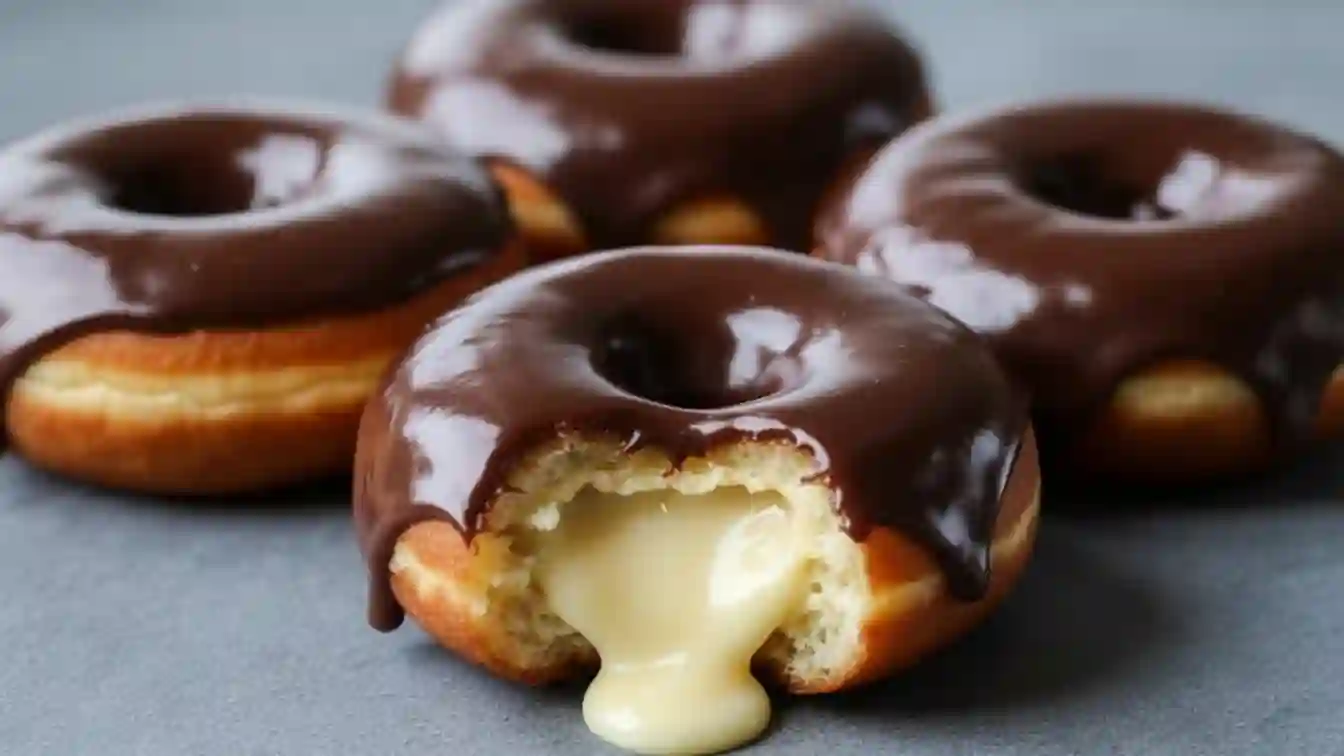
Boston Cream Donuts Recipe: The Ultimate Homemade Treat
Oh, the Boston Cream Donut. Just the sound of those words brings me back to my childhood, standing outside the local bakery with my nose practically glued to the glass case. There’s something truly transportable about that perfect combination: a tender, buttery yeast donut, bursting with silky-smooth vanilla pastry cream, and crowned with a mirror-like, decadent chocolate glaze. It’s not just a donut; it’s an edible hug, a little slice of comfort food heaven.
I’ve always felt a great, satisfying challenge in recreating classic bakery items at home. Store-bought versions are fine, but they often lack the deep, yeasty flavor of a truly homemade donut or the rich, real vanilla custard filling. After years of testing—and many, many delicious failures—I finally perfected this Boston Cream Donuts recipe. It delivers that authentic, melt-in-your-mouth experience. This recipe isn’t about rushing; it’s about taking your time, enjoying the process, and being rewarded with a magnificent, golden-brown treat that smells like pure joy. Get ready to fill your kitchen with the most comforting aroma you can imagine!
Why You’ll Love This Homemade Boston Cream Donuts Recipe
This isn’t just a how-to; it’s an invitation to elevate your weekend baking. Here’s why this version of the Boston Cream Donut will become your new favorite:
The Texture Trifecta: You get the slight crisp from the freshly fried exterior, the lightness and airiness of the perfect yeast dough, and the creamy smoothness of the vanilla filling—all in one bite.
Intense, Real Flavor: We’re making homemade pastry cream from scratch. This isn’t a powdered mix; it’s a velvety custard that offers a deep, authentic vanilla richness that simply can’t be beaten.
The Glory of Yeast Dough: Working with yeast is a meditative process. The final product is a tender, slightly chewy donut that has a far superior flavor profile to cake donuts.
Impressive and Fun: While they take a little time, the steps are straightforward. The reaction when you present a platter of these generously filled, glossy-glazed Boston Cream Donuts makes the effort completely worthwhile.
The Skeptic’s Seal of Approval
I remember the first time I served these to my brother-in-law, Mark. Mark is notoriously difficult to please when it comes to sweets; he usually finds them “too sweet,” “too bready,” or “just okay.” He reluctantly took one of the golden-brown donuts, skeptical of the generous amount of silky custard peaking from the side. He took a bite, paused, and then—without saying a word—immediately reached for a second one. The highest praise came when he declared, “This isn’t just sugar; this is butter and vanilla and good flour. This is a real baker’s donut.” If this Boston Cream Donut recipe can win over Mark, it can truly win over anyone.
What Makes It Special
The magic of a bakery-quality Boston Cream Donut lies in a few key, high-quality ingredients working in harmony.
Fast-Acting Dry Yeast: This is the lifeblood of our tender donut dough. It ensures a reliable, beautiful rise, leading to that coveted airy and light interior.
Unsalted Butter: Used both in the dough and the custard, butter adds unmatched richness and buttery flavor, preventing the donuts from tasting dry or bland.
Egg Yolks: The secret to a truly velvety and rich pastry cream. The yolks provide color, thickness, and a depth of flavor that separates a great custard from a basic one.
Semisweet Chocolate Chips: The ideal choice for the glaze. They melt into a glossy, deep brown topping that offers a perfect balance—sweet, but with enough cocoa intensity to cut through the richness of the cream.
Making It Happen: The Craft of the Perfect Donut
Creating these Boston Cream Donuts is a fun journey in three delicious stages.
The Tender Donut Dough
It all starts with a little activation. Gently combine the warm water, milk, sugar, and yeast. You want to see that beautiful, frothy bloom—that’s your yeast waking up, ready to work its magic. Once foamy, you’ll add the remaining dry and wet ingredients. Kneading is critical here; whether by hand or with a mixer’s dough hook, you’re aiming for a dough that feels smooth, elastic, and supple. Let this buttery dough rise until it’s almost doubled, a process that fills your kitchen with the comforting scent of fermentation. When ready, gently punch the air out—don’t be too aggressive—and roll it out to a nice 1/2-inch thickness. Cutting the donuts and letting them proof a final time ensures you get those puffy, golden pillows ready for the fryer.
The Silky Pastry Cream
While the donuts proof, we make the creamy filling. In a saucepan, you’re heating the milk, sugar, and cornstarch, stirring constantly until it visibly thickens. This mixture needs to temper the egg yolks—slowly adding the hot liquid to the yolks prevents them from scrambling. Once combined, return it all to the heat and stir until it reaches a gentle boil and becomes luxuriously thick. Off the heat, whisk in the butter and vanilla extract. This stage is key: press plastic wrap directly onto the surface of the vanilla custard. This prevents a skin from forming, ensuring your filling stays velvety smooth as it chills in the fridge.
Frying and Finishing
The fryer is where the magic happens quickly. You’re looking for a steady temperature of $350-360^\circ \text{F}$. Gently drop the dough circles into the hot oil. They should turn a beautiful deep golden-brown in about two minutes per side. Don’t overcrowd the pot! Remove the donuts and let them drain on a paper-towel-lined rack. For the glaze, simply heat the heavy cream until steaming, pour it over the chocolate chips, and let it sit for a minute before whisking it into a shiny, deep brown glaze. Once the donuts are completely cool, cut a hole in the side, generously pipe the cold, firm custard inside, and dip the tops into that glossy chocolate glaze. The wait to let the glaze set is the hardest part!
You Must Know: Frying and Filling Tips
Use a Thermometer, Always: Frying temperature is non-negotiable for perfectly golden, fluffy donuts. Too cool and they’ll soak up oil; too hot and they’ll burn outside before cooking inside.
The Proofing Secret: The second, shorter proofing (15 minutes after cutting) is crucial. It gives the donuts the final lift needed for an airy texture when they hit the oil.
Chill the Custard Completely: The pastry cream must be fully chilled and set before you try to pipe it. Warm custard will just run out of the donut.
Don’t Overwork the Glaze: Once the chocolate is melted, stop whisking. Over-whisking can make the glaze dull instead of mirror-shiny and glossy.
Press the Plastic Wrap: When chilling the custard, make sure the plastic wrap is touching the entire surface. This prevents a thick, chewy layer (a skin) from forming on top.
Serving and Pairing Ideas
These rich, creamy Boston Cream Donuts are perfect on their own, but they truly shine when paired thoughtfully.
Coffee is King: Serve them with a strong, hot cup of black coffee or a dark roast espresso. The bitterness of the coffee cuts through the richness of the custard and chocolate beautifully.
The Brunch Twist: A light fruit salad—something tart like raspberries or kiwi—is a wonderful palate cleanser alongside this hearty treat.
Evening Indulgence: For a truly decadent finish, pair them with a small glass of cold milk or, for adults, a dark rum or a sweet, bubbly Moscato wine.
Make It Different: Customization and Substitution
For a Lighter Donut: While frying yields the best results, you can bake these at $375^\circ \text{F}$ for 8-10 minutes for a slightly less decadent, though denser, texture.
Flavor Swap: Infuse your milk for the pastry cream with a cinnamon stick, a few citrus peels (lemon or orange), or even a tablespoon of instant coffee for a subtle mocha flavor twist.
Gluten-Free Flour: You can often substitute the all-purpose flour with a 1:1 gluten-free blend, but be prepared for a slightly different texture and you may need a little extra liquid.
Espresso Glaze: Dissolve 1 teaspoon of instant espresso powder in the heavy cream before heating for an irresistible espresso-chocolate glaze.
Recipe Tips: Storage and Reheating
Boston Cream Donuts are best eaten the day they are made. The combination of fried dough and cold, creamy filling starts to degrade over time.
Storage: If you must store them, place them in an airtight container in the refrigerator for up to 2 days.
Reheating: Do not reheat the filled donuts. If you have unfried dough or unfilled donuts, you can reheat them slightly. The filled donuts should be served cold or at room temperature. For the best experience, fill and glaze only the number of donuts you plan to eat within a few hours.
Success Tips for Your Perfect Boston Cream Donuts
Don’t Rush the Rise: The first rise is crucial for developing flavor and texture. If your kitchen is cool, try placing the bowl near a sunny window or in a turned-off oven with the light on.
Cornstarch vs. Flour in Custard: This recipe uses cornstarch for the custard. It provides a silky, translucent finish that flour cannot match, which is essential for that perfect bakery-style filling.
Use the Right Fat: A solid, neutral oil (like vegetable, canola, or peanut) is essential for frying. Avoid olive oil or butter, as they have a low smoke point.
Frequently Asked Questions (FAQ)
Q: Why did my donuts come out greasy?
A: This almost always means your oil temperature was too low. When the oil is not hot enough, the dough slowly absorbs the fat. Use a reliable thermometer to ensure it stays in the $350-360^\circ \text{F}$ range.
Q: Can I make the donut dough ahead of time?
A: Yes! You can punch the dough down after the first rise, wrap it tightly, and refrigerate it overnight (up to 24 hours). Let it warm up slightly at room temperature before rolling and cutting the donuts.
Q: My custard is lumpy. What went wrong?
A: Lumps usually form when the cornstarch isn’t fully dissolved before heating or if the egg yolks weren’t tempered properly (added too quickly to the hot liquid). If you get lumps, you can quickly whisk the hot custard vigorously or even push it through a fine-mesh sieve before chilling.
Q: What if I don’t have a donut cutter?
A: No problem! A wide-mouth glass or a biscuit cutter that is about 3-4 inches in diameter will work perfectly.
Q: Can I make the glaze without heavy cream?
A: Yes, you can substitute the heavy cream with full-fat milk or half-and-half, but the glaze won’t be as rich, thick, or glossy. The fat content in the heavy cream is what gives the glaze its beautiful finish.
Ingredients
Donuts
16 ounces all-purpose flour
1 package fast-acting dry yeast (0.25 oz)
1 ounce milk lukewarm
7 ounces water lukewarm
3 Tablespoons granulated sugar
1 large egg room temperature
3 ounces unsalted butter softened, cubed
⅓ teaspoon baking powder
½ teaspoon salt
Oil for frying
Custard
1 cup milk
2 egg yolks
1 Tablespoon cornstarch
¼ cup granulated sugar
1 Tablespoon unsalted butter
1 teaspoon vanilla extract
Chocolate Glaze
4 ounces semisweet chocolate chips
⅓ cup heavy cream
Instructions
Donuts
Activate Yeast: Combine the warm water, milk, sugar, and yeast in a large bowl. Whisk to dissolve the yeast. Allow the yeast to proof for about 5 minutes or until it starts to foam.
Make Dough: Add the remaining donut ingredients. Knead on low using a dough hook on your mixer or by hand for about 5 minutes or until the dough is nice and smooth and elastic.
First Rise: Place the dough into a greased bowl, cover with plastic wrap and let rise in a warm, draft-free place until almost doubled in size, about an hour.
Cut Donuts: Punch the dough down and roll out on a lightly floured surface to 1/2-inch thick. Use a 3-inch cutter to cut the donuts. Place the donuts on a floured parchment-lined baking sheet, cover with plastic wrap, and let proof for 15 minutes. Re-roll the remaining dough, cut out the remaining donuts and add them to the baking sheet.
Fry: Heat 2 inches of oil in a heavy pot (Dutch oven) to $350-360^\circ \text{F}$. Drop 2-3 donuts at a time and allow to become golden-brown before turning to the other side, about 2 minutes per side.
Cool: Remove from the oil and place on paper towel-covered wire rack. Let cool completely before filling.
Pastry Cream
Thicken Milk: Add the sugar, cornstarch, and milk to a large saucepan and mix until smooth. Cook, stirring continuously, over medium heat until mixture begins to thicken and boil. Reduce heat to medium and simmer for 1 minute. Remove from heat.
Temper Yolks: Add a little bit of the hot milk mixture to the egg yolks and whisk together, then add the egg mixture to the remaining milk mixture. Place the saucepan back on the heat and bring to a light boil. Allow to boil for 2 minutes, stirring continuously, until velvety and thick.
Finish Custard: Remove from heat, add butter and vanilla. Stir until smooth. Pour into a medium bowl. Cover with plastic wrap and press it directly on the surface to prevent a skin. Refrigerate until cold and firm.
Fill Donuts: Fill a piping bag with a round tip with the cream. Using a small knife, cut a hole in the side of each donut about 3/4 of the way into the donut and pipe a generous amount of vanilla cream into the center.
Chocolate Glaze
Melt Chocolate: For the chocolate glaze, heat the cream in a microwave or over medium heat until just below boiling point. Pour the heated cream over the chocolate chips and let sit for 1 minute.
Whisk: Whisk it all together until the chocolate is fully melted and the glaze is smooth and glossy.
Glaze: Swirl the top of the donut in the glaze and allow to sit for about 10 minutes for the glaze to set before serving.
Notes
For the best results, use a kitchen scale to measure the flour accurately.
Make sure your milk and water are lukewarm (around $105-115^\circ \text{F}$) for the yeast to proof correctly.
