
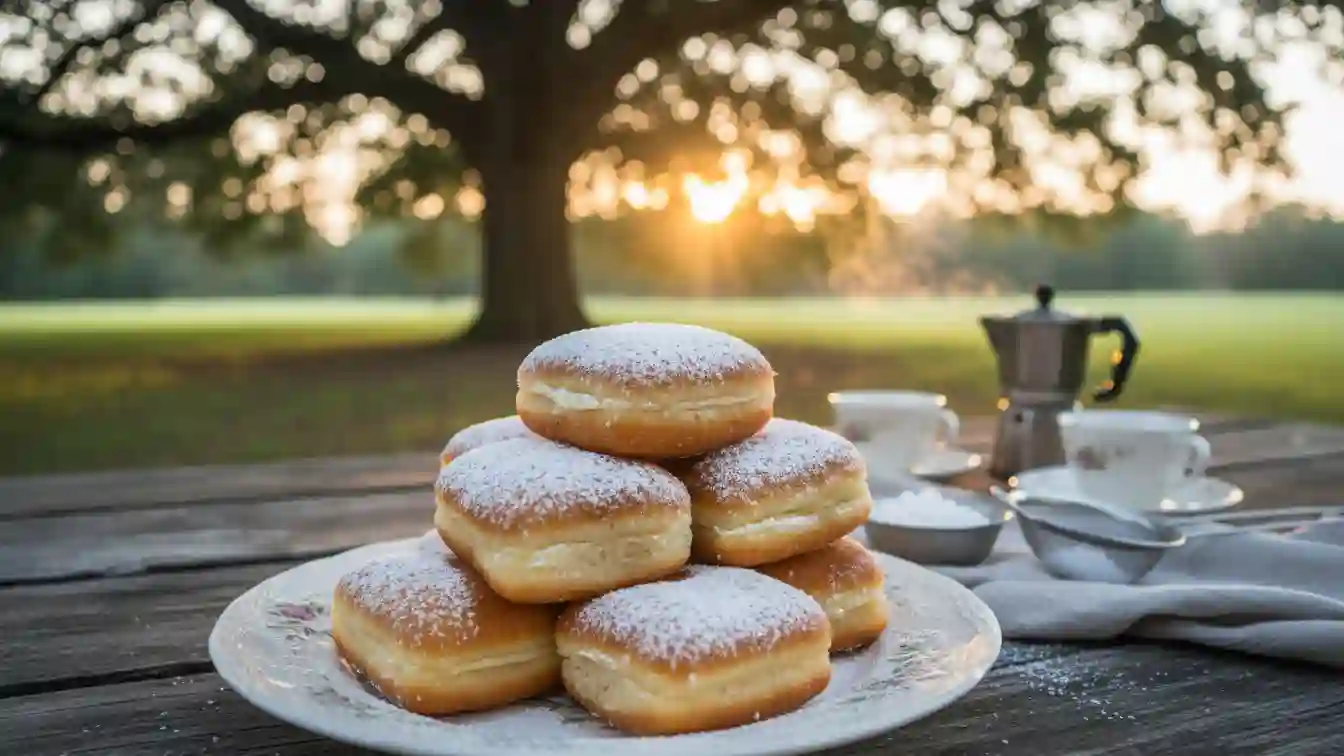
There is something almost magical about the smell of frying dough. It immediately transports you to the bustling streets of New Orleans or a quiet, sun-drenched cafe in the French Quarter. But you don’t need a plane ticket to experience that specific joy; you just need a good French Beignets recipe.
I still remember the first time I attempted these at home. I was intimidated by the idea of deep-frying and working with yeast, assuming the result would be heavy or greasy. I was wrong. When done right, a beignet is a cloud of fried dough—golden and slightly crisp on the outside, but incredibly tender and hollow on the inside. It’s a messy indulgence, inevitably leaving you dusted with a layer of powdered sugar “snow,” but that is half the fun. This recipe captures that authentic, melt-in-your-mouth texture that makes them worth every bit of effort.
Why You’ll Love This
Pantry Staples: You likely already have everything you need in your kitchen right now—flour, sugar, eggs, and milk.
Forgiving Dough: Unlike complex pastries that require precise folding, this dough is meant to be rustic. Irregular shapes just hold more powdered sugar.
Texture Perfection: These aren’t dense like cake donuts; they are airy, chewy, and light enough that you can easily eat two (or three) without noticing.
The “Wow” Factor: Serving a basket of hot, fresh beignets makes you look like a master baker, even though the process is surprisingly straightforward.
The Skeptic Conversion
I have a friend who claims to dislike “fried sweets.” She usually passes on donuts, churros, and funnel cakes, citing that they are too heavy or oily. The first time I made this French Beignets recipe for a brunch, I didn’t even offer her one, assuming she’d stick to the fruit salad.
As the first batch came out of the oil, golden and steaming, the aroma filled the kitchen. She grabbed one “just to try a bite.” Before the coffee was even poured, she had finished it and was reaching for a second. She admitted that because they puff up so much, they feel impossibly light rather than greasy. Now, she requests them every time she comes to visit.
What Makes It Special
Great beignets rely on a few specific elements to get that signature rise and flavor.
Evaporated Milk: While you can use regular milk, evaporated milk adds a creamy richness to the dough without weighing it down.
Active Dry Yeast: This is the engine of the recipe. It creates those large air pockets that distinguish a beignet from a standard donut.
Generous Vanilla: Two teaspoons of vanilla extract infuse the dough with a warm, aromatic flavor that pairs perfectly with the frying process.
High-Heat Frying: Cooking these quickly at the right temperature ensures the outside crisps up immediately while the inside steams and puffs.
Making It Happen
Making beignets is a process of patience and timing, but it is not difficult. Here is how it comes together in your kitchen.
You start by waking up the yeast. Combine your warm water (make sure it’s bathwater-warm, not scalding) with the yeast and a bit of sugar. Let it sit for a few minutes until it gets frothy and bubbly—this tells you the yeast is alive and ready to work.
While the yeast blooms, mix your flour and salt. Once your yeast mixture is foamy, whisk in the milk, vanilla, egg, and the rest of the sugar. This is where you start building the structure. You’ll gradually mix the wet and dry ingredients. If you are using a stand mixer, let the dough hook do the heavy lifting. Once the flour is incorporated, you add the butter.
Here is the key: this is an enriched dough. It will be sticky. Don’t panic and add too much flour, or your beignets will be tough. Knead it until it is smooth and pulls away from the sides of the bowl, but expect it to be tacky to the touch.
Now, patience. Let the dough rise in a warm spot for at least two hours. It needs to double in size. When you are ready to cook, heat your oil to a steady 360°F. Roll the dough out (not too thin, or they won’t puff!) and cut them into rustic squares.
Drop them into the hot oil. Watch the magic happen as they bob to the surface and balloon up. Flip them once they are golden, drain them, and immediately bury them in powdered sugar.
You Must Know
Watch the Heat: A candy thermometer is non-negotiable here. If the oil is too cool, the beignets will soak up grease and become heavy. If it is too hot, the outside will burn before the inside is cooked.
Don’t Overcrowd: Fry only 3 or 4 at a time. Adding too much dough drops the oil temperature drastically.
Thickness Matters: When rolling out the dough, aim for 1/2 inch. If you roll them paper-thin, they will turn into crackers rather than pillows.
Freshness is Key: Check your yeast expiration date. If your yeast doesn’t bubble in the first step, do not proceed. Buy fresh yeast and start over, or the dough will never rise.
Serving Ideas
Beignets are traditionally a breakfast or dessert item, but they fit anywhere.
Classic Pairing: Serve with a Café au Lait (coffee with hot milk) to dip the beignets in. The bitterness of the coffee cuts through the sweetness of the sugar perfectly.
Dips: While tradition calls for just powdered sugar, serving them with a side of warm chocolate ganache or raspberry preserves adds a lovely dimension.
Fruit: A side of tart berries helps balance the richness of the fried dough.
Make It Different
Dairy-Free: You can substitute the butter for a plant-based butter and use almond or oat milk (or coconut milk for a tropical twist) instead of dairy milk.
Spiced Sugar: Instead of plain powdered sugar, toss the hot beignets in cinnamon sugar or mix a little cardamom into your powdered sugar for a warmer flavor profile.
Zest it Up: Add a teaspoon of orange or lemon zest to the dough during the mixing phase for a subtle citrus fragrance.
Storage and Reheating
Let’s be honest: Beignets are best eaten within 15 minutes of frying. However, if you have leftovers:
Storage: Keep them in an airtight container at room temperature for up to 2 days. Do not refrigerate the cooked beignets, as they will go stale faster.
Reheating: Do not microwave them; they will become rubbery. Instead, place them in an oven or toaster oven at 350°F for about 5 minutes until they are heated through and slightly crisp again. Dust with fresh sugar before serving.
Success Tips
The Sticky Situation: I cannot stress this enough—the dough should be sticky. Resist the urge to add cup after cup of flour. A sticky dough yields a soft, airy beignet. A dry dough yields a hockey puck.
The Paper Bag Trick: To coat them evenly, toss the hot, drained beignets into a clean paper lunch bag with powdered sugar and shake vigorously.
Make Ahead: You can make the dough the night before and let it do its first rise in the refrigerator for up to 48 hours. Actually, the cold fermentation often develops a deeper flavor!
Frequently Asked Questions
Why didn’t my beignets puff up?
This usually happens for two reasons: either the oil wasn’t hot enough, or the dough was rolled too thin. Ensure your oil is at 360°F and your dough is a plump 1/2 inch thick.
Can I bake these instead of frying?
Technically yes, but the texture will be completely different. They will be more like sweet dinner rolls than beignets. The hot oil is necessary to create that signature rapid steam expansion and crispy exterior.
What kind of oil is best for frying?
Use a neutral oil with a high smoke point. Vegetable oil, canola oil, or peanut oil are the best choices. Avoid olive oil as it has a low smoke point and a strong flavor.
Can I re-use the oil?
Yes! Once the oil cools, strain it through a cheesecloth or fine mesh sieve to remove any burnt flour bits. You can store it and reuse it for frying 2-3 more times.
Why is my dough not rising?
Your yeast might be dead (expired) or your water might have been too hot, killing the yeast. The water should feel warm to the touch, like a baby’s bath, not hot.
French Beignets Recipe
Prep Time: 20 mins (+ 2 hours rising)
Cook Time: 15 mins
Total Time: 2 hrs 35 mins
Servings: 24 Beignets
Category: Dessert/Breakfast
Difficulty: Intermediate
Cuisine: French/Cajun
Ingredients
3/4 cup warm water (between 110°F)
1/2 cup granulated sugar (100g)
2 1/4 teaspoons active dry yeast (1 envelope)
1 large egg, room temperature
1/2 cup milk or evaporated milk (120ml), room temperature
2 teaspoons vanilla extract (10ml)
3 3/4 cups All-Purpose flour (450g)
1 teaspoon salt
3 tablespoons unsalted butter, at room temperature (42g)
Vegetable oil or peanut oil (for deep frying)
1/2 cup powdered sugar (60g)
Instructions
Bloom the Yeast: Add the warm water to the bowl of a stand mixer (or a large bowl if using an electric hand mixer). Add the yeast and half of the granulated sugar. Stir gently and set aside for about 5 minutes until the mixture becomes foamy and bubbly.
Prep Dry Ingredients: While the yeast blooms, measure out the 3 3/4 cups of flour and mix it with the teaspoon of salt in a separate bowl. Set aside.
Mix Wet Ingredients: Once the yeast mixture is bubbly, pour in the milk, vanilla extract, remaining granulated sugar, and the egg. Whisk everything together until combined.
Combine and Knead: Add about half of the flour mixture to the wet ingredients and whisk until smooth. Switch to a dough hook attachment (if using a stand mixer) and add the remaining flour. Mix on medium speed.
Add Butter: Once the dough starts to come together, add the room-temperature butter. Continue mixing on medium speed for about 4 minutes. The goal is a smooth dough that pulls away from the sides of the bowl. Note: The dough will be enriched and sticky. Only if it seems excessively wet should you mix in an extra 1/4 cup of flour.
Rise: Lightly oil a large bowl. Transfer the dough into it, turning it once to coat it in oil. Cover with plastic wrap or a warm towel and place in a warm spot free of drafts. Allow to rise for at least 2 hours, or until doubled in size. (Alternatively, store in the fridge for up to 48 hours).
Heat the Oil: Pour about 3 inches of oil into a large heavy-bottomed pot or Dutch oven. Attach a candy thermometer and heat the oil to 360°F (180°C) over medium-high heat. Prepare a wire cooling rack lined with paper towels for draining.
Shape: Once the dough has risen, punch it down gently. Turn it out onto a well-floured surface. Roll the dough into a rectangle about 1/2 inch thick. Using a pizza cutter or sharp knife, cut the dough into 2 to 2 1/2 inch squares.
Fry: Carefully drop 3-4 squares into the hot oil. Do not overcrowd. Fry until the bottom is puffed and golden brown, then flip and fry the other side until golden. This happens fast! Use a spider strainer or slotted spoon to remove them.
Serve: Place the hot beignets on the paper towel-lined rack to drain briefly. Immediately dust generously with powdered sugar while they are still hot. Serve warm.
Nutrition Information
Calories: 165kcal (approx per serving) | Carbohydrates: 25g | Fat: 6g | Protein: 3g
