
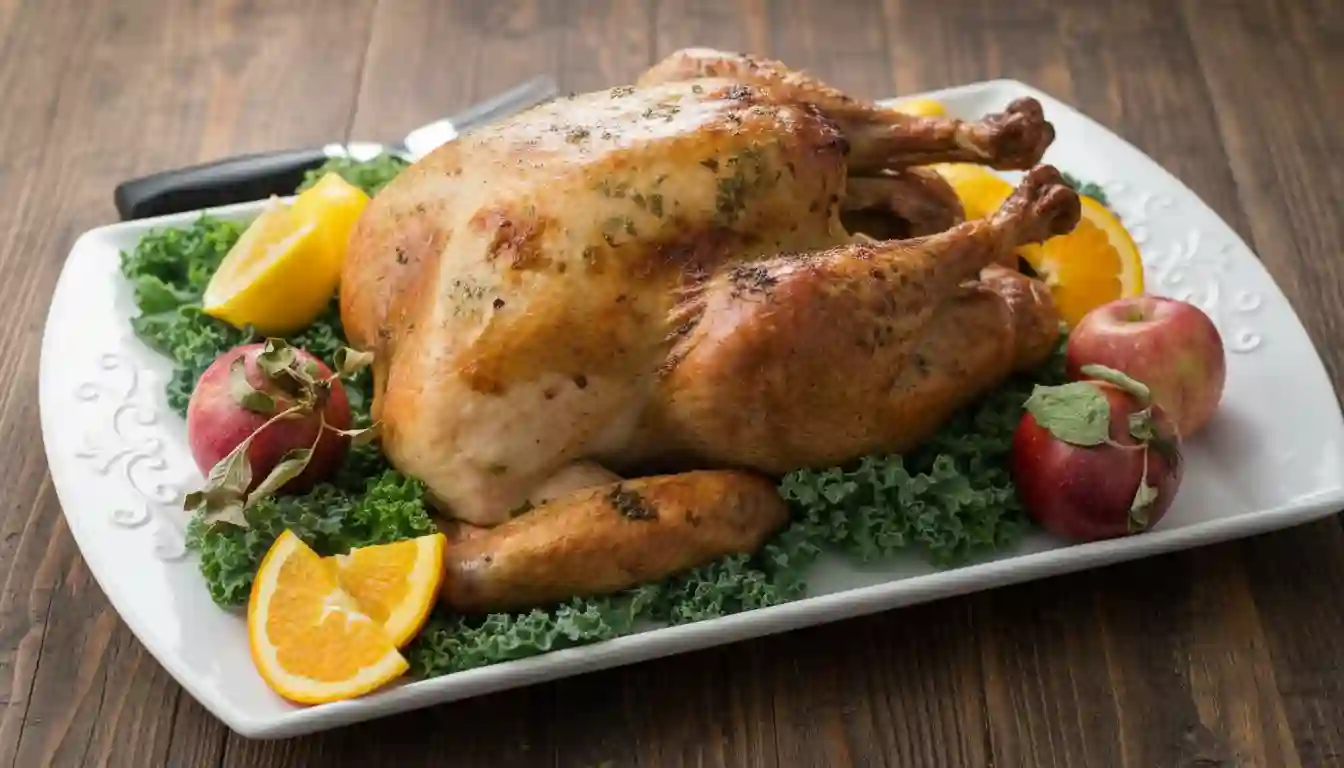
The Ultimate Juicy Roast Turkey Recipe: A Foolproof Guide for a Golden, Flavorful Bird
A Turkey Worth Talking About
I used to approach roasting a turkey with a sense of solemn duty. It was the culinary mountain I had to climb once a year, often resulting in a dry summit that needed a river of gravy to navigate. That all changed the year I discovered the power of flavored butter and a little patience. This recipe isn’t just about cooking a turkey; it’s about transforming it into the star of the table. The moment you slide that golden-brown, aromatic masterpiece out of the oven, and the scent of lemon, garlic, and roasted poultry fills your home, you’ll understand. This is the juicy roast turkey recipe that turned a holiday chore into my favorite culinary triumph.
Why You’ll Love This Juicy Roast Turkey
No More Dry Breast Anxiety: The technique of massaging herbed butter directly under the skin creates a self-basting system that keeps the white meat incredibly tender and moist.
A Crispy, Salty, Golden Skin: The high initial heat and generous seasoning promise a skin so crispy and flavorful, it might just be the best part.
Effortless, Elegant Flavor: The compound butter and simple cavity stuffing work together to create a deep, aromatic flavor that permeates the entire bird, without any complicated steps.
The Ultimate Centerpiece: This turkey looks as spectacular as it tastes, with a beautiful golden-brown hue and a festive presence that will have everyone reaching for their phones before their forks.
The True Test: A Picky Eater’s Seal of Approval
Last Thanksgiving, my nephew, a renowned picky eater whose diet largely consisted of beige foods, looked at the turkey with suspicion. He reluctantly accepted a slice of breast meat, mostly to appease his mother. After a few chews, his eyes widened. “This chicken is really good,” he declared. We all laughed, but the victory was silent and sweet. He went back for seconds. That’s the magic of this recipe—it wins over even the toughest critics.
What Makes It Special
The secret to this juicy roast turkey lies in a few key ingredients and their specific roles:
Herbed Lemon Butter: A full cup of softened, unsalted butter whipped with fresh lemon juice, zest, and garlic doesn’t just sit on the skin. It’s worked underneath it, where it melts and bastes the breast from the inside out, locking in moisture and infusing every bite.
A Simple Aromatic Stuffing: Unlike a heavy bread stuffing that can steam the bird from the inside, we use quartered onion, lemon, garlic, and parsley. This creates a steam pocket of fragrance that flavors the meat without making it soggy.
The Dual-Temperature Roast: Starting with a blast of high heat (430°F) ensures the skin crisps up beautifully right away, while finishing at a lower temperature (350°F) allows the inside to cook through gently and evenly.
Making It Happen: Your Step-by-Step Journey to Turkey Perfection
First, bring your thawed turkey out of the fridge about 30 minutes before you begin. This helps it cook more evenly. Pat it completely dry inside and out with paper towels; this is the first crucial step to getting that crispy skin we all crave.
Now, let’s make the magic potion: the flavored butter. In a bowl, mash together the softened butter, olive oil, fresh lemon juice and zest, pressed garlic, chopped parsley, salt, and pepper. It might take a minute for the lemon juice to fully incorporate, but keep stirring—it will happen.
Gently separate the skin from the turkey breast by sliding your fingers underneath it, being careful not to tear it. Take about two-thirds of your fragrant butter and stuff it under the skin, then massage the top of the skin to spread it evenly. This is the heart of the juiciness. Rub the remaining butter all over the outside of the bird, drizzle it with a little more olive oil, and give it a generous sprinkle of salt and pepper.
Next, pack the cavity with your quartered onion, halved garlic cloves, parsley, and lemon. Tie the legs together with kitchen string—it looks professional and helps the bird cook evenly.
Preheat your oven to 430°F and place a rack in the lower part of the oven. Create a foil shield for the breast by molding an oiled, triangular piece of foil over it; set this aside for now. Place your turkey in the roasting pan and insert a meat thermometer into the deepest part of the thigh, avoiding the bone.
Roast the turkey, uncovered, for 20 minutes. This initial blast gives you that beautiful golden color. Pull the turkey out, quickly baste it with the buttery pan juices, and then carefully place your pre-shaped foil shield over the breast. This will protect it from drying out.
Reduce the oven temperature to 350°F and continue roasting. For a 12-pound bird, this will take about 2 hours and 30 minutes more, but always trust your thermometer, not the clock. The turkey is done when the thigh reads 170°F and the breast reads 160°F.
Once it hits those temperatures, transfer the turkey to a platter, tent it loosely with foil, and let it rest for a full hour. This is non-negotiable! The juices will redistribute, making the meat tender and making it much easier to carve.
You Must Know
Dry Skin is Key: A thoroughly patted-dry turkey is the foundation for crispy, not steamed, skin.
Trust the Thermometer: Oven temperatures vary. A reliable meat thermometer is your best insurance against under or overcooking.
The Rest is Not a Suggestion: Skipping the rest period means the precious juices will run straight onto the cutting board instead of staying in the meat.
Butter Temperature Matters: Use softened, but not melted, butter for the flavored butter. It’s easier to spread and will stay under the skin better.
Serving Ideas
Carve your magnificent bird and serve it alongside classic mashed potatoes, herbed stuffing, and cranberry sauce. The pan drippings are liquid gold for making a rich, homemade gravy. For a drink pairing, a buttery Chardonnay or a light Pinot Noir complements the savory, citrus-tinged flavors of the turkey beautifully.
Make It Different
Herb Swap: Not a fan of parsley? Use fresh thyme, sage, or rosemary in the butter.
Dairy-Free: Substitute the butter with an equal amount of high-quality olive oil or vegan butter.
Citrus Twist: Replace the lemon with an orange for a sweeter, deeper citrus note.
Spice it Up: Add a teaspoon of smoked paprika or a pinch of cayenne to the butter for a subtle kick.
Storage and Reheating Recipe Tips
Store leftover turkey in an airtight container in the refrigerator for up to 4 days. To reattain moisture, reheat slices in a baking dish with a splash of chicken broth, covered with foil, in a 325°F oven until warmed through. The turkey also freezes well for up to 3 months. Slice it first and freeze in portion-sized bags for easy use in soups, sandwiches, and casseroles.
Success Tips
For the most even cooking, ensure your turkey is fully thawed. The “13 minutes per pound” rule is a great guideline after the initial browning time, but always use a thermometer to confirm doneness. If the skin is browning too quickly before the inside is cooked, tent the entire turkey with foil. Save every drop of those buttery, flavorful pan drippings—they are the secret to an incredible gravy.
Frequently Asked Questions (FAQ)
1. How long in advance do I need to thaw my turkey?
The safest method is to thaw it in the refrigerator. Plan for approximately 24 hours of thawing time for every 4-5 pounds of turkey. A 12-pound turkey will need about 3 full days in the fridge to thaw completely.
2. Can I make the flavored butter ahead of time?
Absolutely! You can prepare the butter mixture up to 2 days in advance. Keep it covered in the refrigerator, but let it soften at room temperature before you attempt to spread it under the turkey skin.
3. Why did you use olive oil instead of extra-virgin?
Regular olive oil has a higher smoke point than extra-virgin, making it better suited for the high initial roasting temperature without burning or becoming bitter.
4. The skin on my breast is getting dark. What should I do?
This is exactly what the foil shield is for! If you notice it browning too fast, just place the pre-shaped shield over the breast. If you didn’t make one, you can quickly fashion a new one or tent the whole bird loosely with foil.
5. Do I really need to let it rest for a full hour?
Yes, it makes a significant difference. The resting period allows the muscle fibers in the meat to relax and reabsorb all the juices. If you carve it immediately, those juices will end up on the platter, and the meat will be drier.
Juicy Roast Turkey Recipe Card
Prep time: 30 minutes
Cook time: 2 hours 50 minutes
Total time: 3 hours 20 minutes (plus resting time)
Servings: 8-10
Category: Main Course
Difficulty: Intermediate
Cuisine: American
Yield: 1 Roast Turkey
Ingredients
For the Turkey:
12 lb turkey, thawed (11-15 lbs will work, adjust time)
Salt & Pepper, for seasoning
For the Flavored Butter:
1 cup (2 sticks) unsalted butter, softened
2 Tbsp olive oil (not extra virgin)
4 Tbsp fresh lemon juice (from 1 large lemon)
1/2 Tbsp fresh lemon zest
3 large garlic cloves, pressed
1/4 cup freshly chopped parsley
1/2 Tbsp sea salt
1/2 tsp black pepper, freshly ground
For the Aromatics:
1 large onion, peeled and quartered
4 garlic cloves, peeled and halved
1/2 bunch parsley
1 lemon, quartered
Instructions
Prep Turkey: Remove thawed turkey from fridge 30 mins prior. Pat completely dry inside and out. Fold wings behind the back.
Make Butter: Combine all flavored butter ingredients in a bowl. Mash and stir with a fork until well combined.
Season & Butter: Season inside of turkey cavity with salt and pepper. Gently separate the skin from the breast and legs. Stuff 2/3 of the butter mixture under the skin and massage to spread. Rub remaining butter all over the outside. Drizzle with olive oil and season generously with salt and pepper.
Stuff & Tie: Fill cavity with onion, garlic, parsley, and quartered lemon. Tie legs together with kitchen string.
Oven & Shield: Preheat oven to 430°F. Create an oiled foil shield for the breast. Place turkey in pan and insert a meat thermometer into the thigh.
Roast: Roast at 430°F for 20 mins. Remove, baste with pan juices, and apply the foil shield over the breast.
Finish Roasting: Reduce oven to 350°F. Roast for another ~2 hrs 30 mins (approx. 13 mins/lb) or until thermometer reads 170°F in the thigh and 160°F in the breast.
Rest: Transfer turkey to a platter, tent loosely with foil, and let rest for 1 hour before carving.
Notes
Most of the butter and oil will remain in the pan, which is perfect for making gravy. The final internal temperature will rise to 165°F in the breast and 175-180°F in the thigh during the rest.
